
Jensen Huang says he has discovered a ‘completely new’ $200 billion market for NVIDIA
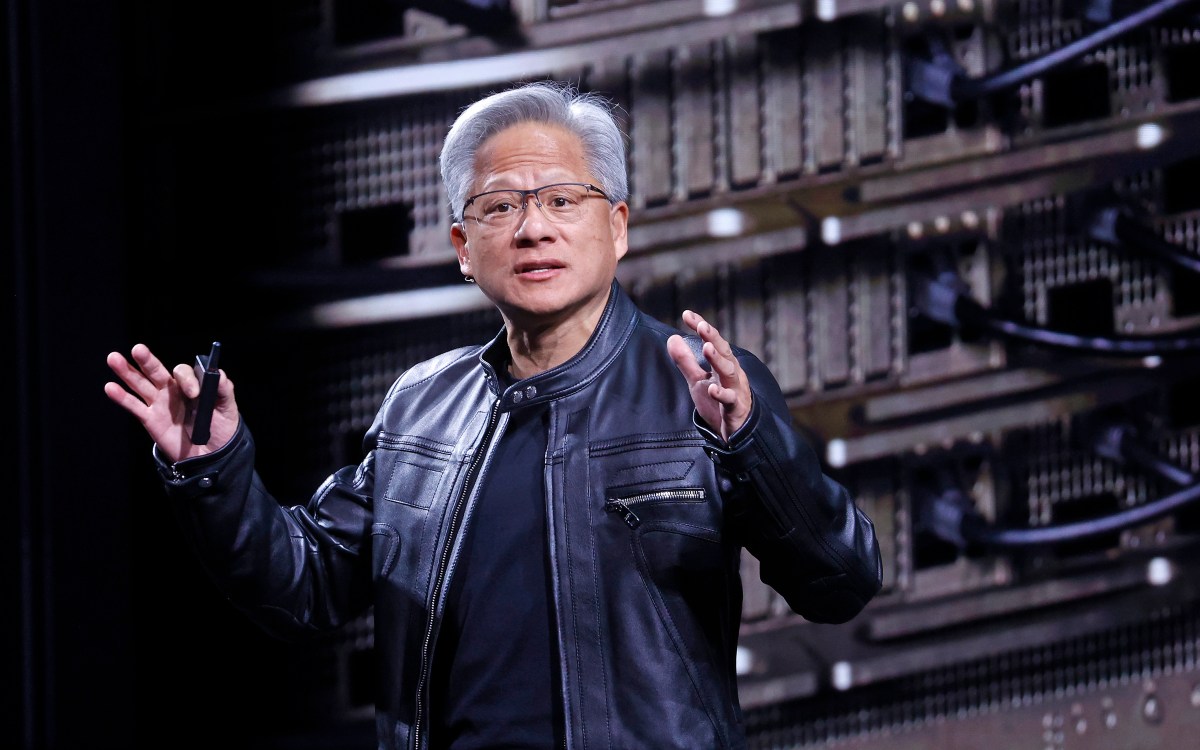
Nvidia founder and CEO Jensen Huang is perhaps one of the greatest corporate hype men of all time when it comes to his own company. He may even surpass Salesforce’s Marc Benioff when it comes to unrelenting optimism about the company’s future and profits.
Still, he delivers on the hype every quarter.
Instead of warning you to view with skepticism his declaration that he found “$200 billion in new TAM for NVIDIA,” I would argue that he has earned some credibility.
Huang pinned this huge new market on the back of Nvidia’s new CPU product, Vera, announced in March. On Wednesday’s earnings call, after Nvidia posted a record quarter of $81.6 billion in revenue and predicted the next quarter would be $91 billion, Huang touted Vera as a product with transformative potential. And some are already seeing promising sales figures.
But no matter how well Nvidia performs, Wall Street is worried about what could cause it to fall from grace.
Lately, such concerns have focused on the CPU. Nvidia is the king of GPUs, but historically the CPU market was owned by companies like Intel and AMD. (Of course, Nvidia has made CPUs before, but that’s not the company’s core business.)
For example, last month Amazon Web Services made a fuss about the huge deal it signed with Meta for millions of Amazon’s own AI CPUs. Amazon CEO Andy Jassy has made it clear that he believes AWS can deliver both GPU and CPU AI chips at least as well, and perhaps even better than Nvidia.
But now, with Vera CPUs being sold separately and bundled with Rubin GPUs, Huang said on the call that it has unlocked a “major new growth driver” for his company, as he believes Vera is “the world’s first CPU purpose-built for agent AI.”
“Vera is opening a brand new $200 billion TAM in Nvidia, a market we have never addressed before, and every major hyperscaler and system manufacturer is partnering with us to deploy it. The world is reimagining computing for agent AI and robotic physics AI, and Nvidia is at the center of these transitions,” said Huang, head of hype.
He explained that the “thinking” part of the AI model uses the GPU, but the agent primarily runs on the CPU. He predicts that they will use CPUs to perform assigned tasks and run their own form of CPU-powered PCs.
Vera is specifically designed to process tokens as quickly as possible, so it’s for agents. This is in contrast to the CPU in classic cloud architectures, which are designed with “cores”, the ability to run multiple instances of an app as fast as possible.
That may sound logical, but with big cloud providers as well as startups pursuing the development of AI chips, why does he think Nvidia will become the go-to source for agent CPUs?
That’s because Nvidia has already sold $20 billion worth of standalone Vera CPUs this year, and we’re just getting started, Huang said.
“There are a billion users in the world, human users. My sense is that there will be billions of agents in the world instead of today. I mean, we’re going to grow into that, but there will be billions of agents, and those billions of agents will all use tools. And those tools will be like PCs, just like we humans use PCs today,” he said.
“We’re going to need more CPUs,” he explained.
If you buy through links in our articles, we may earn a small commission. This does not affect editorial independence.
Source link

