
Elon Musk has given up on solar power (on Earth)
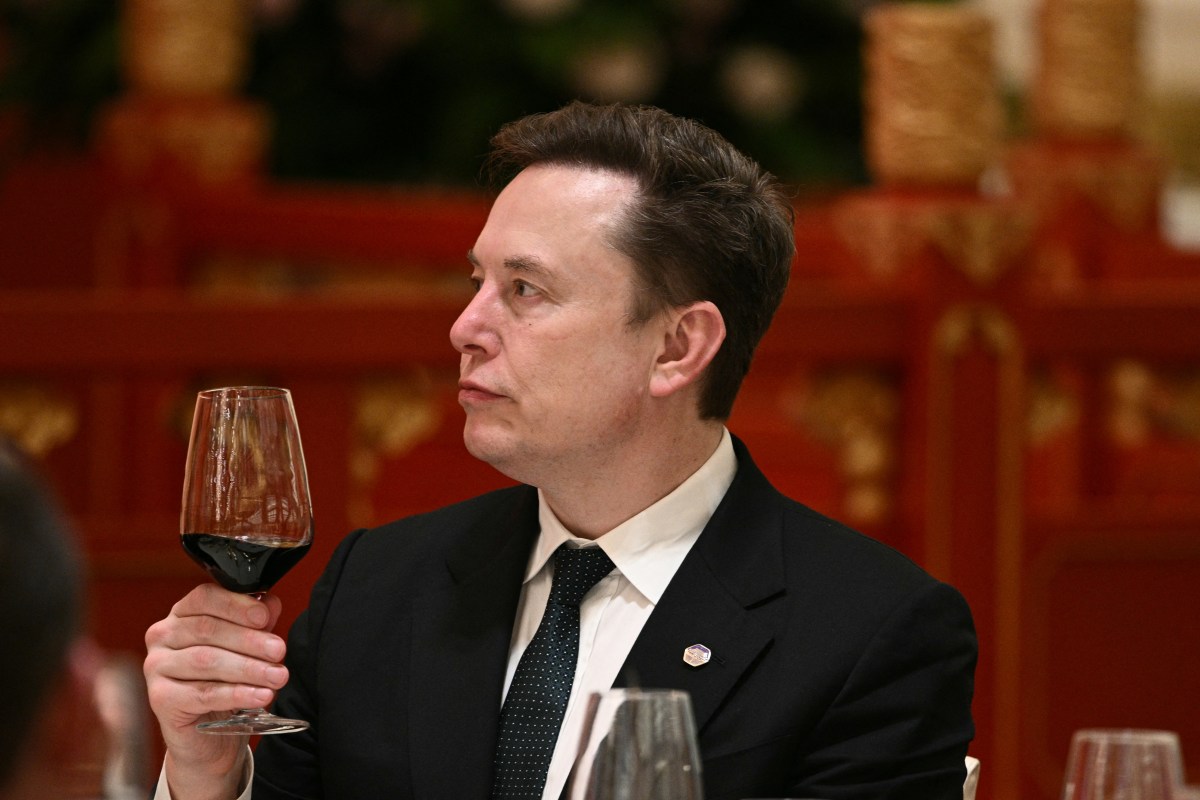
Has Elon Musk given up on Tesla’s master plan, the electrified economy, and solar power as we know it? SpaceX’s IPO filing released this week certainly seems to be the case.
To summarize for those not caught up in the Musk verse, Tesla has announced four master plans over the years, and while the details vary, the consistent line has been the electrification of the economy. Musk put it best in the first edition: “The Tesla Motor’s primary purpose…is to accelerate the transition from a hydrocarbon extraction and combustion economy to a solar power economy.”
But recently, one of Musk’s companies, xAI, has embraced a hydrocarbon economy of extraction and combustion, using dozens of unregulated natural gas turbines to power its data centers, and plans to buy another $2.8 billion, effectively reinforcing the role of fossil fuels in its AI business.
It’s a strange development for a businessman who built an empire on clean energy. He has no qualms about directing his companies to buy from each other. SpaceX spent $131 million on 1,279 Cybertrucks, and xAI spent $697 million on Tesla Megapacks over the past two years. This is a grid-scale battery storage system that the company uses to manage peak loads. But so far, xAI hasn’t bought many solar panels from Tesla.
It’s not that SpaceX’s application doesn’t include solar power, it’s just that it’s all focused on space, which the company is touting as the future of data center power. Ground-based solar power has gotten some mention, but it’s more of an indication that SpaceX is thinking about how good space-based solar power can be, rather than as a power source for xAI data centers.
It’s no secret that Musk and other Silicon Valley executives are obsessed with space solar power. SpaceX says space-based solar arrays can generate “more than five times the energy” of terrestrial solar arrays thanks to 24/7 lighting. As AI data centers face conflict here on Earth, CEOs like Musk have begun to consider installing large server racks in space to take advantage of 24/7 sunlight. Hammer, hit the nail.
Even if SpaceX were able to reduce the cost of putting a data center into orbit, the economics are tough. Power prices for Starlink satellites are many times higher than what ground-based data centers typically spend, and protecting chips from the rigors of space is neither easy nor cheap. It is also not clear whether AI training can be distributed across multiple satellites and a significant portion of the AI work can be confined to the ground. SpaceX has many problems to solve, not just one.
Perhaps Musk sees xAI’s current data center as a stopgap, and thinks that once SpaceX is able to launch gigawatts worth of servers into orbit (probably years from now, in his mind), he’ll scrap what’s on the ground, including the natural gas turbines, and never have to think about NIMBYs again. The risk, of course, is that he’s wrong.
But it’s not just NIMBYs that Musk is concerned about. He is clearly concerned that the computing demands from AI will quickly outstrip what we can provide on the planet. SEC filings are littered with references to “annual terawatt growth in AI computing,” and the power needed to match that. This is an impressive number considering that every data center in the world currently uses around 40 gigawatts.
This is Mr. Musk’s “first principles” philosophy in action. At one point, he thought the world would need an additional terawatt of computing each year, and worked backwards from there. “Third-party estimates of data center demand are constrained by actual supply constraints that exist in the terrestrial environment, and we believe power shortages may be much greater than research estimates,” the company claims.
Is it possible? I certainly think so. But consider that humans today use about 35,000 terawatt-hours of energy per year, or about 4 terawatts of energy on a continuous basis. Energy demand has increased recently and is likely in an exponential growth phase for AI, which could continue or level off. There’s no way to know right now, but if there’s one thing Musk is good at, it’s finding inflection points in trends and making bold guesses.
Here, Mr. Musk’s problem is resolved back on Earth. I’m no rocket scientist, but I suspect that transporting solar panels on flatbed trucks would use less energy than putting them into orbit. Furthermore, solar panels for space must be manufactured on an unprecedented scale. It’s not an insurmountable problem, but it can be a distraction. For example, we have done little damage to the potential of solar power here on Earth.
The perfect doesn’t necessarily have to be the enemy of the good. While we are chasing our dreams in the stars, there is a lot of room for improvement on this planet.
Exactly three years ago, Musk and his colleagues at Tesla released “Master Plan Part 3,” which thoughtfully outlined “a plan to phase out fossil fuels.” A good starting point might be an xAI data center.
If you buy through links in our articles, we may earn a small commission. This does not affect editorial independence.
Source link

