
European breakthrough to reverse paralysis after spinal cord injury
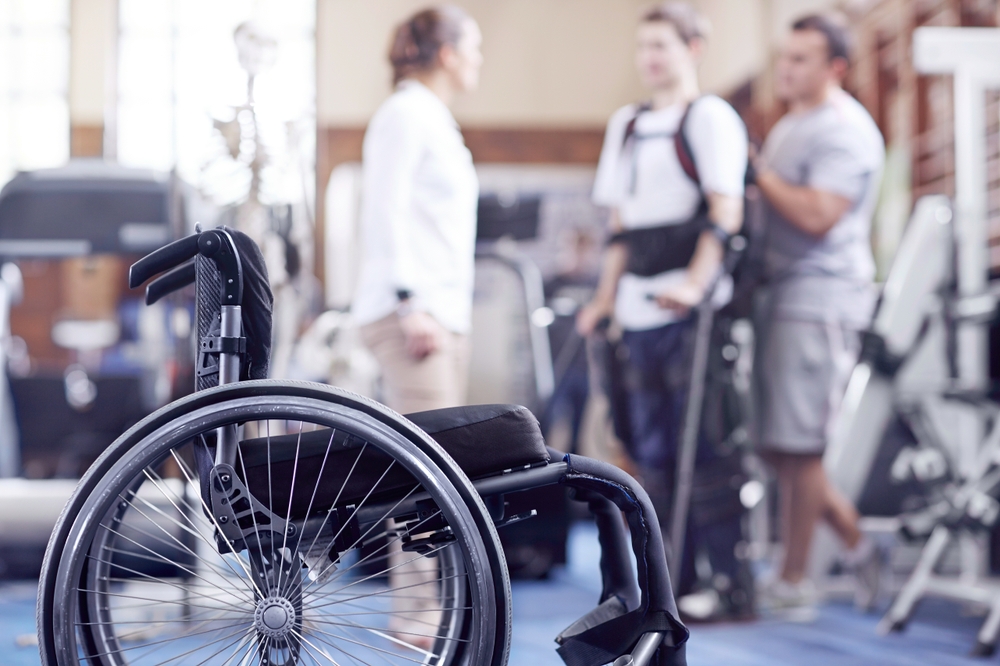
Once thought impossible, restoring movement after paralysis is becoming a reality thanks to EU-funded researchers who have developed a device to reconnect the brain to the body.
Spinal cord injury (SCI) remains one of the most devastating neurological diseases, disrupting communication between the brain and the body and leaving millions of people around the world permanently paralyzed.
Despite decades of research, motor recovery after spinal cord injury remains one of neuroscience’s most difficult problems.
An EU-funded initiative supported by the European Innovation Council offers a new avenue for a fully implantable brain-spine interface to reconnect mind and body and bring new hope against paralysis.
“Treatment of paralyzed patients remains one of humanity’s greatest challenges,” said Professor Grégoire Courtine, a neuroscientist at the Swiss Federal Institute of Technology Lausanne who led the groundbreaking study.
He said researchers have been trying for decades to regrow neurons and fibers using biological approaches, but have been unsuccessful.
“We have completely changed our approach. Rather than trying to repair the actual damage, we are focusing on what lies beneath the damage, intact but disconnected from the brain,” added Corteen, who has pioneered a new method of restoring movement after paralysis using spinal stimulation and neurotechnology.
Digital bridge to overcome injuries
The EU-funded ReverseParaosis project is built around research led by Courtine and has developed a new generation of brain-spine interfaces designed to restore function to both the lower and upper limbs of people living with SCI.
The system creates a “digital bridge” that directly links signals in the brain and spinal cord, rather than relying on damaged neural pathways. By combining advances in neuroscience, bioengineering and AI by teams in the Netherlands, Switzerland and France, this technology bypasses the site of injury and allows nerve transmission to resume.
After SCI, motor signals from the brain no longer reach the muscles. In this approach, a small implant reads signals from the brain’s motor cortex, converts them into commands, and relays them to a spinal implant located below the injury.
This delivers precise electrical stimulation to the nerves that control your muscles, causing your legs to move when you think of “walking.”
Until recently, most technologies focused on helping people adapt to paralysis, such as wheelchairs, walkers, and exoskeletons, rather than restoring movement itself.
From breakthrough to first step
Under the care of neurosurgeon Dr. Jocelyn Block at Lausanne University Hospital, the first patient to receive the prototype implant was sports education student David Musee, who was paralyzed in a gymnastics accident.
Ahead of his surgery, he was competing in the Wheelchair Rugby World Cup. Koteen attended the game with his newborn daughter.
“David looked her straight in the eye and said, ‘I’m going to walk in front of you,'” Corteen said. “Eight months later, on a beautiful day on Lake Geneva, he did just that. He took the first step in the history of paralysis. It was a very, very special moment.”
Not only did Mzee learn to stand and walk with support, she also qualified as a sports teacher and now works at a vocational school.
“I’m still wheelchair dependent, but I have a spinal cord injury at neck level, so small improvements make a big difference. It’s really important to gradually regain function,” Muse said.
Building on this breakthrough, the three-year ReverseParaosis project, completed in 2025, achieved results once thought to be out of reach. Two people with complete spinal cord injuries have regained the ability to stand and walk, and two others have regained arm and hand movement and are able to resume daily activities.
Dr. Vincent Delattre, co-founder of ONWARD Medical, a neurotechnology company based in Eindhoven, Netherlands, who coordinated the ReverseParaosis project, is now working on turning the results of these experiments into products for clinical use.
“One of the participants was able to eat something by himself for the first time in years,” he said. “He picked up a sausage and took a bite. Seeing the smile on that person’s face is enough to motivate us to do whatever we do.”
relearning movements
For people living with spinal cord injuries, even small improvements in mobility can change daily life, reduce dependence on caregivers, and restore a sense of independence.
However, SCI is extremely complex. The location and severity of injuries vary, making it difficult to accurately decipher brain signals and translate them into smooth, natural movements. Each success also revealed how much there is still to understand about relearning lost skills.
To address this, the ReverseParaosis team has integrated machine learning algorithms that adapt to individual users. These systems continually improve how they interpret brain signals, improving performance over time. Advances in electrode design have also made it possible to precisely target nerve pathways within the spinal cord.
“This is not a cure. It is the first step in the recovery process,” Delatorre said. “With intensive training, patients can improve and even regain some function without stimulation.”
Broadening the horizons of spinal cord injury recovery
The team is now applying its expertise to other challenges related to paralysis. One focus is stabilizing blood pressure, a common but often overlooked complication of SCI that can cause dizziness and fatigue and reduce quality of life.
Researchers aim to use targeted spinal stimulation to help patients sit upright longer, participate in treatment, and carry out daily activities more safely.
This technology could also benefit stroke survivors. A stroke does not damage the spinal cord, but it destroys the brain’s ability to control movement. The goal is to strengthen and stabilize the remaining signals and restore function.
ONWARD Medical’s next challenge is to transform specialized testing systems into practical self-contained devices that can be widely used in clinical settings. Making this technology available to more patients could still be five to 10 years away.
As Delattre says, the limits of recovery after SCI are changing. “We are pushing the boundaries of what was previously thought possible.”
This article was originally published in Horizon, EU Research and Innovation Magazine.
The research for this article was funded by the European Innovation Council (EIC).
Source link

