
How PySAF turns biocrude oil into sustainable aviation fuel
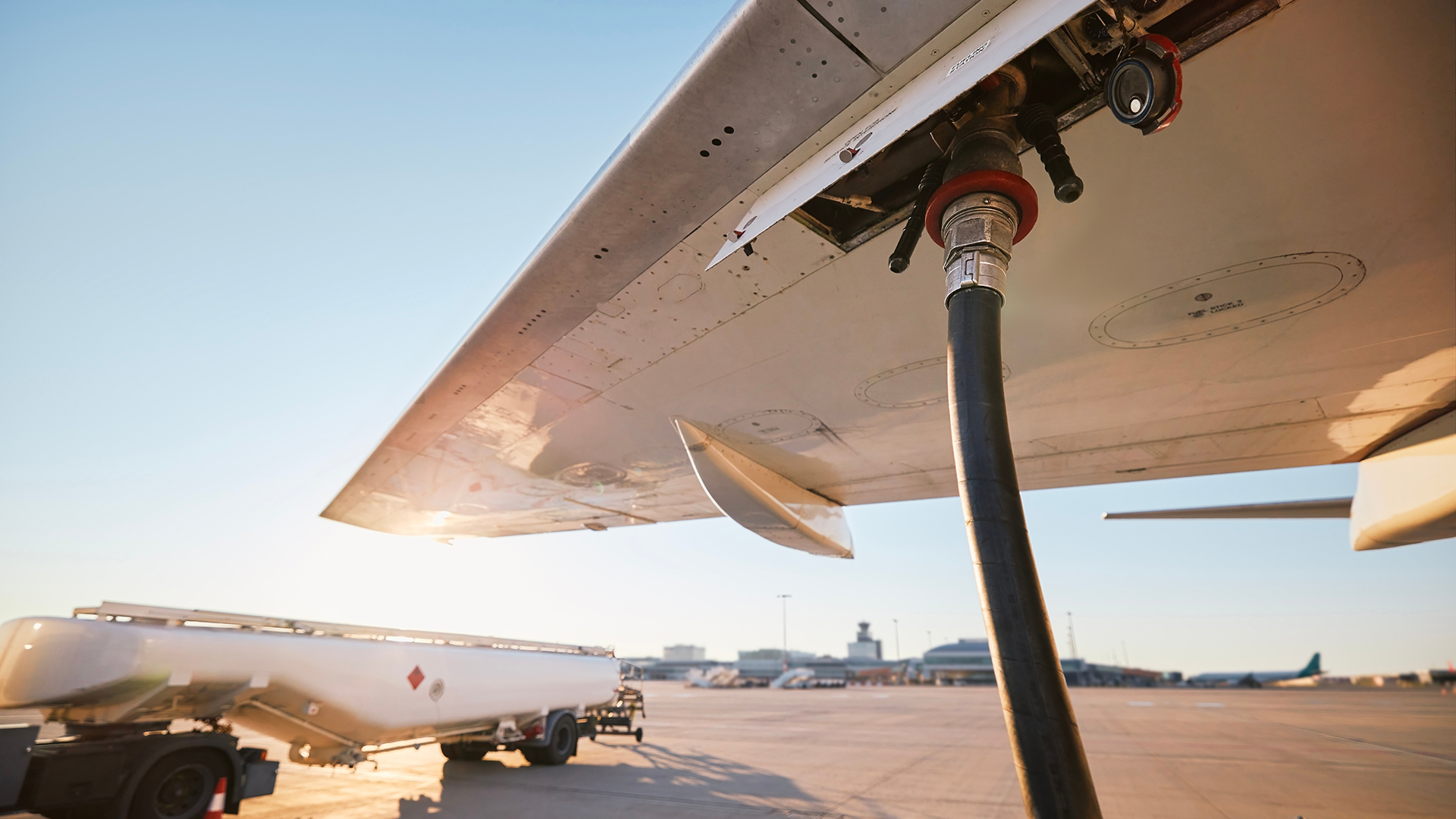
Aircraft emit approximately 1 billion tons of CO₂ every year. A promising sustainable aviation fuel feedstock has sat largely unused in drums for decades.
Flights account for approximately 2.5% of global CO₂ emissions. This number sounds modest until you consider all the climate impacts of aviation at altitude. Due to contrails, nitrogen oxide effects, and other non-CO₂ warming effects, the net climate impact of aviation is approximately two to three times greater than the CO₂ contribution alone. Unlike road transport, aviation cannot wait for batteries. The energy density required to lift a fully loaded aircraft is not compatible with electrochemical storage technology within a commercially realistic time frame. That leaves one serious short-term option. It’s sustainable aviation fuel.
The SAF market is growing rapidly, but not fast enough. Global production will reach about 1 million tons in 2024, doubling from the previous year, with demand fixed by obligations. The UK has mandated a 10% SAF mix by 2030, rising to 22% by 2040. For UK airlines alone, this means they will procure more than 1 billion liters of SAF a year by the end of this decade, much of it with no confirmed domestic sources. The EU’s ReFuelEU aviation regulation sets similar, and in later years even higher, blending obligations across its 27 member states. Market analysts expect the global SAF opportunity to be worth $15 billion to $20 billion annually by 2030. However, current production covers less than 0.5% of jet fuel demand, and the main route, hydrotreated used cooking oil, is nearing the limit of its feedstock. The supply gap is structural, not temporary.
Raw materials that are visible to the naked eye
The UK has significant biomass resources, including agricultural and forestry residues, energy crops and organic waste representing tens of millions of tonnes of dry biomass per year, as reflected in the UK’s 2023 Biomass Strategy Scenario. Currently, much of it is used for low-value heat production or left as field residue. Fast pyrolysis, a thermochemical process that rapidly heats biomass in the absence of oxygen, can convert this material into a liquid intermediate in seconds. This technology is mature and commercially available today.
The liquid, fast pyrolysis biocrude it produces is dark, pungent, and chemically complex. Worldwide, hundreds of thousands of tonnes are produced annually from a small number of commercial plants, primarily for use in industrial heat, co-firing in power plants, or as a raw material for smoke flavorings and wood preservatives. It has never reached its full potential as a SAF precursor. It’s not because the energy isn’t there, it’s because no one has found a clean way to extract it.

20 years until this moment
Dr. Sanjeev Gajjela first began researching fast pyrolysis biocrude oil as a doctoral student at Mississippi State University. He spent the next 20 years developing biocrude upgrading processes across industry and academia, amassing approximately 40 patent applications in the process. The photo provided in this article was taken at a commercial toll plaza in South Carolina, USA, where biocrude upgrading work was being done under contract during an early industry study. This effort, and 20 years of similar work, has led to the construction of the PySAF separation platform.
The sample in the vial he holds is an upgraded fast pyrolysis bio-crude oil labeled for shipping, the same substance contained in the drum behind him. Since then, he has continued to strive to unlock that potential.
When he founded PySAF Ltd in late 2025, the underlying question was one that had dogged him throughout his career. The question was, why is this raw material still being wasted?
isolate the problem
The answer developed by PySAF is a proprietary fractionation process that splits the fast pyrolysis biocrude into two distinct streams before further upgrades occur.
The first, PyXCrude™, concentrates the lipophilic and phenolic fractions into a material with significantly improved fuel properties. The moisture content is less than 1%, the metal removal rate is 97% compared to raw biocrude oil, and the calorific value is approximately 30 MJ/kg. It is designed for catalytic hydroprocessing to produce SAF blendstock and is also compatible with co-processing in existing oil refineries. The second stream, PyXSugra™, captures approximately 97 grams of aqueous carbohydrate fraction per liter of fermentable C5 and C6 sugars, paving the way for biohydrogen, biomethane, and biobased chemicals.
Traditional attempts to upgrade whole fast pyrolysis biocrude oils have directly faced a consistent set of obstacles. That is, high water content dilutes the organic fraction, elevated metal concentrations promote catalyst poisoning, and chemically incompatible species cause phase instability under hydroprocessing conditions. This results in high hydrogen consumption, rapid catalyst deactivation, and low fuel yield. PyXCrude avoids these problems by reaching a hydrotreater that is already dehydrated, demetalized, and chemically concentrated. Hydrogen consumption is reduced, catalyst life is extended, and the yield of usable fuel product is increased. The splitting step does the heavy lifting before the upgrade begins.
By separating before upgrading, PySAF avoids a central technical problem that hampered previous approaches: chemically incompatible parts interfering with each other during transformation. Each stream then goes through the chemical reaction most appropriate to it.
The process reached Technology Readiness Level 5 in January 2026 and sample materials are now being provided to external partners under formal material transfer agreements. The technology has attracted inbound interest from major energy companies and is being evaluated by academic and industry partners in the UK and Europe.
Unlike most energy transition companies, PySAF does not need to build any major production infrastructure. This separation technology will be integrated directly into the existing biomass supply chain, reducing both capital requirements and time to first revenue, with modular separation units designed to be deployed alongside the UK’s existing biomass infrastructure.
A seed funding round has now been launched to fund the establishment of the UK laboratory and initial co-development agreements. The 2027 Series A will fund the first modular separation unit at pilot scale.
The drum of black liquid in that photo is not waste. They never were. PySAF Ltd is currently raising a seed round to prove it.
Please note: This is a commercial profile
This article will also be published in the quarterly magazine issue 26.
Source link

