
Is your teen talking to chatbots too much? Here’s what to do.
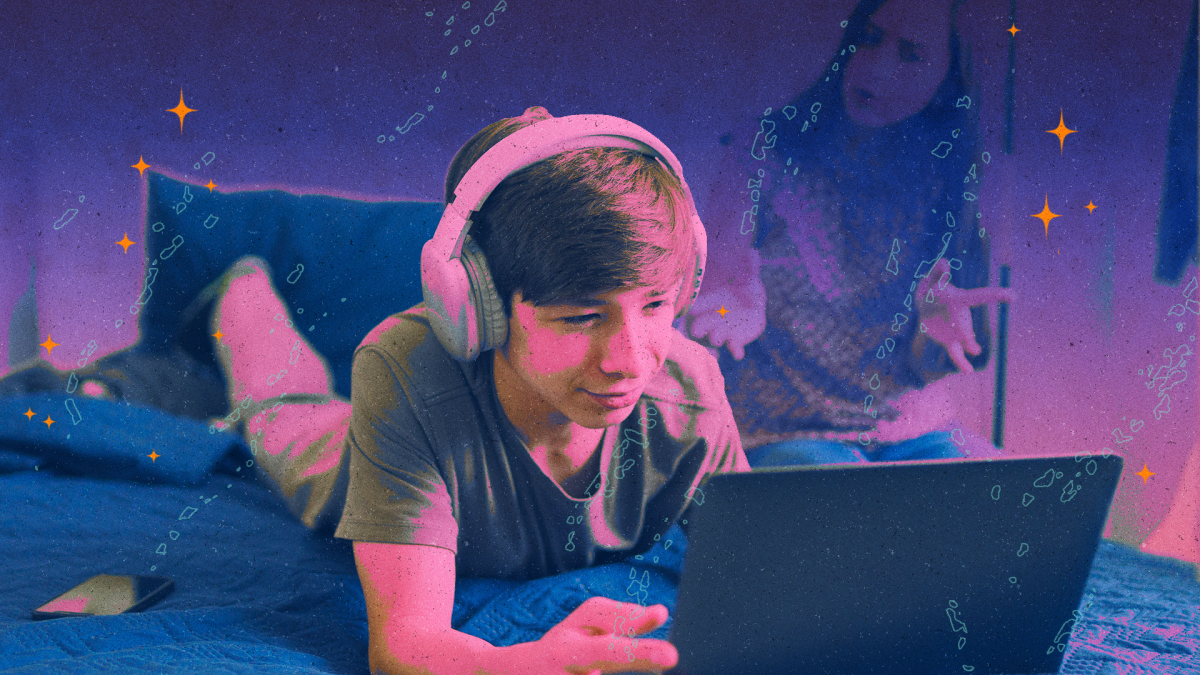
Dr. Matthew Leahy, a licensed psychologist, treats young people who have developed deep relationships with artificially intelligent chatbots and are no longer able to confide in their parents.
In some cases, parents are shocked to learn that chatbots have dramatically captivated their children. In another case, parents sought out Leahy at the Momentus Institute, a mental health provider in Dallas, precisely because they knew the extent of their child’s relationship with chatbots and wanted to help restore their child’s confidence.
Why Friction Maximization is a Good Technology to Use
Intense relationships with chatbots can have dire mental health consequences for adolescents who become isolated, develop romantic relationships with chatbots, and routinely consult chatbots instead of humans about things. Last fall, child experts declared AI chatbots unsafe for teen mental health.
“When you’re talking into a computer as opposed to your co-workers, especially your parents, that’s when things start to get confusing really quickly,” Leahy says.
If parents are aware of their reliance on chatbots and work on it with their children, the impact can be short-lived, Leahy says. the goal? Rebuild a relationship of trust that convinces the child that their parents are willing to guide them in any way.
How often do teenagers talk to chatbots?
Leahy’s anecdotal observations about chatbot relationships in childhood and adolescence may seem like an outlier. But posts on Reddit by concerned parents who have had similar experiences suggest the phenomenon is not unique to Leahy’s office.
Recent survey data from the Girl Scouts of the United States (GSUSA) also shows widespread interest in AI assistants and chatbots, at least among girls.
Nearly half of the 1,000 girls aged 5 to 13 surveyed believe that AI is better than their parents when it comes to helping with homework. Sure, some parents might be relieved to let AI do the work, but they might be concerned to learn that 50% of respondents prefer AI for music, TV show, and movie recommendations.
The beginning of intimacy with chatbots
If tutoring and entertainment suggestions lay the foundation for a child-chatbot relationship, asking more sensitive questions could deepen the relationship. Half of the 11- to 13-year-old girls surveyed said they had asked AI for help when they felt sad, anxious, or lonely.
The survey of girls and their parents also showed that parents significantly underestimate how often their children talk to chatbots. Half of the girls said they used AI once a day, but only a third of parents believed their child would use AI that often.
Sarah Keating, vice president of girls and volunteer experiences at GSUSA, told Mashable that research data proves that girls turn to AI chatbots and advice apps to help them deal with topics that are difficult to discuss with their parents, or to try to understand questions their parents may not be able to answer.
“The takeaway from this for me is that it’s all about reopening the lines of communication,” said Sarah Keating, vice president of Girl Experience at GSUSA.
Get your kids to open up to you, not a chatbot
When Ms. Leahy works with parents, she plans strategies to help them do just that.
But first, they must convince skeptical parents that there is even a problem with the relationship between their children and chatbots. Parents may think it’s just fun or educational and not dangerous at all.
Mashable Trend Report
To reframe their thinking, Leahy closed the laptop, pointed to it, and said, “It’s your child’s best friend now.” Leahy said she watches parents’ faces change in real time as they register the alarm.
The importance of one-on-one time
Leahy’s approach to helping parents rebuild relationships with their children varies depending on the situation.
Some parents are starting from scratch. For some, the once-close bond they had with their children has weakened through adolescence and the use of chatbots.
Either way, it’s important for parents to intentionally set aside one-on-one time with their children. One of the fathers he works with is playing catch with his son. Another parent has a stand-up boba date with their child.
Leahy says parents shouldn’t start by asking their children deep questions. The point of these experiences is to build trust. Therefore, parents should stay present instead of being distracted by their mobile phones. The foundation laid in that moment will eventually give way to conversations about their lives over the course of weeks and months.
Be curious instead of giving advice or judgment
This is where things get tricky, Leahy says. When adolescents open up, they may share things that make their parents uncomfortable. In contrast, chatbots are unlikely to respond in the same way.
“Emotions can run high, especially if you’re not used to having these conversations,” he says. “You may be disappointed by what you hear. You may quickly become angry about what you hear. That’s the challenge.”
To pass this test, Leahy recommends listening with curiosity rather than giving advice. It takes time and effort to hone that skill, but the rewards are invaluable because it proves trustworthiness, Leahy says.
That doesn’t mean parents should silence concerns about safety or behavior. Instead, Leahy suggests revisiting those issues and encouraging kids to collaborate and discuss them.
Don’t expect them to abandon chatbots anytime soon
In Leahy’s experience, it takes time for teens to reset their use of chatbots. While you may still be “enthusiastic” at first, Leahy typically recommends scaling back gradually. Parents can consider limiting the amount of time their children spend on devices.
Leahy isn’t necessarily worried about teenagers spending 30 minutes talking to a chatbot and then returning to their normal activities. That may be the sweet spot for engagement, he notes.
The important thing is that parents need to keep their children engaged in face-to-face activities such as sports or social activities so that chatbots can’t easily steal their attention. These experiences also help build confidence in a way that chatbots cannot.
It’s normal for teens to not tell their parents everything.
Dr. Dana Susskind, a pediatrician and child development expert who studies how language and social connections shape the developing brain, says teens typically seek advice from non-parental sources, such as peers, trusted adults, or the Internet.
The challenge with chatbots, she explains, is that they are very effective at building intimacy and attachment, which replaces human relationships.
Susskind encourages parents to think carefully about AI technology, especially for their children, and consider questions such as what the product is designed to do, whether and how it will interact with them and their child.
“This is a slippery slope problem because these technologies… are involved in our social aspects,” says Susskind, author of the forthcoming book Human Raised: Nurturing Connection, Curiosity, and Lifelong Learning in the Age of AI.
Red flags to watch out for
Leahy says parents should be concerned and consider consulting a mental health professional in the following situations:
Children under the age of 12 using chatbots for personal conversations.
If using a chatbot takes up a lot of your time and replaces other healthy activities like socializing, exercising, and sleeping.
Ongoing chatbot consultation, including basic decision-making.
When a child anthropomorphizes a chatbot so that it appears to be a real person, or when they believe they are talking to an intelligent being.
Regular sexual role play using chatbots.
Developmental disorders that can put children at risk for addiction, such as attention-deficit/hyperactivity disorder and autism spectrum disorder.
Leahy is optimistic that with the proper investment of time and energy, parents can guide their children and repair the relationship.
“A repaired relationship is one in which the parent feels they have their child back, and the child feels that the parent has their back,” Leahy says.
Source link

