
USMNT World Cup buzz is turning casual soccer fans into believers
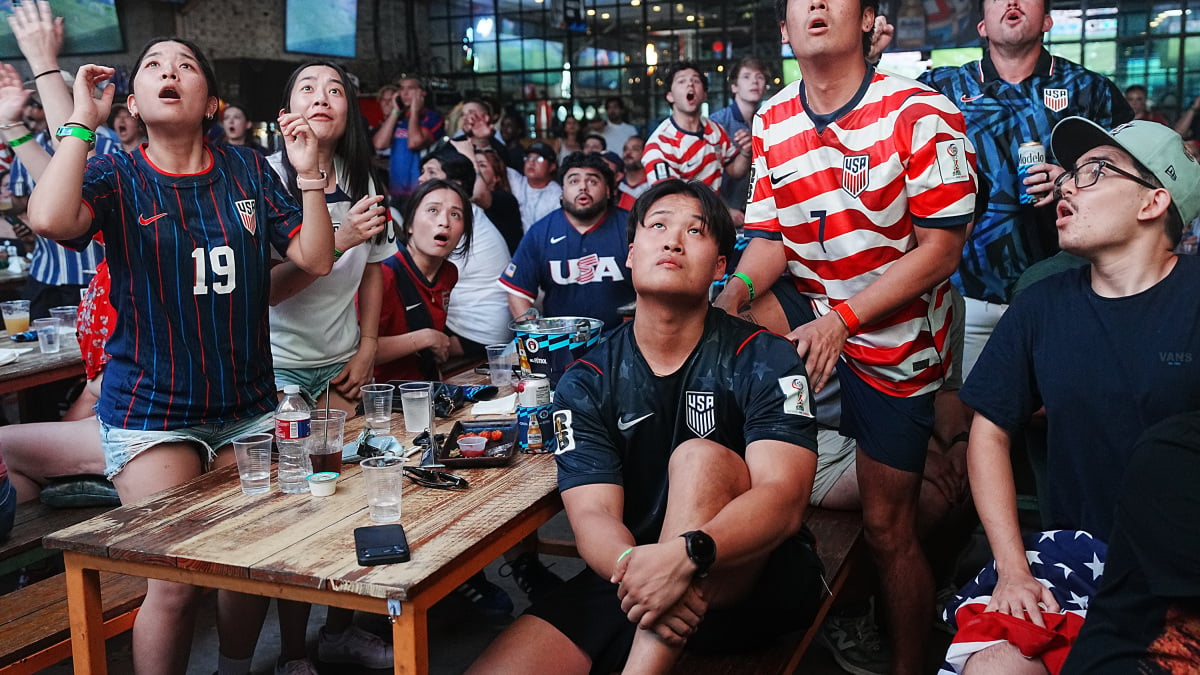
In the United States, football games are held on Monday nights in mid-July. However, this time I don’t have a helmet.
Tonight, the U.S. men’s national team will face Belgium in a prime-time World Cup final. Advancement to the quarterfinals is at stake, and this is a team that the country really wants to support.
This is not the norm, at least not in the US. For decades, U.S. soccer has been treated as the next big thing that will never take hold. When the World Cup arrives, casual fans tune in and the conversation builds up for a few weeks, before typically returning to the regular rotation of football, basketball, baseball, and whatever scandals people talk about.
However, this tournament was different. America’s season opener against Paraguay drew an average of 18 million viewers across FOX’s platforms, with an additional 7 million viewers on Spanish-language Telemundo. FIFA also announced that attendance exceeded 3.6 million people in the first two weeks of the tournament, breaking the record set in 1994, the last time the men’s World Cup was held in the United States. So if soccer has been trying to prove that it deserves to be talked about in American sports, this tournament is making a pretty strong case for it.
This Tweet is currently unavailable. It may be loading or it may have been deleted.
This Tweet is currently unavailable. It may be loading or it may have been deleted.
This Tweet is currently unavailable. It may be loading or it may have been deleted.
This Tweet is currently unavailable. It may be loading or it may have been deleted.
This Tweet is currently unavailable. It may be loading or it may have been deleted.
Part of the conversation is in logistics. The match is being played on American soil, in the American time zone. In other words, the American team isn’t asking the average fan to wake up at 5 a.m. and plan their day around a game played on the other side of the world. Prime time games are an easy sell. You can watch it the same way Americans already watch big sporting events: at a bar, at home, in a group chat, after work.
Part of it is timing. The United States reached this stage during a summer already wrapped in red, white and blue, as the nation celebrated its 250th anniversary and the host city turned World Cup games into something like an extended weekend of Independence Day. Across America, this sight is hard to miss. There were packed fan zones, pop-up shops selling soccer equipment, viewing parties in parks, shopping centers and museums, and U.S. fans wearing jerseys, flags and face paint.
This Tweet is currently unavailable. It may be loading or it may have been deleted.
This Tweet is currently unavailable. It may be loading or it may have been deleted.
This Tweet is currently unavailable. It may be loading or it may have been deleted.
There’s also the fact that the American team gave people a reason to keep paying attention.
Mashable Trend Report
Striker Folarin Balogun is the centerpiece, giving the United States a scoring threat unlike anything they’ve seen before on the World Cup stage. But everyone from Christian Pulisic to Chris Richards to Weston McKennie is one of the clearest examples of modern American soccer.
This Tweet is currently unavailable. It may be loading or it may have been deleted.
This Tweet is currently unavailable. It may be loading or it may have been deleted.
This Tweet is currently unavailable. It may be loading or it may have been deleted.
Additionally, players such as Tim Ware, Sergiño Dest and Malik Tillman reflect an American program that has built multiple pipelines at once: players developed overseas, players with immigrant family ties, players eligible for multiple national teams, and players formed through European club soccer, MLS academies, and the American youth system. Some could have represented other countries and chose the United States instead. For casual fans, it makes it easier to follow the team.
And there is controversy. Because nothing draws Americans to a sporting event faster than a good scandal.
During the United States’ 2-0 win over Bosnia and Herzegovina, Balogun was sent off the pitch following a VAR review for a challenge on defender Tarik Muharemovic. The red card initially meant he would miss the game against Belgium, leaving the United States’ top scorer out of the biggest game of the tournament. FIFA then reversed course after a conversation between President Trump and FIFA President Gianni Infantino.
This Tweet is currently unavailable. It may be loading or it may have been deleted.
Although the red card itself was not erased, FIFA suspended Balogun’s one-match suspension and allowed him to play in the Round of 16. The decision was reportedly made after President Trump called FIFA president Gianni Infantino and asked him to review the play, saying he did not think it was a foul. This decision is controversial and has sparked debate on the internet.
This Tweet is currently unavailable. It may be loading or it may have been deleted.
This Tweet is currently unavailable. It may be loading or it may have been deleted.
This Tweet is currently unavailable. It may be loading or it may have been deleted.
This Tweet is currently unavailable. It may be loading or it may have been deleted.
This Tweet is currently unavailable. It may be loading or it may have been deleted.
The gambling market is also moving. Sportsbooks saw unusually high activity around U.S. games, with games involving the USMNT receiving far more attention than other World Cup games played on the same day. While the amount of wagers doesn’t prove a long-term fan base, it does indicate that the U.S. team has moved from a background program to one that people actively follow as part of the broader U.S. sports calendar.
But the growing interest in the sport didn’t start with this match or the World Cup as a whole. According to Nielsen research, the North American soccer fan base has grown by 10.9% over the past five years to more than 136 million people. According to the report, the United States currently has the fourth largest soccer fan base in the world, with 62.5 million followers. The tournament has steadily increased interest, with nearly seven in 10 North American fans saying their appeal to the sport has increased over the past three years as the World Cup approaches, and 64% expect interest to increase further.
Local youth soccer clubs are reporting new members and renewed interest from families during the competition period. Houston’s HTX Soccer announced that hundreds of kids have registered in recent weeks, and the increase in clubs has led to excitement for the World Cup. In Florida, the Tampa Bay Rowdies soccer team is using watch parties and youth assistance programs to create more lasting attention for the World Cup.
That still doesn’t mean soccer has overtaken soccer, basketball, and baseball in the United States. But it means this World Cup took place at a time when the sport was already gaining momentum. Lionel Messi’s move to Inter Miami also helped propel MLS further into the mainstream, adding to the celebrity and global attention that David Beckham has cultivated since becoming one of the club’s owners. MLS has grown to 30 teams in the United States and Canada. Broadcasts of the Premier League and La Liga have helped make the United States the largest overseas market for several major European leagues. Streaming, social media, the FIFA video game, and shows like Ted Lasso and Welcome to Wrexham have made the sport more accessible to American viewers who didn’t necessarily grow up watching it.
Once again, the problem with soccer in the United States is not whether it can get people interested. I feel like a lot of people are already doing that.
Topics
Fandom FIFA World Cup
Source link

