

simple facts
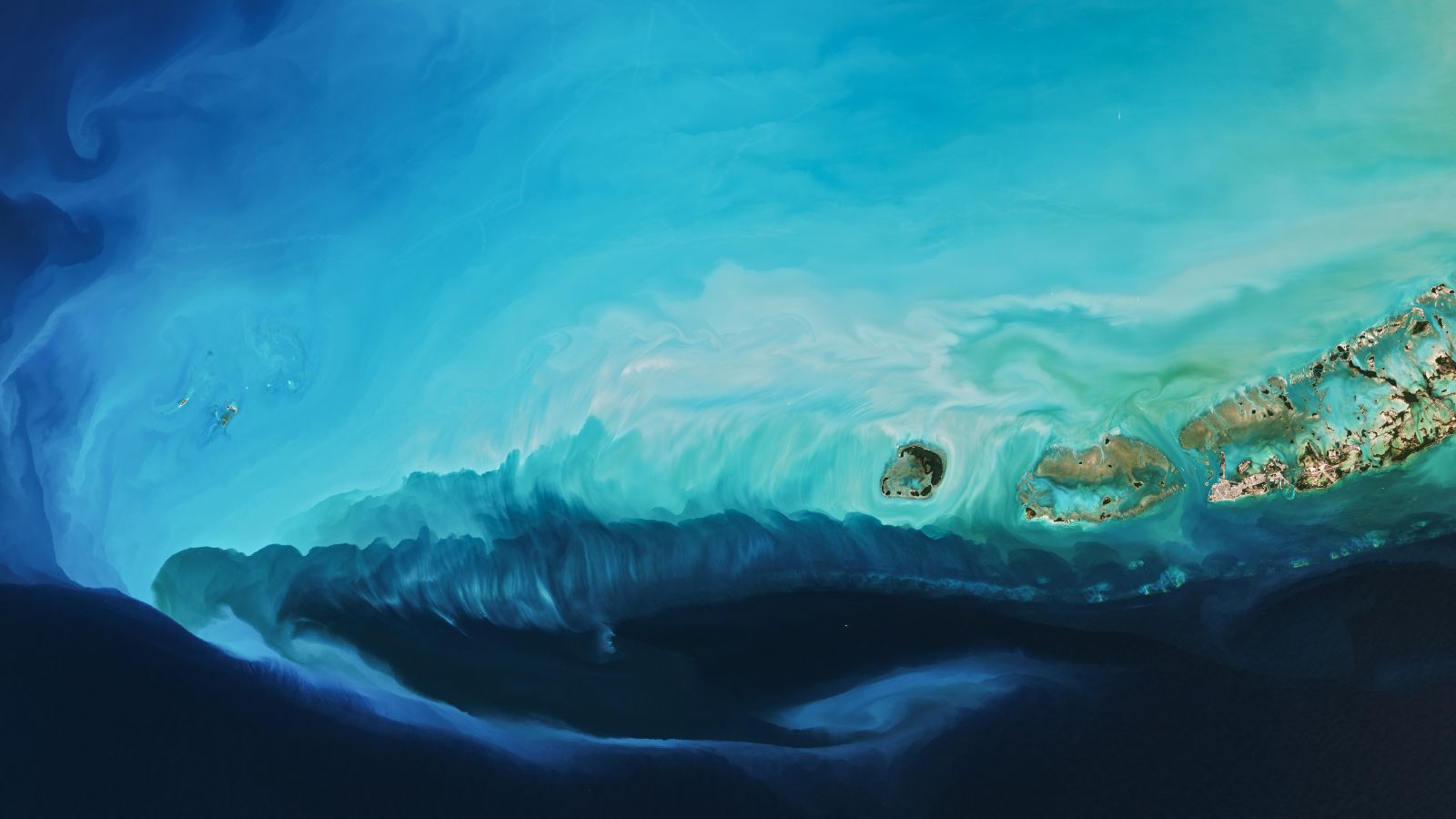
Where is it? Gulf of Mexico, off the Florida Keys [24.5786632, -82.52266106]
What is in the photo? Bright plumes of calcium carbonate-rich mud kicked up by cold winds
Which satellite took the photo? NASA’s Terra satellite
When was it taken? February 3, 2026
This striking satellite photo shows a bright plume of swirling marine mud that was kicked up off the coast of Florida by the blast of cold air from the Arctic that brought severe winter weather to much of the United States earlier this year.
In late January, as it had nearly a year ago, an extreme cold front descended across the eastern half of North America as the polar vortex (the ring of cold air above the North Pole) extended southward.
The phenomenon, known as the Arctic Blast, brought temperatures as low as -43 degrees Fahrenheit (-42 degrees Celsius) to some parts of the Midwest, according to the National Weather Service’s Weather Prediction Center. There were also concerns that the trees might start exploding.
Article continues below
you may like
This weather front not only dumped snow as far south as Georgia, but also helped generate a huge underwater plume on the West Florida Shelf, a vast shoal created by the submerged continental shelf off Florida’s southwest coast.
According to NASA’s Earth Observatory, the plume was composed primarily of calcium carbonate scattered on the ocean floor, and at its widest point extended 150 miles (240 kilometers) from the coast, extending outward from Key West (partially visible as three large landmass on the right of the photo). It also extended approximately the same distance from north to south (beyond the border at the top of the photo).
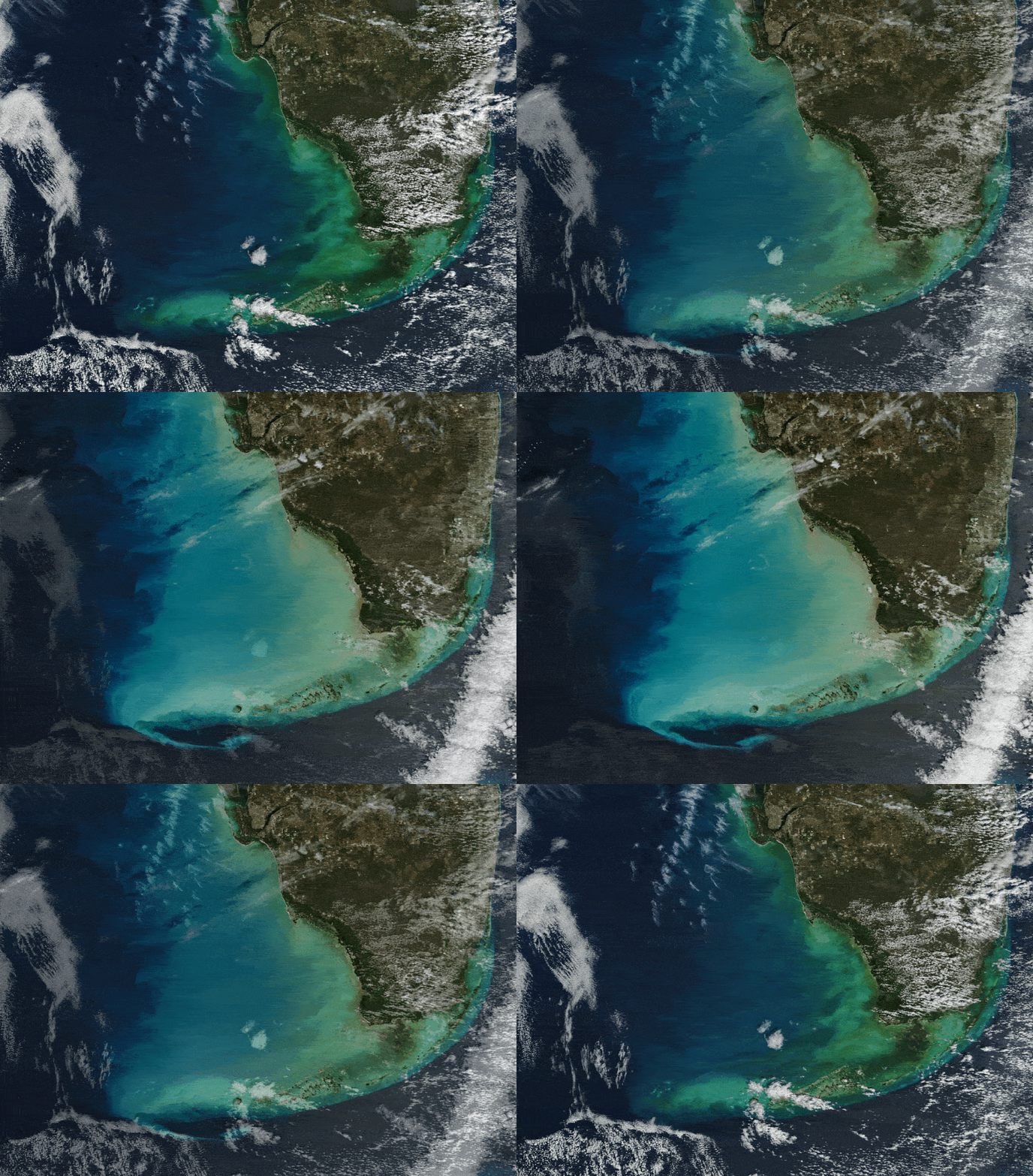
Calcium carbonate (CaCO3) is an inorganic compound. Although commonly found in rocks such as limestone, the swirls in the photo are made of biogenic CaCO3, produced by corals, algae, and crustaceans, and accumulates on the ocean floor when organisms die and fall to the ocean floor. The West Florida Shelf collects high levels of this material due to its shallow waters, resulting in what is often referred to as the “carbonate lamp.”
James Acker, a chemical oceanographer at the University of South Florida and NASA’s Goddard Earth Science Data and Information Services Center, told the Earth Observatory that when the cold Arctic air descended on North America, it triggered strong winds across the surface of the continental shelf, creating currents that dragged calcium carbonate and other seafloor sediments closer to the surface.
Similar plumes occur in this area after hurricanes, and they can also stir up sediment from the ocean floor. However, such plumes are often less complex than the one in this image, as the disturbance to the ocean floor is much more intense.
Recent research suggests that Arctic outbursts like this plume may become more common in the future as a result of human-induced climate change, increasing the likelihood that the polar vortex will extend southward. So we may see more seascapes like this in the coming decades.
hidden details
The plume is most concentrated in a line running directly between Key West and Dry Tortugas National Park, which consists of seven small islands (visible on the left side of the photo).
What to read next
Faint swirls of sediment can also be seen far from the coast. They include a rare pair of counter-rotating vortices, also known as “hammerhead vortices” (visible in the top left of the image), which were created when the cold water of the plume collided with the warm water of the Gulf of Mexico, according to the Earth Observatory.

This swirling sedimentation is also partly related to the cold weather. “The cold air cools the shallow water near the shore, making it denser than the surrounding warm open ocean water,” Acker said. As this dense water sinks and flows offshore with the tide, it could carry some of the sediment toward the edge of the shelf, he added.
In the opposite direction, a thin trail of sediment can be seen snaking beneath the plume, ending in a distinctive curl. This “loop current” formed when sediment-filled water spewed out into the deep waters of the Atlantic Ocean through hidden channels in the floor of the shelf.
According to the Earth Observatory, the last time such visible loop currents were seen in the region was in the aftermath of Hurricane Ian, which hit Cuba and then made landfall in Florida in 2022.
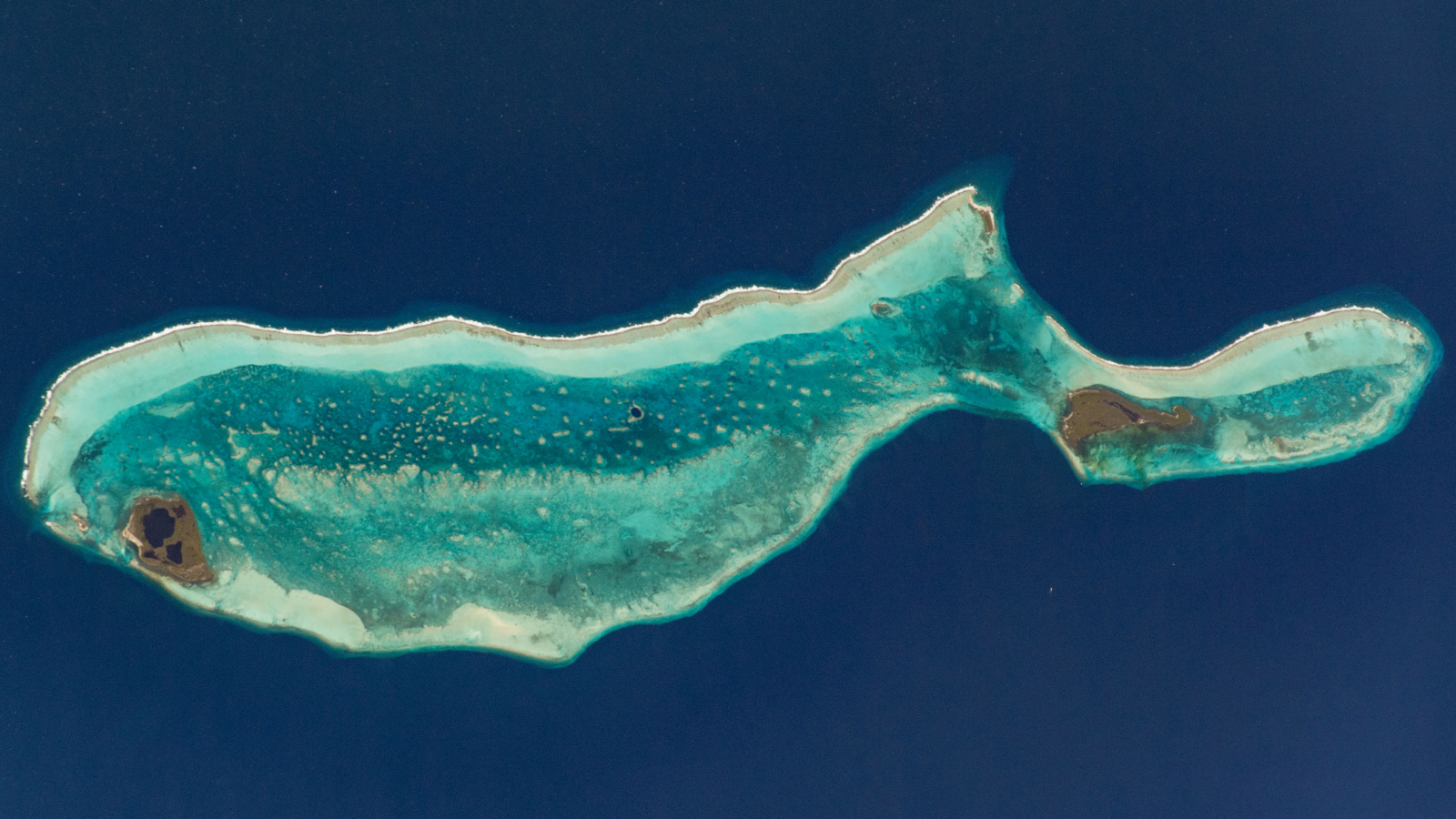
Belize’s whale-shaped island
A 2020 astronaut photo shows a rare whale-like shape at Belize’s Lighthouse Reef. It’s home to the famous Great Blue Hole, which doubles as the island’s “fumarole” when viewed from space.
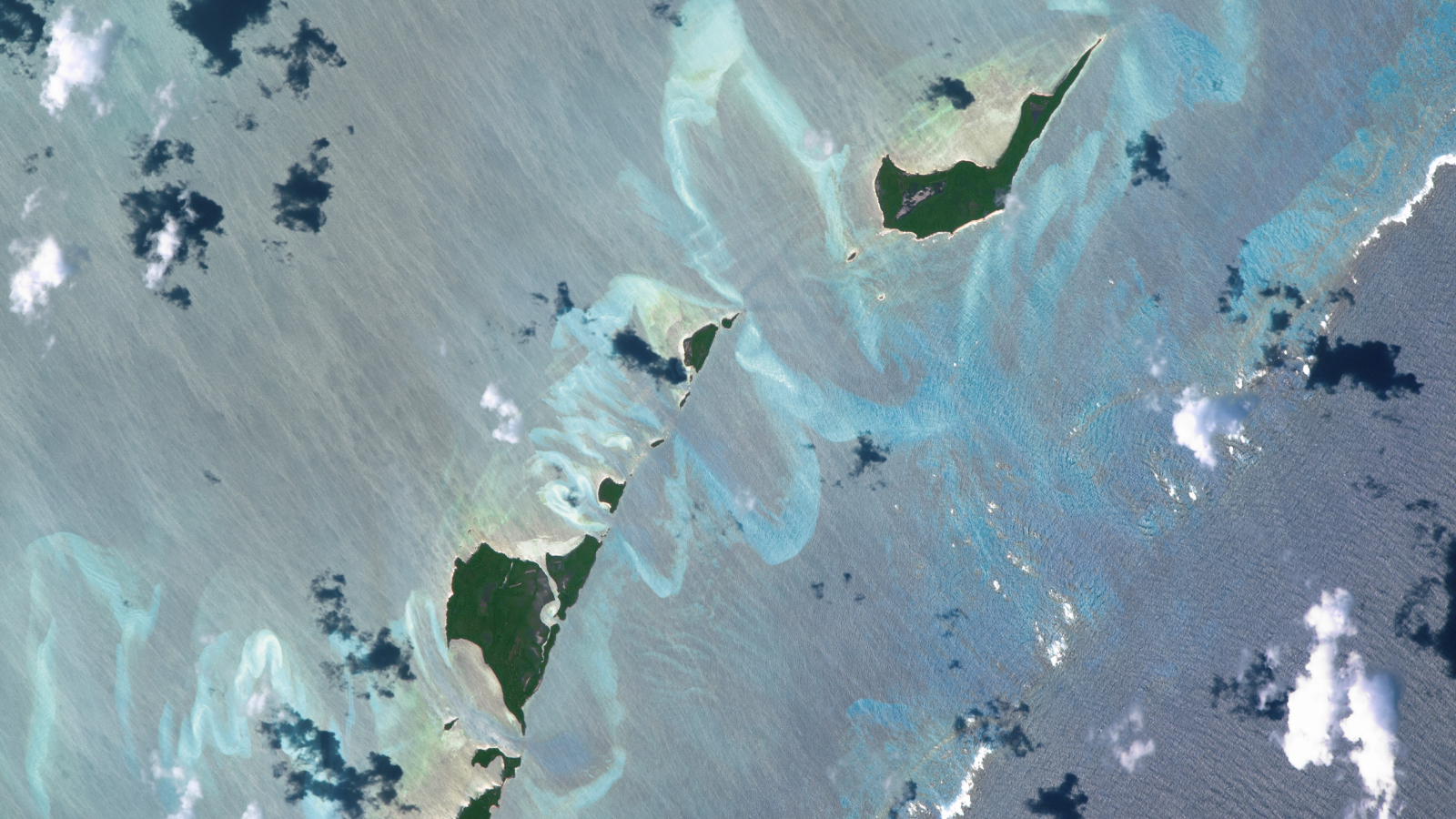
The sandbars of the Bahamas shine
Astronaut photos taken in the Bahamas in 2016 show a series of shimmering, rippling sandbars partially carved out by coral reefs. The image also reveals subtle differences in sea level caused by hidden steep ocean drops.

A trio of perfect islands off the coast of Australia
A 2011 astronaut photo shows the Raleigh Shoals atoll lined up in a near-perfect line off the coast of Australia. The three islands were once part of an ancient weir reef system that spanned more than 1,200 miles.
Source link
