

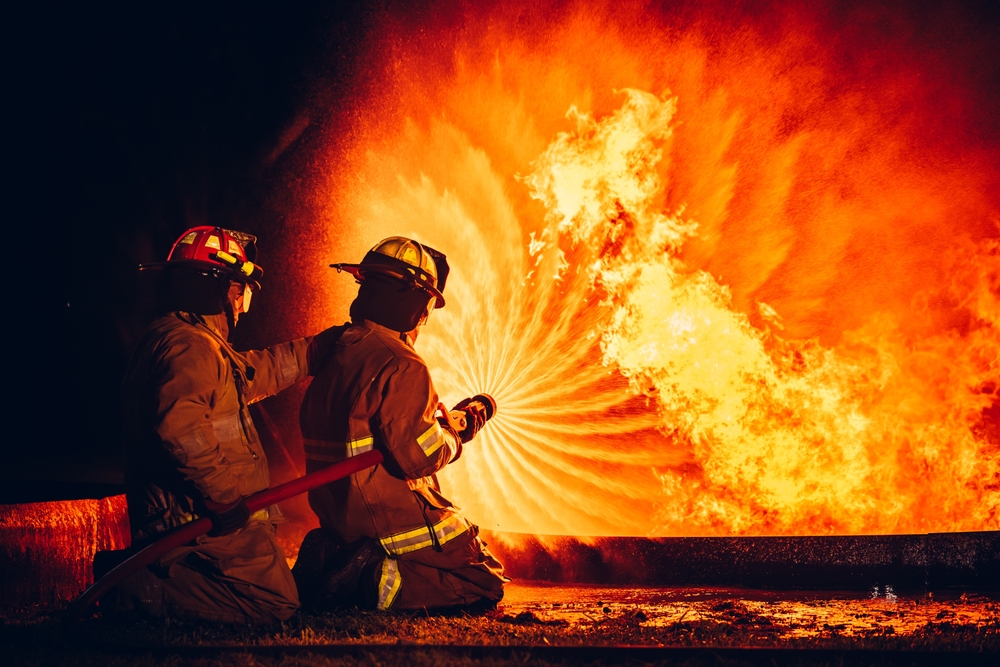
New scientific research reveals hidden dangers in firefighters’ equipment that remain long after the blaze is extinguished.
Researchers at the University of Miami Miller School of Medicine identified the presence of cancer-related “permanent chemicals” in all protective equipment they tested, including respirators designed to provide clean air.
The findings raise urgent questions about the risks of long-term PFAS exposure within fire departments and highlight practical new ways for departments to identify contamination before it becomes a permanent health threat.
Silent threats hidden in protective gear
Firefighter gear is designed to withstand extreme heat and toxic fumes, but new research shows it can also harbor invisible contaminants.
Using a simple wipe-based screening method, scientists detected per- and polyfluoroalkyl substances (PFAS) in all equipment tested, including voting coats, pants, gloves, and even respiratory masks.
PFAS are synthetic chemicals valued for their heat resistance and durability. However, due to these same properties, they persist in the environment and the human body.
If it gets on firefighter equipment, it can remain on skin, fire stations, vehicles, homes, etc. for long periods of time.
Why PFAS matters to firefighters
Cancer remains the leading cause of firefighter fatalities, and exposure to PFAS has been linked to several forms of cancer.
This study highlights how routine firefighting operations, particularly incidents involving foam and complex chemical fires, can leave residue on the equipment they are intended to protect.
Surprisingly, PFAS were also found inside respiratory masks, which are normally thought to protect from contamination.
Concentrations measured on the surfaces of firefighters’ equipment reached high enough levels to raise concerns about cumulative exposure over decades of careers.
Practical tests with real-world impact
What makes this study unique is not just what it discovered, but how it discovered it. The wipe test uses a damp, non-destructive polypropylene wipe to sample high-contact areas of the gear.
The collected material is analyzed using advanced mass spectrometry to identify PFAS compounds.
This method does not damage fabrics or components, so fire departments can use it regularly without having to shut down the equipment.
This makes it a useful tool for day-to-day decision-making, especially after large fires and foam-heavy responses.
Improving firefighting equipment management methods
The findings are already reshaping the debate about how to handle fire equipment.
Wipe tests help departments determine when gear needs to be cleaned, how it should be bagged and transported, and which items need to be thoroughly decontaminated before reuse.
Rather than relying on guesswork, crew members can make decisions based on measurable contamination levels.
Researchers also modeled how surface PFAS on firefighting suits could lead to internal exposure.
Their analysis suggests that repeated encounters, even in small amounts, can accumulate in the body and contribute to long-term health risks.
Cultural change beyond the fireground
This research aligns with broader efforts to improve firefighter health through education, testing, and policy.
Research-related efforts have supported mobile cancer screening clinics, multilingual training programs, and improved decontamination operations.
Advocacy also played a role in promoting the Cancer Presumption Act, which provides financial and medical assistance to affected firefighters.
Aiming for safer firefighting equipment
As awareness increases, the focus is shifting from simply fighting the fire to managing what is left behind.
Regular inspections, smarter cleaning procedures, and informed handling of fire equipment can significantly reduce exposure to PFAS and other toxic substances.
By making invisible hazards visible, this research provides firefighters with new opportunities to protect their members not only during emergencies but throughout their careers.
Source link
