

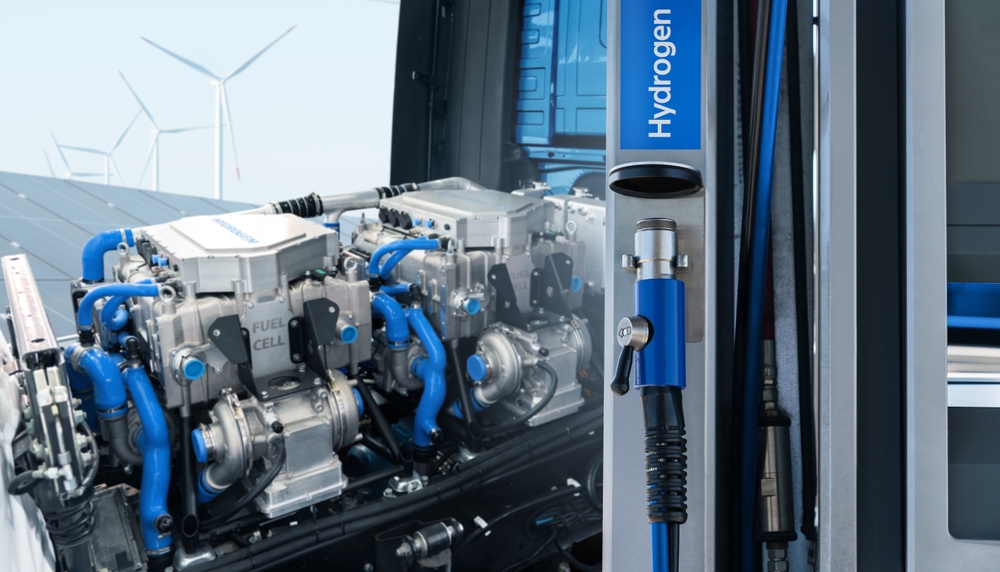
Back in February, Dr. Emma Guthrie was appointed CEO of the Hydrogen Energy Association. Here she examines a year of accelerated learning, constant collaboration and hard-won progress on hydrogen for the UK.
If there’s one message I’d like to emphasize after my first year as CEO of HEA, it’s this. Hydrogen in the UK is no longer the technology of tomorrow. It’s being delivered today.
Across our membership, we are seeing real projects move from feasibility to above-ground steel, refueling corridors taking shape, mobile supplies for construction, clean power for festivals and film sets, and the maturation of our first production plants.
But the second message is just as important. Delivering at scale depends on clear and confident policy and investment signals.
This means that if the UK wants to lead, it needs to move quickly from pilot to program.
So what does the UK national hydrogen situation currently look like? What has HEA been doing with its members to remove impediments to progress? And how can we translate that momentum into the market in 2026 and beyond?
Sectors leaving the laboratory
Visit the UK Hydrogen Projects Map to see a living tapestry of activity across the country, including production, distribution, end use and enabling technologies.
Among the member highlights demonstrating the breadth and practicality of what is happening are N-Gen Energy Solutions and Hygen Energy, who signed a Low Carbon Hydrogen Agreement with the UK Government in July 2025, agreeing to build a new hydrogen production and refueling facility on the former Berkshire Gas Holder site in Bradford.
The project will start producing 12.5 tons of hydrogen daily from early 2028. This is enough to power 800 buses.
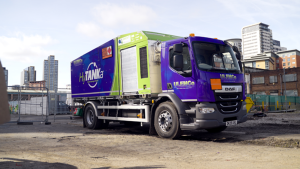
We will also highlight ULEMCo’s HyTANKa, a mobile hydrogen supply and refueling vehicle designed to support the decarbonization of construction and other off-grid sectors.
The platform enables flexible and autonomous refueling of hydrogen equipment, addressing one of the biggest barriers to decarbonizing the construction industry: access to on-site refueling infrastructure. HyTANKa is a fully compliant road legal vehicle and is powered by hydrogen itself, making it a practical alternative to diesel bowsers.
Then there’s the GeoPura Hydrogen Power Unit (HPU). This demonstrates how hydrogen power can provide clean and reliable energy across multiple sectors.
GeoPura’s HPUs replace diesel generators and complement the power grid, freeing up additional capacity and accelerating the execution of major projects.
From large-scale events such as Latitude and the Isle of Wight Festival to film productions such as Downton Abbey, GeoPura’s zero-emissions technology is reducing carbon and improving air quality wherever reliable off-grid power is needed, including large-scale construction and long-term infrastructure projects.
Meanwhile, Fuel Cell Systems, based in Hungerford, Berkshire, is at the heart of the UK’s first hydrogen fuel transport corridor.
The company is supporting a government-funded project to provide hydrogen refueling infrastructure along the M4 between London and Bristol, with 30 hydrogen HGVs on the road by summer 2026.
And finally, there is HiiROC, which has developed a breakthrough process called thermal plasma electrolysis (TPE). It produces low-carbon hydrogen and solid carbon without emitting CO2.
This modular and scalable technology is more energy efficient than traditional electrolysis and can use industrial waste gases as feedstock. The result is clean hydrogen and a carbon byproduct that can be used in tires, inks, plastics, asphalt, and concrete.
These are not abstract “someday” examples. They are either operational or rapidly progressing. They are creating jobs, building UK capacity and, importantly, proving that hydrogen is winning in uptime, payload, range, cold weather performance, off-grid operation and system resilience.
where we are still stuck
Despite progress, members reiterated that the same obstacles remain, including infrastructure gaps, policy uncertainty, first-mover cost premiums, skills bottlenecks and inconsistent signals across sectors.
So over the past year, HEA has focused on translating that feedback into tailored action.
HEA, in collaboration with the Road Haulage Association (RHA) and the Construction and Plant Hire Association (CPA), is actively working with Government to promote a twin-track approach for hard-to-electrify applications (HGVs, passenger cars, specialist plant, emergency vehicles and rail segments).
Our joint proposal was clear. We want to see progress on a national hydrogen refueling roadmap that includes 12 to 13 strategic stations on key corridors and hubs back to base to move fleets.
We proposed demand signals (targets) to attract private investment and ensure security of supply, and a transitional cost bridging mechanism to close the fuel gap with diesel while the market expands.
We also called for support for all viable hydrogen powertrains (including hydrogen ICEs) under ZEV and related policies.
We cannot afford to plan for a single technology outcome for heavy vehicles across the land transport sector.
The UK needs a portfolio approach that protects productivity, hedges system risks and avoids costly grid upgrades in constrained locations.
In addition to this, we realized that the UK’s hydrogen strategy includes ammonia.
We recently joined forces with organizations in energy, ports, maritime and energy-intensive industries to call on governments to explicitly include low-carbon ammonia in their revised hydrogen strategies.

Ammonia is a direct means of decarbonization in existing industrial chains (chemicals, refrigeration, water treatment, fertilizers) and represents a practical maritime fuel opportunity as shipowners consider investing in ammonia-capable vessels.
It is also a storable and transportable energy carrier, making it ideal for reaching power peaks and moving renewable energy from surplus to demand points.
The hydrogen value chain does not end with the electrolyser. Carriers such as ammonia will become a key part of the UK’s energy security and export plans.
Furthermore, a broader approach that not only considers the important relationship with hydrogen derivatives but also supports a variety of low-carbon hydrogen production pathways would benefit the entire sector.
Convening the ecosystem
None of our work will have an impact unless we bring government to the table.
This year, the HEA Annual Conference returned to Westminster for its 20th time, supporting a continued dialogue with policymakers on the themes of investment, innovation and implementation.
This was a first under my leadership and our strongest engagement with government to date, including a keynote speech by the Minister for Industry and Net Zero, and attendance by officials from DESNZ, HMT, DfT and the Department for Industry and Trade in the exhibition hall.
The signals from the industry were clear. Scale faster, invest smarter, and have long-term certainty. Meanwhile, the response from the government has been positive, with more projects underway through HAR and a refreshed strategy going forward.
But we must now match ambition with acceleration.
At the 2026 Conference, scheduled for July 9, 2026, we will focus that pressure constructively.
please listen more intently
Ahead of this conference, we believe the UK hydrogen story needs more than anecdote. I need data.
For this reason, in October we launched a survey of the current status of hydrogen nation. This is an industry-wide ‘health check’ on business confidence, skills, investment, policy clarity, growth barriers and market outlook.
The results will form the basis of HEA’s first Hydrogen Nation Report, to be published in early 2026, and our intention is to make this an authoritative, independent, and useful annual benchmark for industry and policy makers.
Responses are currently being collated and will form evidence-based recommendations for government on what to fix, fund and respond quickly.
This work coalesces with the work done by our working groups, member roundtables, and policy engagements over the last year and demonstrates real alignment in the big picture.
Hydrogen’s comparative advantage increases as duty cycles get longer, loads get heavier, temperatures get colder, and use cases become off-grid or mission-critical (where uptime is paramount). From electrolyzers to storage, powertrains, safety systems and balance of plant, UK capability is real. The pipeline is rich. The economics strengthen rapidly with scale (of both stations and fleet) and utilization. Value is not created just by “spreading it thinly.” Clustered deployments along freight routes and inter-location hubs are possible. Skills are extremely important. We need to upskill our existing workforce, attract new talent and build career routes across engineering, operations, safety and maintenance. Now, not later.
What we still don’t have, consistently across the UK, is a bankable 10-year signal that quickly de-risks investment, and an infrastructure plan that private capital can start building.
Policy priorities for 2026
Based on member input and previous policy work, HEA will continue to advocate for a practical and financeable framework focused on four outcomes:
The first is infrastructure that can be funded. Our hydrogen refueling roadmap must enable targeted corridor-based and hub-based deployment using a blended finance model, and our sector needs planning and clarity to accelerate timelines.
The second is the market we can rely on. We need to quickly move from allocation rounds to predictable pipelines and address initial fuel cost differentials to unlock fleet commitments. From here, a secure domestic supply base can be built and demand signals can be introduced to drive long-term demand capture.
The third is the idea of a full value chain. This is something the HEA has championed for many years, thanks to our Broadchurch membership. We need to treat hydrogen and its carriers as a system and encourage integrated projects that bring together production, logistics, end-uses and skills, especially in industrial clusters and along freight routes.
Finally, we need to promote skills and safety at scale by funding rapid training pathways with industry-recognized standards. To achieve this, the government will need to support a national center of excellence for hydrogen safety, storage and durable applications, making UK know-how an export in its own right.
On top of all this, heading into 2026, the exhausting battery vs. hydrogen debate continues. In reality, supporting the energy transition requires different solutions.
Passenger cars, urban delivery vans, and many warehouse-based vehicles will be successfully electrified.
However, for heavy-duty heavy vehicles, specialized off-road machinery, emergency vehicles, and off-grid operations, hydrogen refueling speed, range, payload, and cold-weather resiliency are decisive, and system costs (grid hardening, downtime, loss of payload) are the hidden variables. The UK needs to keep its options open, supported by transparent total systems analysis.
what we have built together
I am extremely proud of the HEA team and what our members have accomplished in my first year as CEO.
We convened a cross-sector coalition to strengthen on-site transport, keep heavy goods transport options open and recognize the role of ammonia in modern hydrogen strategies, through the UK Hydrogen Project Map and Member Showcase – evidence that resonates with policy makers.
We will deepen our two-way dialogue with Government, bring DESNZ, HMT, DfT and DBT into the same room with project developers, investors and technology providers, and our Inquiry into the State of the Hydrogen Nation will establish our recommendations based on evidence across the sector.
We are also expanding the HEA community and welcoming new members across production, distribution, components, end-uses and services. Academia. and regional collaboration – so our voice continues to reflect the entire value chain.
By the time we publish our first National Hydrogen Report in early 2026, we hope to see a revised Hydrogen Strategy that aligns cross-sector policy signals and helps us develop a confident and investable UK proposition that attracts private capital, with clear rules and a visible pipeline.
Hydrogen is here and growing. The question in 2026 is whether the UK will choose to align decisive policy and investment with the delivery of results. This allows us to take the lead not only in projects, but also in markets, skills and exports.
That’s the challenge I’m setting for my second year, and that’s what I want to share with all of you.
You can do this. The materials are here, the projects are genuine, and the capabilities are domestic.
This article will also be published in the quarterly magazine issue 24.
Source link
