

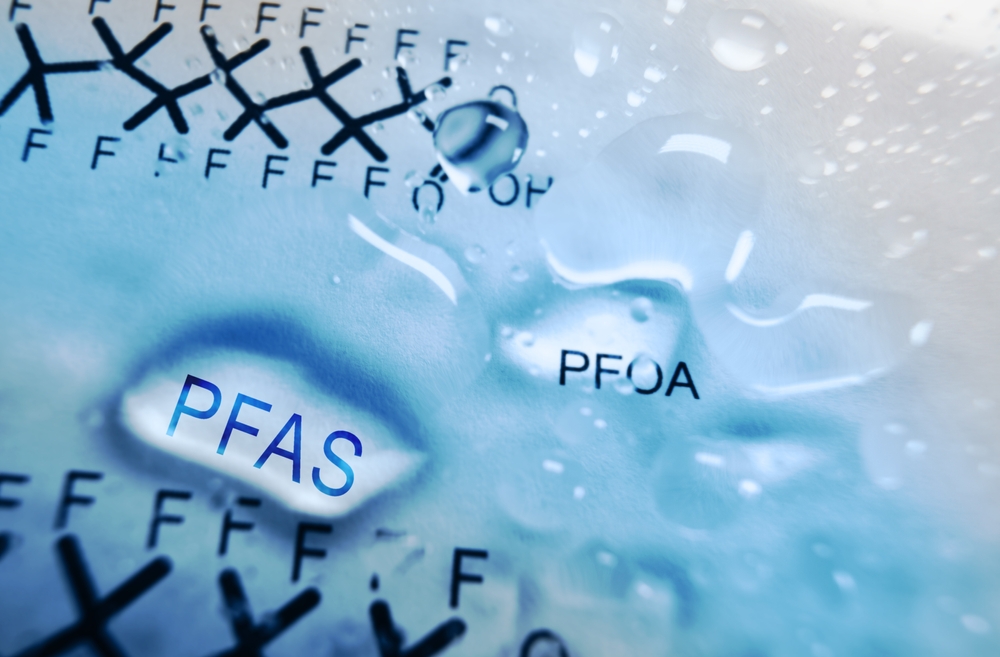
High-volume recovery technologies and new destruction techniques are redefining PFAS treatment for safer drinking water, but the most difficult challenge lies in managing what is left behind from these processes.
Advanced PFAS treatment technologies are increasingly combining high-volume recovery with destructive steps to meet increasingly stringent drinking water restrictions. Granular activated carbon has excellent performance against long-chain PFAS, while anion exchange resins improve removal of short-chain compounds but generate spent media or regeneration waste.
Nanofiltration and reverse osmosis remove most PFAS, but produce concentrated brines that must be safely managed. Disruptive innovations include UV-driven advanced oxidation, plasma, and boron-doped diamond electrochemical reactors that break carbon and fluorine bonds. When is each PFAS treatment option most effective?
PFAS treatment options: which ones are most effective?
Granular activated carbon (GAC) is ideal when the water is characterized by long-chain PFAS, such as PFOA or PFOS, and has strong adsorption. Less suitable where short-chain PFAS pose a risk. Anion exchange resins (AERs) work well when the PFAS are primarily negatively charged and stable, and disposable media are economical when reclamation logistics are costly.
Reverse osmosis (RO) is recommended when extensive removal across long and short chain compounds is required considering that 10-20% of the flow rate will be a concentrated waste stream. Foam fractionation is well-suited for scenarios that require simple, low-cost PFAS enrichment for removal, especially as a front-end step, but downstream processing is often required for complete destruction. Plasma and supercritical water oxidation targets destruction directly and is ideal for processing concentrates despite energy, scale, and by-product constraints.
Determination of PFAS in water: methods and detection limits
Although treatment performance ultimately depends on accurate characterization, measuring PFAS in water typically requires a combination of targeted LC‑MS/MS that can quantify known PFAS at the ng/L level, with broader screening tools such as total oxidizable precursor (TOP) assays and total/extractable organofluoride measurements to account for unknowns. Targeted LC-MS/MS provides compound-specific concentrations of regulated analytes, supports trend analysis, and allows comparison with health recommendations, but may miss precursor compounds or novel structures not included in the method list.
The TOP assay addresses this gap by chemically oxidizing the precursor to a terminal perfluoroalkyl acid and subsequently quantifying it, revealing “hidden” PFAS masses. Total organic fluorine or extractable organic fluorine provides a view of the mass balance of total organic fluorine, but cannot distinguish PFAS from other fluorinated substances. Combining targeted and global approaches increases confidence in assessing detection limits and overall PFAS burden in the field.
PFAS Capture by Adsorption: GAC, IX, and New Media
Adsorption technology immobilizes many PFAS treatment trains by physically or electrostatically trapping contaminants on solid media. Granular activated carbon (GAC) remains a popular choice as it can achieve greater than 90% removal of long-chain PFAS, whose uptake is facilitated by hydrophobic interactions. Its limitation is its low affinity for short-chain PFAS, which can lead to early breakthrough and requires more frequent media exchange or polishing steps.
In contrast, ion exchange resins are designed to bind negatively charged PFAS and often achieve high efficiency for both short and long chain compounds. This selectivity can improve performance in difficult matrices, but contaminants are concentrated in the spent resin or regenerant stream and require downstream processing.
To fill the remaining gap, developers are developing functionalized polymers and hybrid nanosorbents designed to capture a broader PFAS spectrum. Initial results show higher throughput and faster reaction rates than traditional media in a variety of water chemistries and conditions.
PFAS Removal with Membranes: NF/RO and Concentrate Control
Membrane separation provides a means to complement PFAS control when adsorption media approaches capacity or short-chain compounds break through. Nanofiltration (NF) and reverse osmosis (RO) are the primary membrane technologies used for polishing, often achieving greater than 90% removal of both long- and short-chain PFAS.
RO is typically the most robust option for separating contaminants by size and charge, but often produces 10-20% concentrated waste streams with elevated PFAS levels. NFs can also reject PFAS through size and charge effects and have lower energy demands in suitable water matrices, but performance is more application-specific than RO.
Therefore, system design relies on centralized control. If not handled carefully, concentrated waste can reintroduce PFAS into the environment. Experts evaluate safe disposal routes, minimize concentrate volumes, and integrate membranes with upstream processing to reduce fouling and stabilize performance over time.
Destruction of PFAS in water: AOP and plasma
Beyond isolation, PFAS control moves from water phase capture to true destruction using advanced oxidation processes (AOPs) and plasma-based treatments. In AOP, a strong oxidizing agent, such as ozone or hydrogen peroxide, is combined with ultraviolet light to create highly reactive species that attack PFAS. Studies have reported destruction efficiencies greater than 90% for multiple PFAS types. Performance is dependent on water chemistry, contact time, and oxidant dosage, and incomplete reactions can produce conversion products that must be monitored.
Plasma treatment applies a high-energy electrical discharge to water, creating short-lived radicals and energy states that can break carbon and fluorine bonds. Under controlled settings, near complete destruction has been demonstrated. However, both approaches are constrained by high energy demands, the need to manage by-products, and uncertainty regarding cost-effective scale-up for municipal use. Continuous innovation in AOP chemistry and plasma reactors is central to improving reliability and lifecycle costs.
Electrochemical PFAS destruction: new reactor designs
Beyond UV/oxidizer AOP and plasma, electrochemical reactor designs are emerging that directly destroy PFAS in water while controlling energy use and byproduct production.
WSP’s PFASER technology applies boron-doped diamond (BDD) electrodes in a modular electrooxidation system designed for scalable on-site processing. The chemical stability of BDD supports long run times. Continuous operation of more than 6 years has been reported, suggesting durability suitable for permanent installation. Reactor design is also increasingly linked to compliance management. PFASER integrates control of perchlorate, a potential electrochemical oxidation byproduct, to advance the destruction of PFAS while meeting stringent international water quality limits.
In parallel, Tetra Tech is developing approaches that emphasize strong bond cleavage with limited additives. The company’s mobile electron beam (eBeam) system uses high-energy electrons to break carbon and fluorine bonds without dosing chemicals, demonstrating the concept of a transportable platform. Across these innovations, designers prioritize fracture performance, modular deployment, and minimizing secondary contaminants.
New PFAS destruction: bioremediation and enzymes
While most PFAS treatments have relied on physical separation or energy-intensive destruction, bioremediation and enzymatic approaches have emerged as potential routes to degrade these persistent compounds in situ. Bio-based strategies focus on identifying microorganisms with measurable PFAS-converting activity and engineering enzymes that can attack strong carbon-fluorine bonds, an effort that is still in its infancy but is gaining momentum.
Recent studies reporting microbial degradation of selected PFAS support the premise that biological routes can be used for contaminated soils, sediments, or groundwater where conventional treatments are difficult to implement. Enzyme treatment is also valued as a more sustainable destruction option because it works at milder temperatures and pH values than many chemical processes.
Parallel research on mechanochemical degradation, in which mechanical forces are applied to accelerate the degradation of PFAS in solids, highlights widespread interest in the low-input fracture concept, although performance limitations still exist. Continuous innovation is aimed at improving reaction rates, specificity, and scalability across different PFAS mixtures.
PFAS treatment train: cost, waste, and performance
As utilities face stricter PFAS limits and more complex contaminant mixtures, they are increasingly using treatment trains that combine destructive steps such as adsorption, membrane separation, and electrochemical oxidation to balance removal efficiency, operational practicality, and life-cycle costs.
In laboratory studies, integrated PFAS treatment systems often show removal rates greater than 90%, but field results depend on influent variability, media depletion, and membrane fouling.
The focus is on cost trade-offs. Advanced trains may require more capital investment, but better process control and longer journey times can reduce long-term operating costs. Waste management can have a significant impact on the life cycle. Ion exchange processes and some membrane processes produce concentrated brine or spent media that must be treated, destroyed, or disposed of without rerouting PFAS.
As a result, robust performance metrics track removal of both long- and short-chain PFAS, residual precursors, and breakthrough behavior over time. Regulatory compliance also drives accurate analysis to ensure known and emerging PFAS are below drinking water standards throughout the train.
Source link
