


Southern Alberta Institute of Technology’s Applied Research and Innovation Services (ARIS) and Green Building Technology Access Center (GBTAC) advance sustainable and affordable housing solutions in Canada through applied research, collaboration and innovative practices.
As demand for housing increases and material costs rise, the need for construction with speed and quality increases. It is important to create homes that balance rapid construction with quality, carbon reduction and long-term sustainability. Innovators around the world are rethinking how buildings are designed, constructed and powered to meet human and environmental needs. At Southern Alberta Institute of Technology (SAIT), Applied Research and Innovation Services (ARIS) is driving this change by supporting better and more responsible construction in the evolving housing environment.
The Green Building Technology Access Center (GBTAC), one of ARIS’s five research groups, focuses on:
Advanced Building and Materials Science Energy Management Information Systems Environment and Architectural Ecology Affordability and Carbon Impact
Tackling a challenge of this scale requires more than just an idea. It requires evidence, collaboration and innovation, and this is where applied research comes into play. We combine industry needs with technical expertise to help builders and communities test new materials, validate performance, and confidently adopt proven sustainable methods. At GBTAC, this approach translates research into action, ensuring that solutions are not only practical and affordable, but measurable in improving energy performance, reducing carbon emissions, and increasing overall building resilience.
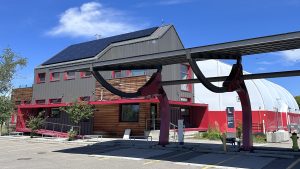
At GBTAC, the link between research and real-world results is realized through partnerships that address housing challenges head-on. Each initiative is designed to accelerate construction while improving energy efficiency, reducing carbon impact, and creating scalable solutions for communities across Canada.
“Our work at GBTAC has seen ideas grow into real-world, tested solutions, whether it’s developing affordable housing or supporting meaningful Indigenous sustainability efforts,” said GBTAC Research Chair Melanie Ross. “The impact these solutions have made shows exactly why applied research and innovation is so important. When proven, real-world results are openly shared with industry and the community, they have the power to accelerate meaningful change.”
Making home ownership more accessible
Institutional barriers such as high upfront costs, limited access to flexible financing, and restrictive regulatory frameworks can put homeownership out of reach for many Canadians. As part of the National Housing Strategy Initiative, GBTAC is committed to providing practical, evidence-based tools to help policymakers, housing organizations, and financial institutions develop more achievable homeownership models.
GBTAC’s applied research supports efforts to make homeownership more accessible by examining the financial, technical, and energy performance factors that influence housing costs. The homeownership model is a financial and structural approach that determines how individuals can build equity in their homes. GBTAC helps buyers understand these models and reduce barriers through research, analysis, and education.
Through research that integrates international insights and Canadian data, GBTAC develops recommendations, including proven affordable homeownership mechanisms and approaches that align with Canada Mortgage Corporation (CMHC) priorities to improve affordability, accessibility and equity. These initiatives will reduce acquisition costs, strengthen fiscal resilience, expand inclusive pathways to homeownership and wealth creation for underrepresented populations, and contribute to a more just and sustainable Canadian housing system. GBTAC is committed to improving affordability, strengthening economic resilience, and promoting long-term wealth creation for individuals in Canada and around the world through analysis of homeownership models.
Attainable Homes Calgary Corporation (AHC) offers a model built on three fundamental pillars:
Acquire land strategically at minimal or no cost. Innovative financing mechanisms such as shared appreciation mortgages and permanent affordability agreements. Operational efficiency has improved and delivery is possible at approximately 50% of conventional development costs.
The AHC model and others across Canada have demonstrated the feasibility of alternative homeownership models, and GBTAC plans to share research findings with municipalities in Alberta to support the continued expansion of innovative and accessible homeownership pathways.
Climate action and housing affordability
Residential buildings play a key role in achieving climate goals that call for improved energy efficiency, reduced emissions and a more resilient, low-carbon environment, and residential energy use accounts for a large proportion of this. Improving energy performance through better design, efficient materials, and integrated renewable systems reduces the cost of living over the life of a building. At the same time, climate adaptation measures such as improved insulation, durable materials, and smarter energy systems can help protect communities from rising energy costs and the effects of extreme weather events. Applied research plays a key role in the transition to energy-efficient housing, creating affordable and environmentally better housing solutions.
GBTAC, along with the City of Calgary and the City of Edmonton, investigated the impact of climate action and considered alternative, cost-effective approaches to achieving a higher-performing energy tier while reducing overall energy use and emissions, and how this impacts the capital and operating costs of housing. Research from this project found that higher-performing tiers generally provide greater energy efficiency and utility bill savings, with a greater impact on overall cost-effectiveness. Construction and retrofitting residential buildings to net-zero standards is a key component of Alberta’s emissions reduction and energy development plans. Both Calgary and Edmonton have taken several steps to support net-zero housing adaptation, including encouraging high-performance/energy-efficiency improvements and adaptations in home retrofits and new construction, moving toward making these measures mandatory over time.
We invest in long-term affordability and emissions reductions as communities demand higher-performing, more resilient buildings. Energy-efficient homes reduce operating costs, reduce stress on infrastructure, support a healthier living environment, reduce environmental impact, and blend environmental responsibility with economic practicality.
Education and training needs
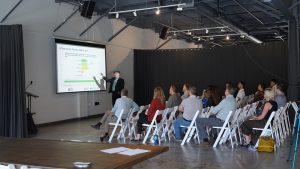
As building codes evolve to meet higher performance and sustainability standards, the need for education and training has never been more important. Many in the construction and design industries are facing uncertainty about what new requirements actually mean, how much they will cost to implement, and what skills are needed to efficiently deliver high-performance buildings. GBTAC has been working with the City of Calgary and real estate professionals to bridge that gap locally and across the province, from developing capacity building resources and tools through energy modeling, physical mock-ups of various materials, cost analysis, and detailed roadmaps to support phased energy code implementation, to providing training materials and sessions. GBTAC provides professionals with the knowledge and confidence to build to modern standards while keeping projects practical, affordable, and in line with an evolving market.
Housing strategies that respond to extreme conditions
Across Canada and around the world, communities are facing an increasingly wide range of temperatures, from frigid winters to extremely hot summers. Even under these extreme conditions, homes need to remain energy efficient, comfortable, and resilient. Meeting this challenge requires innovative approaches, whether in materials, construction techniques, or building systems, to ensure reliable performance year-round while minimizing energy use and environmental impact.
GBTAC helped the Nunavut Housing Corporation (NHC) develop a housing strategy for the Arctic and Northern Canada regions. Many of the housing structures in these regions historically and currently employ designs originating in regions that do not face the unique environmental and social conditions of the Arctic.
The high cost of housing and building materials, exacerbating the housing shortage across the Pan-Arctic region, often means that structures are designed and constructed primarily with financial constraints in mind, rather than energy efficiency or occupant health considerations. Compounding these challenges are factors such as unreliable transportation and supply chains, labor shortages, and the effects of climate change, all of which compromise the quality and structural integrity of buildings. Changes in temperature levels and widespread hot and cold climate conditions also affect community energy use, making energy efficiency and the use of renewable resources in residential energy supply even more important.
Through research, GBTAC has created educational resources for residential energy efficiency, training and knowledge transfer efforts for the local workforce, and strategies for new housing types, formats, and densities.
A living example exists in the Arctic, showing how research and innovation can create resilient buildings anywhere in the world. It’s Kugarak, a first-of-its-kind prefabricated cultural workspace located in Cambridge Bay, Nunavut. This collaborative project combined traditional Inuit knowledge with sustainable building strategies, resilient materials, and the advocacy and implementation of grid-connected renewable energy systems in challenging environments.
Collaboration that leads to innovation
Efforts to build sustainable, resilient, and energy-efficient infrastructure with low carbon emissions are more important than ever. Lasting solutions in accessible homeownership and energy efficient housing come from long-term sustainable and resilient approaches. Rising energy costs and long-term housing affordability are important considerations, and GBTAC’s high-performance building and housing innovation projects address challenges in sustainability, energy efficiency, and accessible housing. GBTAC helps homes remain affordable not only during construction but also during long-term operation by reducing energy use, increasing durability, integrating systems paths such as solar and wind, implementing prefabrication strategies, and establishing alternative financing and ownership models.
Progress at this scale comes from partnerships that bring diverse strengths to the problem. This effort will be strengthened by cross-border cooperation. Canada’s climate and construction expertise, combined with opportunities to engage with international partners, creates a strong foundation for shared learning and creative solutions. Working with partners across Canada and beyond enables solutions that support the global energy transition, reduce environmental impact, and make housing more accessible to more people. Ultimately, this approach will ensure faster and better construction, creating housing solutions that are smarter, fairer, more sustainable and advance climate change and affordability goals.
This article will also be published in the quarterly magazine issue 25.
Source link
