

Consistent with the general trend of incorporating artificial intelligence into almost every field, researchers and politicians are increasingly using AI models trained on scientific data to infer answers to scientific questions. But can AI ultimately replace scientists?
The Trump administration signed an executive order on November 24, 2025, announcing the Genesis Mission, an effort to build and train a set of AI agents on federal scientific datasets to “test new hypotheses, automate research workflows, and accelerate scientific progress.”
you may like
While AI can assist with tasks that are part of the scientific process, it is still far from automating science, and may never be able to do so. As a philosopher who studies both the history and conceptual foundations of science, I find there are some problems with the idea that AI systems can “do science” without or better than humans.
AI models can only learn from human scientists
Rather than learning directly from the real world, AI models need to be “taught” what the world is like by human designers. The breakthroughs that AI facilitates would be impossible without human scientists overseeing the construction of the digital “world” in which models operate—the datasets used to train and test algorithms.
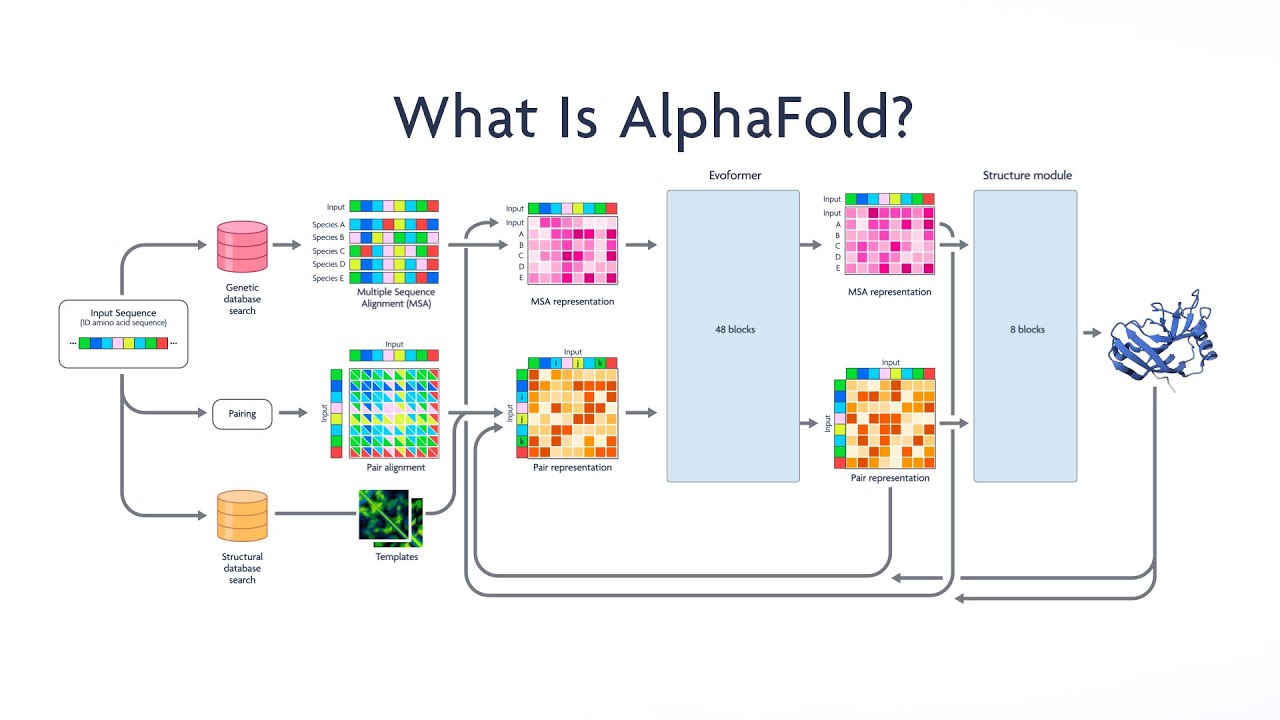
Consider the AI model AlphaFold. Its developers won the 2024 Nobel Prize in Chemistry for the model’s ability to infer the structure of proteins in human cells. With so many biological functions dependent on proteins, the ability to rapidly generate protein structures and test them in simulation has the potential to accelerate drug design, track how diseases develop, and advance other areas of biomedical research.
However, while practical, AI systems like AlphaFold do not by themselves provide new knowledge about proteins, diseases, or more effective drugs. This allows existing information to be analyzed more efficiently.
watch on
As philosopher Emily Sullivan has noted, for AI models to be successful as scientific tools, they must maintain strong empirical connections to already established knowledge. This means that the predictions a model makes must be based on what researchers already know about the natural world. The strength of this link depends on how much knowledge is already available about a particular subject and how well the model’s programmers are able to translate highly specialized scientific concepts and logical principles into code.
AlphaFold would not have been successful without the existing knowledge of human-generated protein structures that the developers used to train the model. And nothing AlphaFold creates will be a scientific advance unless human scientists provide the foundation of theoretical and methodological knowledge.
Science is a uniquely human enterprise
However, the role of human scientists in the process of scientific discovery and experimentation goes beyond ensuring that AI models are well designed and anchored on existing scientific knowledge. In a sense, science as a creative product derives its legitimacy from human abilities, values, and ways of life. They are based on the unique way humans think, feel, and act.
you may like
Scientific discoveries are more than just theories supported by evidence. Scientific discoveries are the product of generations of scientists with diverse interests and perspectives, working together through their skills and a common commitment to intellectual integrity. Scientific discoveries are never the product of a single visionary genius.

For example, when researchers first proposed the double helix structure of DNA, there were no empirical tests that could test this hypothesis. It was based on the reasoning skills of highly trained experts. It took almost a century of technological advances and several generations of scientists to go from what seemed like pure speculation in the late 1800s to the discovery that won the Nobel Prize in 1953.
In other words, science is clearly a social enterprise, where ideas are debated, interpretations are offered, and disagreements are not always overcome. As other philosophers of science have noted, scientists are more like tribes than “passive receivers” of scientific information. Researchers do not accumulate scientific knowledge by recording ‘facts’, but create it through agreed standards based on skilled practice, debate, and social and political values.
AI is not a “scientist”
I believe that the computing power of AI systems can be used to accelerate scientific progress, but only if done carefully.
With active participation from the scientific community, ambitious projects like the Genesis mission can prove beneficial to scientists. Well-designed and rigorously trained AI tools could make the more mechanical parts of scientific investigation smoother and even faster. These tools compile information about what has been done in the past to make it easier to plan future experiments, collect measurements, and formulate theories.
But if the guiding vision for introducing AI models into science is to replace human scientists or completely automate scientific processes, I believe this project will only serve as a caricature of science. The very existence of science as a reliable source of knowledge about the natural world fundamentally depends on human life: common goals, experiences, and aspirations.
This edited article is republished from The Conversation under a Creative Commons license. Read the original article.
Source link
