

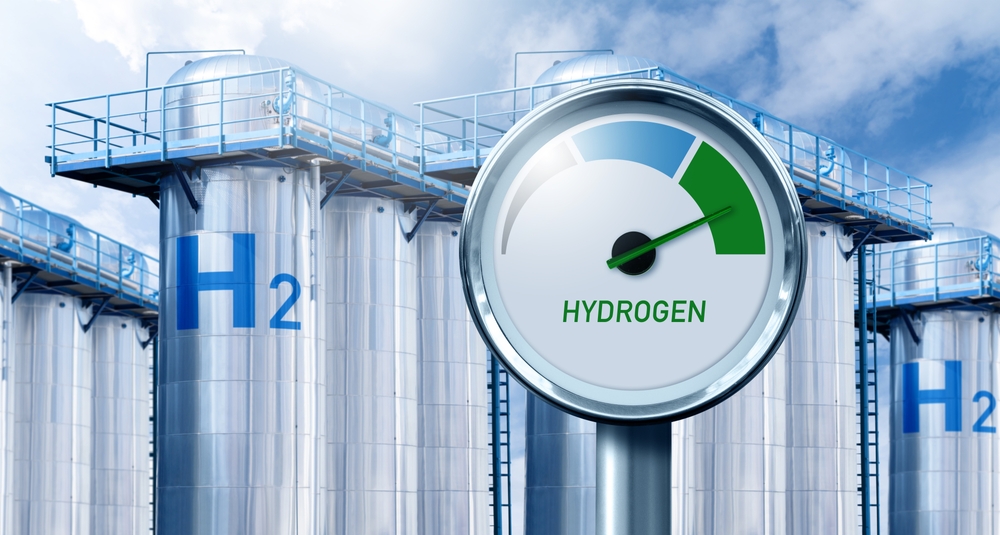
The COUPLE project is expanding ammonia cracking technology to facilitate the supply of clean hydrogen for industry and transportation.
Europe is moving closer to widespread adoption of hydrogen as a low-carbon energy solution, and the COUPLE project represents a major step forward in ammonia-based hydrogen production.
The initiative aims to address key technological hurdles in hydrogen transport and storage, particularly in areas such as heavy industry, shipping, aviation and long-haul transport.
Role of hydrogen and storage issues
Hydrogen plays a central role in the decarbonization of industries that are difficult to electrify. However, their small molecular size and low energy density complicate transport and storage.
Traditional pipelines can be damaged by hydrogen, and compression or cryogenic storage adds cost and complexity.
Ammonia has emerged as a promising medium for hydrogen transport. It can be processed using existing infrastructure, and chemical routes to convert it to hydrogen are already established.
This makes ammonia an attractive option for large-scale distribution of hydrogen.
Couple: Scaling Ammonia Cracking
The COUPLE project builds on previous research, in particular the EU-funded SINGLE project, which tested ammonia decomposition on a small scale of 10 kilograms of hydrogen per day.
COUPLE has expanded its size tenfold, with a demonstration plant in Poppendorf, Germany, capable of producing 100 kilograms of high-purity pressurized hydrogen every day.
This project combines a palladium-based membrane reactor (PdMR) and a proton ceramic electrochemical reactor (PCER) to efficiently extract hydrogen.
This hybrid approach optimizes thermal management and minimizes energy losses, resulting in ammonia conversion of >99.9% and hydrogen recovery of >95%.
The plant targets an energy efficiency of more than 90% and the hydrogen production cost, excluding ammonia feedstock, is expected to be around 0.75 euros per kilogram.
“COUPLE is a great example of European innovation at work. We are building on the success of SINGLE and reusing some of its assets to make the most of public funds,” said project coordinator Gauthier Papon.
“This is a true demonstration of how hydrogen production technologies are evolving and how they can soon be brought to market to help tackle CO₂ emissions.”
Consortium and expertise
The project consortium brings together several European industrial and research organizations with expertise in catalysts, membrane technology, process engineering and ammonia operations.
Partners include CoorsTek Membrane Sciences, GEA Energia Crio, CAMPFIRE AG, Hulteberg Chemistry and Engineering, SINTEF AS, Fondazione ICONS, RWTH Aachen University and Polytechnic University of Catalunya.
The collaboration between the two companies will ensure the combination of industrial experience and advanced research needed to scale up ammonia cracking technology.
Implications for Europe’s hydrogen strategy
The COUPLE project is expected to operate for over 5,000 hours and will evolve from a technology readiness level of TRL 5 to TRL 7.
This success could demonstrate ammonia as a viable hydrogen carrier and support Europe’s broader energy transition goals under the European Green Deal.
As demand for hydrogen increases in high-temperature industrial processes, heavy transportation and aviation, scalable ammonia cracking solutions like COUPLE could be critical to reducing carbon emissions and making hydrogen more accessible for commercial applications.
By demonstrating technical feasibility and economic viability, COUPLE could serve as a model for other European and global efforts to integrate ammonia-based hydrogen into clean energy supply chains.
Source link
