

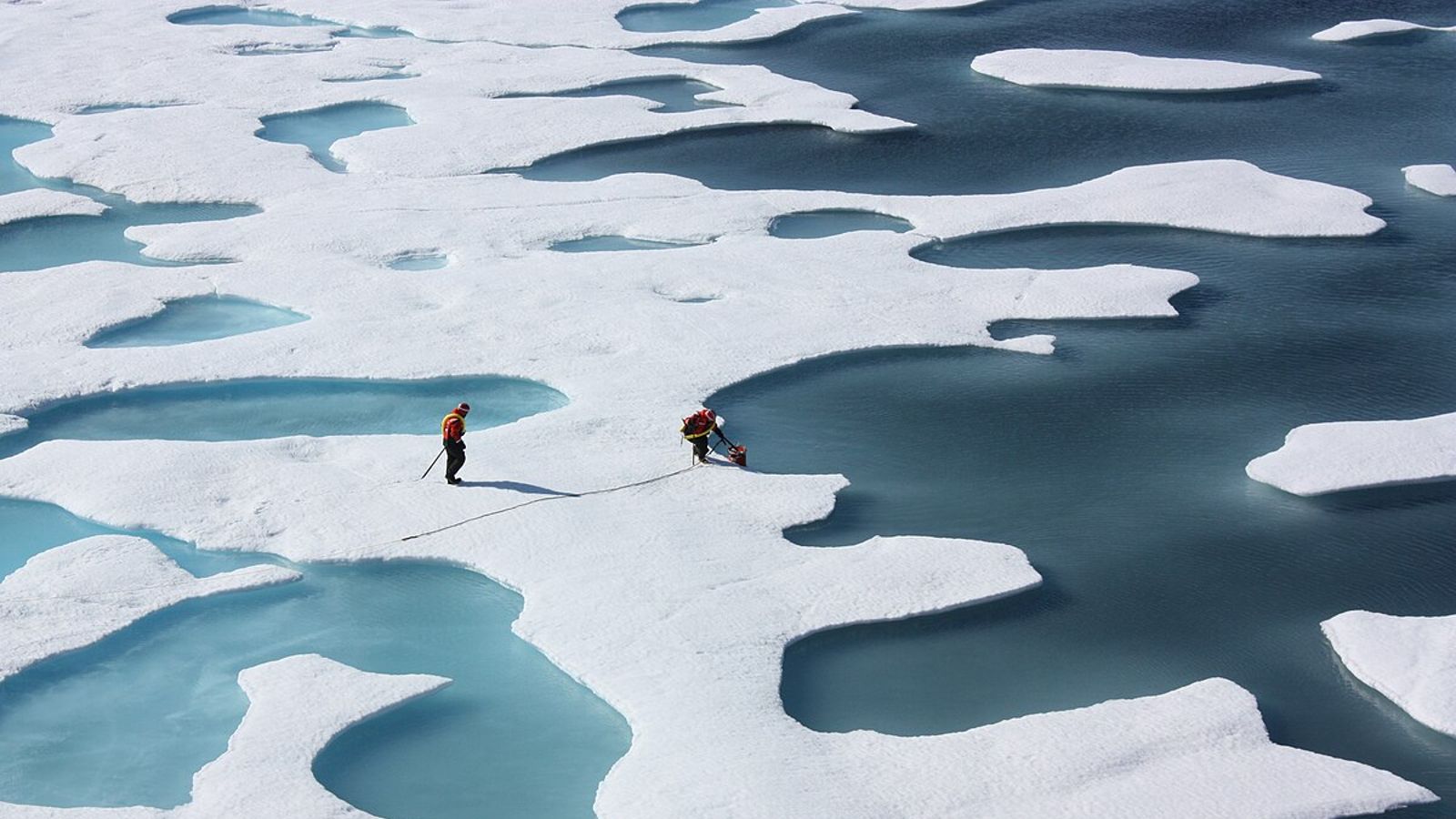
Climate warming could expose Antarctica to ice-free land the size of Pennsylvania by 2300, potentially dramatically changing the geopolitics of Antarctica and its geography.
The study, published in Nature Climate Change, is the first to incorporate glacier isostatic adjustment (how land beneath heavy ice sheets rises after ice retreats) into predictions of the emergence of ice-free land in Antarctica. The results reveal that climate change could potentially expose valuable mineral resources and spur renegotiation of the international treaties currently governing Antarctica.
you may like
resources to rebound
Beneath the Antarctic ice sheet lies a diverse landscape of mountains, canyons, valleys, and even volcanoes. As the climate warms, the ice sheet slowly retreats, exposing parts of its land.
However, until now, predictions about the emergence of ice-free land have only considered changes in the ice edge, i.e. how the spatial extent of ice cover changes. Simulations of future accessible land in Antarctica did not take into account how ice-covered land would rise or how different sea level scenarios would affect the amount of ice-free land that could emerge.
Lucas’ predictions included these factors by incorporating expected sea level changes, information about the thickness of Earth’s lithosphere, and estimates of how the lack of ice sheet gravity would affect land uplift.
The study estimates that 120,610 sq km (46,578 sq mi), 36,381 sq km (14,047 sq mi), and 149 sq km (58 sq mi) of land will emerge under conditions of high, moderate, and low ice melting, respectively, by 2300. “We know there has been ice retreat and grounding line retreat over the past several decades,” so the expected extent of ice-free land is not surprising, Lucas said.
Antarctic politics
Known and suspected deposits of copper, gold, silver, iron, and platinum exist within the region that Lucas and his team predicted will be ice-free by 2300. These deposits contain important minerals used in manufacturing and valuable metals in their own right. In particular, the study found that Antarctica’s largest landmass is likely to occur on territory claimed by Argentina, Chile and the United Kingdom, which contains a variety of mineral deposits including copper, gold, silver and iron.
The continent will continue to be a very difficult environment for the extraction of mineral resources.
Tim Stevens, Professor of International Law, University of Sydney Law School
Currently, commercial mineral extraction is not allowed in Antarctica, although the Antarctic Treaty allows activities related to mineral resources if they are carried out for strictly scientific purposes.
The authors suggest that if mineral extraction becomes easier, countries claiming Antarctica will have an incentive to renegotiate the terms of their claims. The first period for renegotiation is 2048, when states parties to the Antarctic Treaty will be allowed to seek a review of the treaty’s environmental protocol.
The authors suggest that these changes to Antarctic land could put pressure on the region’s legal framework around mineral resource activities. “That’s a fair assessment,” Tim Stevens, a professor of international law at the University of Sydney Law School who was not involved in the new study, wrote in an email. “However, the emergence of ice-free areas predicted by the new study is unlikely to cause major changes in Antarctic governance on its own,” he wrote.
“The continent will remain a very difficult environment for mineral extraction,” he wrote, adding that changes in the Antarctic environment could encourage greater cooperation and focus on the Antarctic Treaty’s environmental protection goals.
This article was originally published on Eos.org. Read the original article.
Lucas, E. M., Richards, F. D., Cederberg, G., Bao, X., Hoggard, M. J., Tsuji, SRJ, Latychev, K., Tsuji, L. J. S., and Mitrovica, J. X. (2026). Emergence of Antarctic mineral resources in a warming world. Natural climate change. https://doi.org/10.1038/s41558-026-02569-1
Source link
