

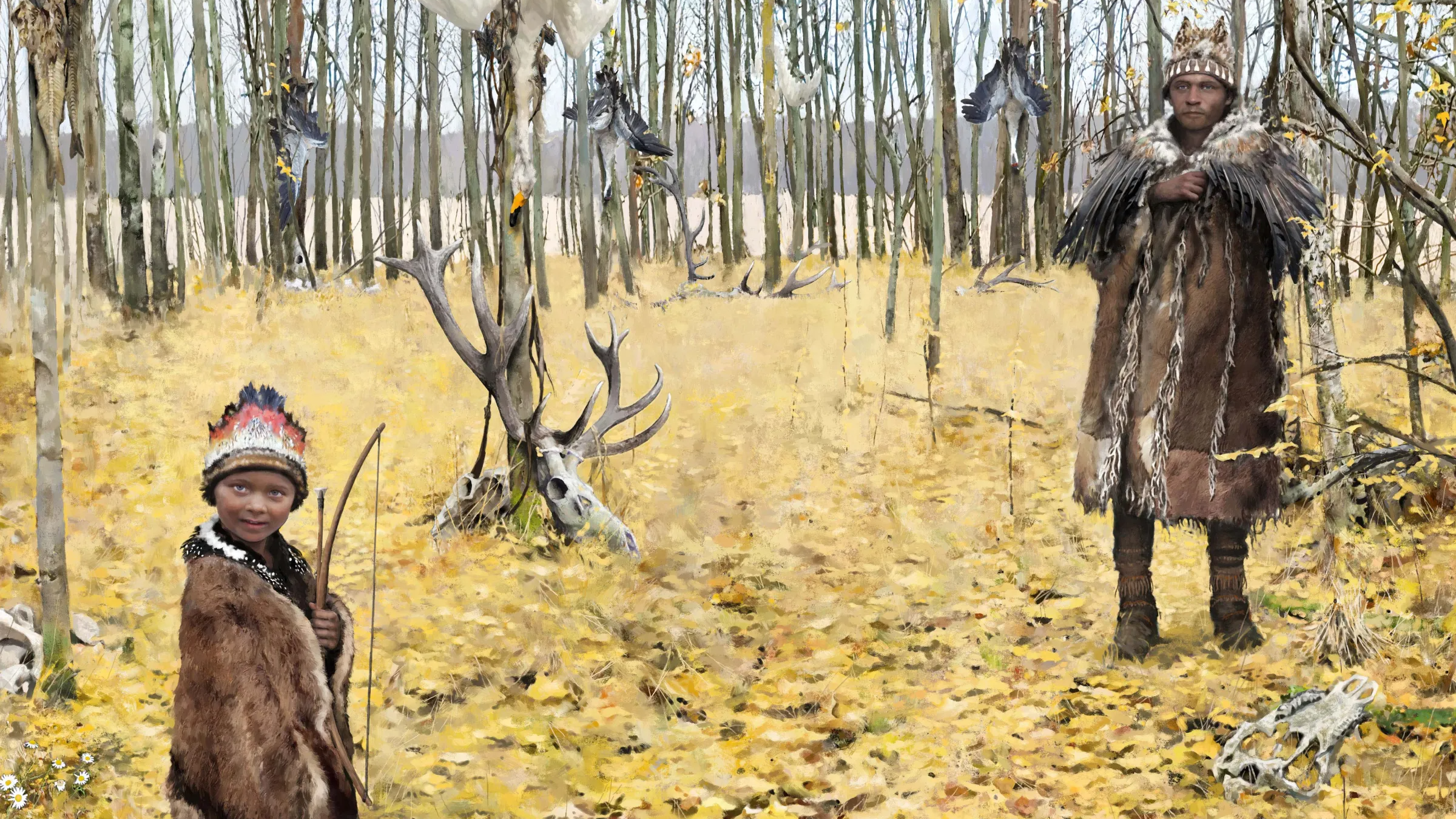
More than 7,000 years ago, Stone Age mourners in what is now Sweden buried a young boy with a crown of woodpecker feathers, and in another grave buried a woman wearing colorful fur and feather footwear, a new study has found.
Researchers say these details were unearthed thanks to newly developed technology that allows them to identify traces of hair and feathers in soil taken from ancient tombs.
you may like
In the study, published February 20 in the journal Archeology and Anthropology Sciences, Kirkinen and colleagues detailed evidence of perishable materials found in 35 burial sites at Skateholm, a Late Mesolithic site in southern Sweden near the Baltic coast that was used as a graveyard by hunter-gatherers from 5200 BC to 4800 BC.
Researchers analyzed a total of 139 soil samples taken from Skateholm graves. First, they identified bone, flint, charcoal, and seed fragments in the soil. The samples were then sieved and centrifuged, and the remaining particles (fibers, hair, feathers) were observed under a microscope.
Mammal hair was recovered from 20 graves, but only 25% matched the species, including otters, deer and cows. However, in one grave, researchers found evidence of lagomorph (pork rabbit), mustelid (weasel or stout), bat, and owl fur, all recovered from the head of a buried young adult male. Beads made from red deer teeth, also recovered from the head, suggest that the young man was buried with a decorative headgear.
After analysis, researchers concluded that at least 21 people were buried with feathers, many of which were of some type of waterfowl. Some feather particles were found in soil taken from the deceased’s head and neck, suggesting that they may have been used in headdresses.
In one grave, excavators found the skeletons of a child and an adult man buried with brown bear teeth, amber beads, bone and stone tools, and red ocher. A soil sample taken from the space between them contained one deer hair and a possible woodpecker feather. These particles suggest the child may have been wearing deerskin clothing and a headdress featuring woodpecker feathers.
Also, in the grave of an elderly woman, soil samples around her neck revealed waterfowl feathers that may have made up a headdress or a feather-trimmed cloak. On her right heel, soil samples detected white hair from weasels and stoats and brown hair from carnivores, suggesting she wore colorful shoes that had decayed over the centuries.
“This study highlights the importance of birds and their feathers and generates interesting new knowledge,” study co-author Christina Manamaa, an archaeologist at the University of Helsinki, said in a statement.
Although the new technique works well, Kirkinen said, “It is difficult to identify microscopic feather and hair fragments to the species level, and methods for analyzing this aspect still have room for development.”
Future studies may include analysis of more recently collected soil samples and the use of DNA analysis of the sediment, which could increase the likelihood of finding soft organic remains, the researchers concluded.
Kirkinen, T., Larsson, L., and Mannermaa, K. (2026). Waterfowl, mustelids, and bast fibers – evidence of soft organic material in the Late Mesolithic Skateholm I and II cemeteries, Sweden. Science of Archeology and Anthropology, 18(3). https://doi.org/10.1007/s12520-026-02415-7
Stone Age Quiz: What do you know about the Paleolithic, Mesolithic and Neolithic periods?
Source link
