

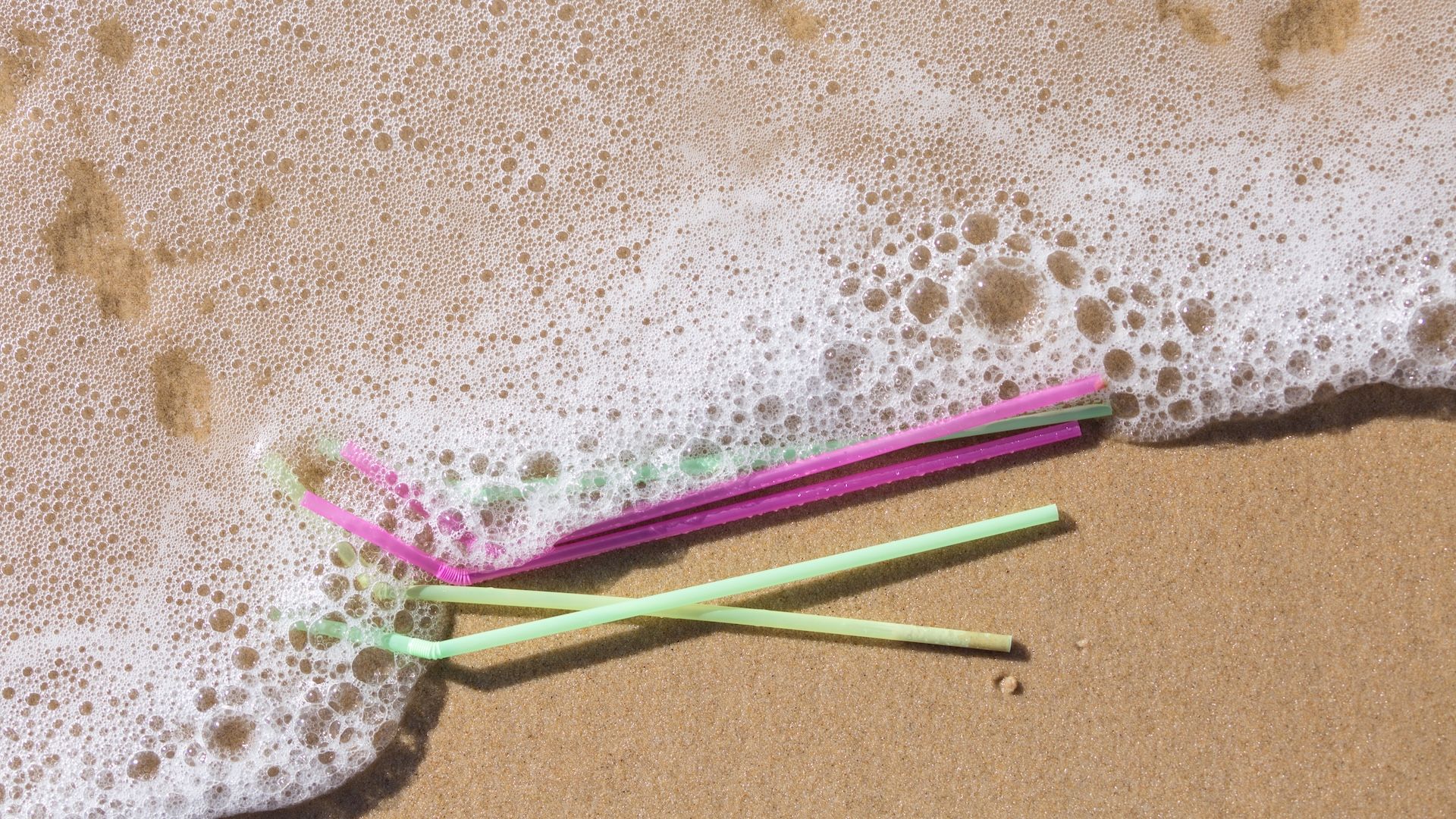
Annual global production of plastics is expected to increase to 400 million tonnes in 2022 and double by 2050. Many of the products produced are single-use, and less than 10% of plastic waste is recycled.
In August 2025, more than 2,600 participants from United Nations member states met for the fifth time to negotiate a deal to end plastic pollution, but it fell short of bridging the fundamental gap between binding and voluntary measures. Countries with interests in oil and plastic production describe themselves as a “like-minded group” and argue that the treaty only covers the recycling and consumption of plastics and opposes curbing production.
you may like
We see images of ugly plastic pollution all the time. Rivers are clogged with floating rafts of trash, beaches are so piled up with plastic that it’s impossible to walk, and plastic bags flap from roadside vegetation. Aesthetics alone make a compelling argument that something must be done.
But of the many problems with plastic pollution, the unsightly one is the least of them.
In a paper published in Nature in July 2025, scientists presented an inventory of 16,325 known plastic chemicals and identified more than 4,200 as chemicals of concern. This means that they are toxic, do not break down naturally in the environment, and do not accumulate in living organisms. These chemicals released throughout the lifecycle of plastics are constantly exposed to people and the environment, often with serious consequences.
These chemicals are added intentionally or unintentionally throughout the plastic’s lifecycle, from raw material extraction to the end of its useful life, said Suzanne Brander, an associate professor in the Department of Fisheries, Wildlife and Conservation Sciences at Oregon State University’s Coastal Oregon Marine Laboratory.
“There is no way to predict how many chemicals are in an individual plastic product,” she says. “The biggest takeaway is that there is no single type of plastic that is safe. All plastics contain potentially problematic mixtures.” Only 6% of plastic chemicals are regulated internationally, and about 1,000 are subject to national regulation.
Once plastic is out in the world, it is physically broken down into smaller particles. Debris less than 5 millimeters in diameter, called microplastics, has long been recognized as a prevalent form of plastic pollution in marine and coastal environments. Toxic and endocrine disrupting chemicals attach to the surface of microplastics. This is known as adsorption. Plankton-eating organisms such as seabirds, fish, and corals ingest microplastics and introduce these chemicals into the food chain. Recent studies have found that microplastics are present in human organs and tissues, contributing to cellular aging, altered gene expression, increased oxidative stress, and inflammation.
Researchers now report that nanoplastics are present in the ocean in amounts comparable to microplastics. Nanoplastic particles are less than 1 micrometer in diameter (a human hair is approximately 100 micrometers thick). The top layer of the North Atlantic Ocean contains an estimated 27 million tons (approximately 30 million US tons) of these particles.
you may like
At sizes this small, materials behave differently. Due to the lack of buoyancy, particles can “rain” into the deep ocean. They can pass through the cellular barriers of the human lungs and intestines and can affect biological systems at the cellular and even molecular level.
make better plastic
Common solutions to plastic pollution include making materials biodegradable. This means that the materials are naturally broken down by living organisms such as bacteria and fungi into biomass such as water, carbon dioxide, and soil. The rate at which this occurs depends on the type and number of microorganisms and factors such as temperature, light, and air exposure. “Compostable” refers to materials that biodegrade relatively quickly under certain human-induced conditions.
The current draft of the proposed United Nations Global Plastics Convention proposes to make plastics as biodegradable as possible. The U.S. National Academies of Sciences, Engineering, and Medicine recommends redesigning plastic products using green chemistry and engineering principles.
But this must be done correctly, the authors of the June 2025 letter published in the journal Science stress. Most current “biodegradable” plastics are composites of biosourced materials (natural materials such as wood and other fibers) and petrochemical-based materials. The letter points to research showing that as these materials weather, potentially harmful chemicals are released into the environment. These include terephthalic acid and bisphenol A, which have been shown to cause genetic, reproductive, and immune destruction.
Developers of biodegradable plastics need to identify how these toxic components break down and design materials for controlled and complete degradation, the letter continues.
Brander and other scientists are calling for toxic chemicals to be phased out completely from plastic production.
Another problem is that it is difficult to separate the individual components of fossil fuel-based composite materials. As a result, most products made from them are landfilled or incinerated rather than recycled or composted at the end of their useful life. Scientists note that changes in design and material selection could help address this problem.
However, there may also be a problem with the “bio” source of these materials.
One polylactic acid (PLA) is made from corn or sugar cane. The Plastic Pollution Coalition reports that these raw materials often require intensive farming practices and contribute to problems such as deforestation and water pollution. Bioplastics make up just 1% of the world’s plastics, but require approximately 800,000 hectares (approximately 2 million acres) of arable land. Additionally, these materials are typically produced and manufactured in industrial facilities that use fossil fuels.
Cellulose diacetate (CDA) is a bioplastic made from wood pulp treated with acetic acid and is already used in consumer products such as straws and food wrappers. Research presented at a 2009 workshop on microplastic marine debris sponsored by the National Oceanic and Atmospheric Administration suggested that very little CDA-based material biodegrades in the marine environment. However, subsequent studies showed that microorganisms can break it down in soil, wastewater, and oceans.
Brander points out that testing of bio-based plastics has shown that they break down into micro and nanoparticles like other plastics and can contain the same chemical mixtures. She added that the way scientists test these materials for degradation can be problematic.
“If you read a paper about how, [a material] Once completely broken down, these claims often hold true in the lab,” she says. “But in the real world, the right temperatures and conditions may not exist. We need to think about situations beyond the laboratory.”
Scientists at Woods Hole Oceanographic Institution in Massachusetts recently did just that by using tanks of continuously flowing seawater from Martha’s Vineyard Sound, replenishing it with natural microbes and nutrients, and controlling variables such as temperature and light to mimic natural coastal marine environments.
Colin Ward, a marine chemist at WHOI and the paper’s senior author, said they tested foamed and solid CDA in this setting for several months and found that the foamed version broke down much faster.
“Foaming the material creates more surfaces for microorganisms to attach to, accelerating degradation,” Ward says. Microorganisms convert materials into food and produce carbon dioxide and water as byproducts.
This study focused on coastal ocean settings, where much plastic ends up, but this material biodegrades in other settings as well.
“This is a promising technology,” Ward said. “While the CDA will not replace all the Styrofoam used, finding alternatives to materials with high levels of leakage into the environment is a priority.” His paper reports that around 15% of the plastic collected in coastal surveys around the world in 2022 was foam plastic take-out containers.
However, CDA still has drawbacks. Like other forms of plastic, its production is energy-intensive and generates chemical waste. Applying green chemistry and green engineering principles to CDA manufacturing may partially address these issues.
Similar to PLA, the source of cellulose is also a potential disadvantage of CDA. One way to minimize this problem is for manufacturers to sustainably source their wood pulp through programs such as Forest Stewardship Council Chain of Custody Certification. Using materials such as industrial and food waste and raw materials produced on marginal agricultural land is also more sustainable.
The main disadvantage of CDA may be cost.
“CDA materials are more expensive to manufacture than plastics,” Ward says. “Consumers need to decide whether they want to maintain the status quo of pervasive plastic pollution, or whether they are willing to invest in technology to reduce the amount.”
Of course, plastic pollution itself has costs, and a healthy ecosystem has economic value. According to Ward, economic analysis shows that switching to materials that don’t persistently pollute can lead to significant savings. One study estimates that repurposing the plastic packaging that currently ends up in the oceans could add approximately $80 billion to $120 billion back to the global economy.
However, plastic alternatives have a significant drawback: they perpetuate the idea of single-use items. Even if it deteriorates over weeks or months rather than decades, it’s still a huge pile of trash. Clearly, the first recommendation of the National Academies report and the main goal of the proposed UN treaty is to reduce the production of plastics.
One way to do this is to focus on the important uses of plastics. Consider that the average plastic bag is used for 12 minutes.
“Do we really need to make something that can be used for 12 minutes and then thrown away?” Brander asked. “Let’s use plastics to save lives, not to transport groceries.”
Reducing the demand for single-use plastics by individuals and businesses could go a long way toward solving this problem.
And Brander says there is still hope for the treaty, which has a new representative and a new chair. An editorial in Science suggests an alternative negotiation process, perhaps led by a non-UN convener. For example, 50 years ago, the International Union for Conservation of Nature (IUCN) initiated and facilitated the process that led to the international treaty known as the Convention on International Trade in Endangered Species of Wild Fauna and Flora (CITES).
But regardless of what happens with the treaty and whether plastics are adopted in future designs or engineering, efforts will be needed to solve plastic pollution, Brander emphasizes. “There is no quick fix solution that will allow you to maintain this lifestyle without repercussions.”
This story was originally published by The Revelator.
Source link
