
Close Menu
  • Home
  • Identity
  • Inventions
  • Future
  • Science
  • Startups
  • Spanish
What's Hot

Exploring the closed nuclear fuel cycle: From recycling to fuel

Unmasking new TOAD attacks hidden in legitimate infrastructure

Fortinet patches CVE-2026-24858 after active FortiOS SSO exploit detected

Facebook X (Twitter) Instagram
  • Home
  • About Us
  • Advertise with Us
  • Contact Us
  • DMCA
  • Privacy Policy
  • Terms & Conditions
  • User-Submitted Posts
Facebook X (Twitter) Instagram
Fyself News
  • Home
  • Identity
  • Inventions
  • Future
  • Science
  • Startups
  • Spanish
Fyself News
Home » Astronomers have identified the oldest Milky Way-like galaxy in the universe, just 2 billion years after the Big Bang
Science

Astronomers have identified the oldest Milky Way-like galaxy in the universe, just 2 billion years after the Big Bang

userBy userJanuary 18, 2026No Comments3 Mins Read
Share Facebook Twitter Pinterest Telegram LinkedIn Tumblr Email Copy Link
Follow Us
Google News Flipboard
Share
Facebook Twitter LinkedIn Pinterest Email Copy Link

Scientists continue to push the boundaries of astronomy and cosmology thanks to next-generation instruments that can see further and more clearly than ever before.

Through these efforts, astronomers have observed some of the earliest galaxies in the universe. This, in turn, led to the refinement of theories and chronology of galaxy formation and evolution.

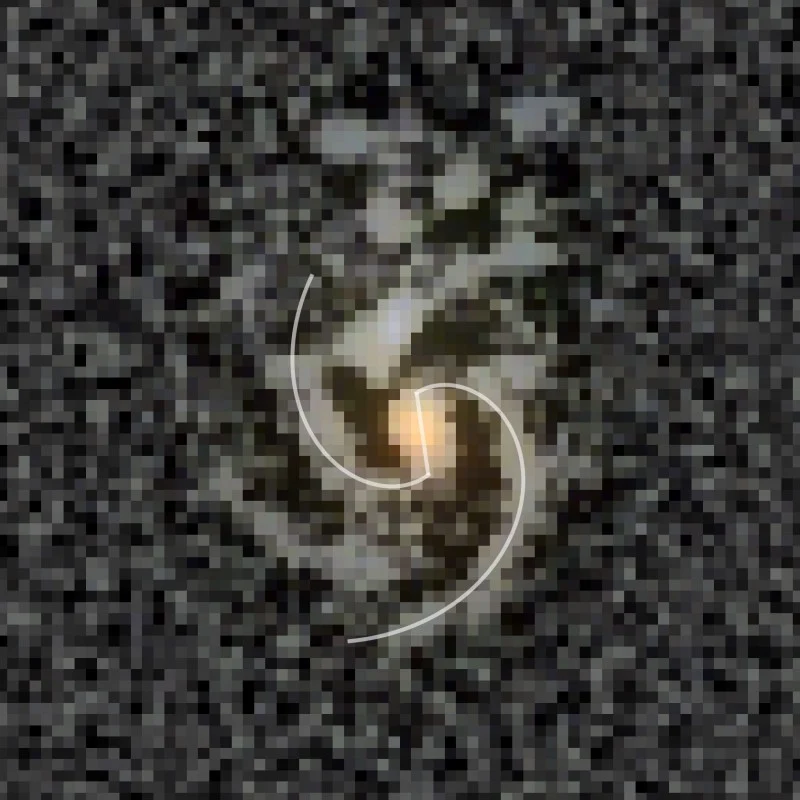
In a recent study, a team of astronomers led by the University of Pittsburgh (UPitt) discovered what may be the oldest barred spiral galaxy ever observed. This discovery helps constrain the time frame in which bars first appeared in the universe.

you may like

The research was led by Daniel Ivanov, a physics and astronomy graduate student in the Kenneth P. Dietrich College of Arts and Sciences at the University of Pittsburgh. Based on observations made with data from the NASA/ESA/CSA James Webb Space Telescope (JWST) and the Space Telescope Science Institute (STScI), the research team discovered a barred spiral galaxy (COSMOS-74706). Thanks to additional confirmation from the Keck I telescope’s Multi-Object Spectrometer for Infrared Surveys (MOSFIRE), the research team determined that the galaxy existed more than 11.5 billion years ago.

He and his team presented their findings at the 247th Annual Meeting of the American Astronomical Society (AAS) on January 8, 2026 in Phoenix, Arizona.

According to the Hubble series, galaxies are classified as elliptical, spiral, or lenticular based on their morphological characteristics. Galaxies typically start out as irregular disks but evolve to form spiral arms (also known as spiral galaxies) that extend from a central bulge.

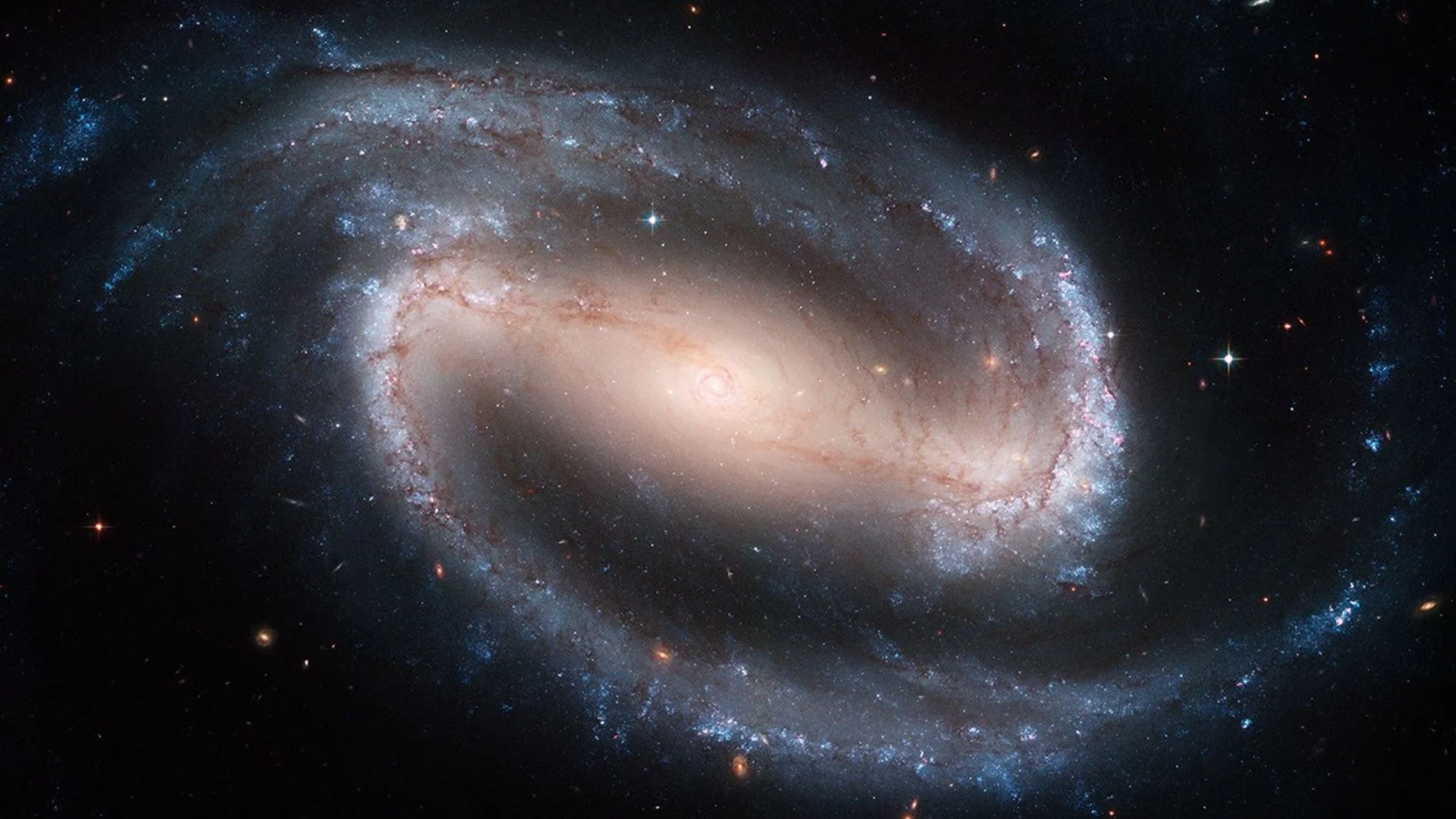
Bar-like spirals, such as those in the Milky Way, have stars arranged in a bar-like line across their centers, and play an important role in the evolution of stars by pouring gas from the outside in, feeding the supermassive black hole at the center, and suppressing star formation throughout the stellar disk.
Get the world’s most fascinating discoveries delivered straight to your inbox.

Hubble image of barred spiral galaxy NGC 1300.

Hubble image of barred spiral galaxy NGC 1300. (Image credit: NASA/ESA/Hubble Heritage Team (STScI/AURA)/P. Knezek (WIYN))

Researchers have reported older barred spiral galaxies, but analysis of these candidates has been inconclusive because the observations were made using gravitational lensing and redshift measurements. The former method is hampered by lens effects that often blur the light from distant objects, while redshift measurements introduce errors and uncertainties of 10-15%. Neither method is as conclusive as the spectroscopy used to verify the age of COSMOS-74706.

Some simulations suggest that bars were forming within galaxies as far back as 12.5 billion years, so the discovery of barred spiral galaxies this early in the universe is not entirely surprising. However, observational evidence for such structures is much more difficult to obtain, making this an important discovery that helps constrain the timescale of galaxy evolution. Ivanov said in a press release from UPitt.

This galaxy developed a bar 2 billion years after the universe’s birth. 2 billion years after the Big Bang. This is the highest redshift spectroscopically confirmed lensless barred spiral galaxy. Basically, I don’t think this is the time to expect to find many of these objects. This helps limit the timescale of bar formation. And it’s really interesting.

A version of this article originally appeared on Universe Today.


Source link

#Biotechnology #ClimateScience #Health #Science #ScientificAdvances #ScientificResearch
Follow on Google News Follow on Flipboard
Share. Facebook Twitter Pinterest LinkedIn Tumblr Email Copy Link
Previous ArticleViruses evolved on the space station and sent back to Earth were highly effective at killing bacteria
Next Article Sequoia invests in Anthropic, breaking taboo on VCs backing rivals: FT
user
  • Website

Related Posts

Shark attacks in Hawaii spiked in October, and scientists think they know why.

January 27, 2026

In vitro fertilization hormones could one day be administered via painless ‘microneedle’ patches, early research suggests

January 27, 2026

A 1,400-year-old Zapotec tomb discovered in Mexico has a giant owl sculpture symbolizing death

January 26, 2026
Add A Comment
Leave A Reply Cancel Reply

Latest Posts

Exploring the closed nuclear fuel cycle: From recycling to fuel

Unmasking new TOAD attacks hidden in legitimate infrastructure

Fortinet patches CVE-2026-24858 after active FortiOS SSO exploit detected

Everything you need to know about the viral personal AI assistant Clawdbot (now Moltbot)

Trending Posts

Subscribe to News

Subscribe to our newsletter and never miss our latest news

Please enable JavaScript in your browser to complete this form.
Loading

Welcome to Fyself News, your go-to platform for the latest in tech, startups, inventions, sustainability, and fintech! We are a passionate team of enthusiasts committed to bringing you timely, insightful, and accurate information on the most pressing developments across these industries. Whether you’re an entrepreneur, investor, or just someone curious about the future of technology and innovation, Fyself News has something for you.

Castilla-La Mancha Ignites Innovation: fiveclmsummit Redefines Tech Future

Local Power, Health Innovation: Alcolea de Calatrava Boosts FiveCLM PoC with Community Engagement

The Future of Digital Twins in Healthcare: From Virtual Replicas to Personalized Medical Models

Human Digital Twins: The Next Tech Frontier Set to Transform Healthcare and Beyond

Facebook X (Twitter) Instagram Pinterest YouTube
  • Home
  • About Us
  • Advertise with Us
  • Contact Us
  • DMCA
  • Privacy Policy
  • Terms & Conditions
  • User-Submitted Posts
© 2026 news.fyself. Designed by by fyself.

Type above and press Enter to search. Press Esc to cancel.