

Billboard Japan Women’s Music
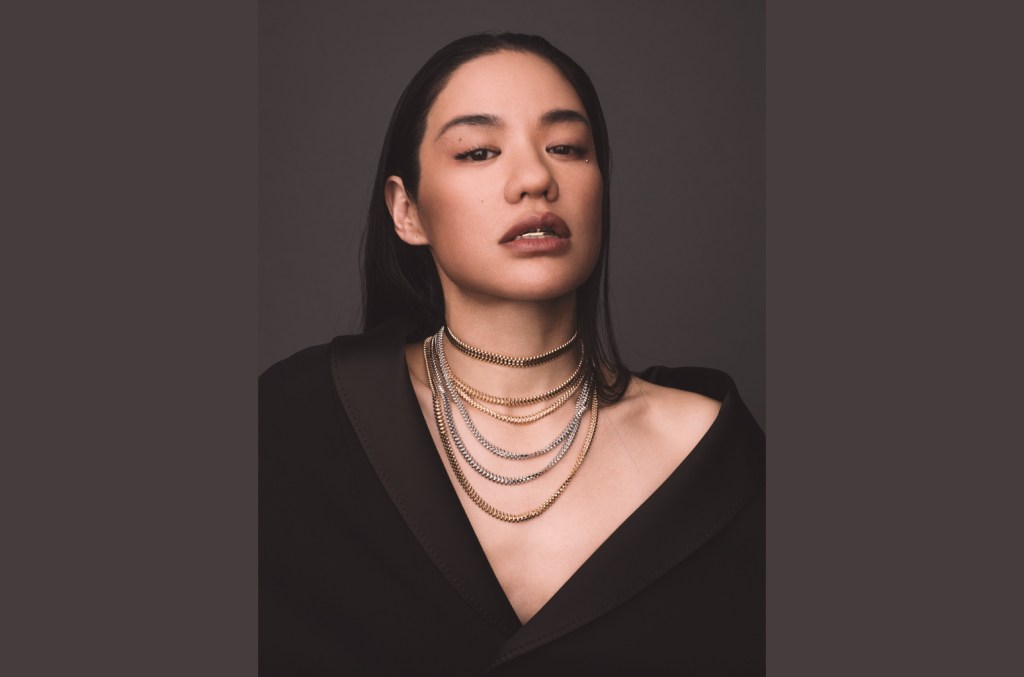
Billboard Japan spoke with Awich in the latest installment of its Women in Music interview series. The initiative was launched in 2022 in the footsteps of Billboard’s annual Women in Music honors, which celebrate artists, producers and executives who have made significant contributions to music and entertainment and inspired other women through their work. This series featuring female players in the Japanese entertainment industry is one of the highlights of the Japanese WIM project.
explore

Check out the latest videos, charts and news
The interview with Japan’s rap queen was conducted on June 9th to commemorate the special one-night live event “Women in Music – EQUAL STAGE” hosted by Billboard Japan and Spotify. She was born and raised in Okinawa, immigrated to the United States, started a family there, and was later widowed. Through it all, she has pushed herself to the forefront of Japan’s hip-hop scene. She spoke frankly about balancing motherhood and career, her identity as an Okinawan woman, and the environment for women in the music industry.
It has been about half a year since the release of “Okinawa Woman”. Has anything changed since then?
I feel like I’ve created an album that I can be proud of anywhere in the world as a self-introduction. RZA of Wu-Tang Clan, who produced it, used to be someone I thought was above the clouds. Now, the relationship has expanded to include both families, and he is a person I respect both as a musician and as a human being. By creating an album that truly pays homage to Okinawa and hip-hop, I’m confident that I’ve laid a solid foundation for wherever my music takes me next.
How did the collaboration with RZA come about?
I’ve had this idea for about three years, but I’ve been wondering for almost a year if this is really the project I need right now. Yet, something inside me kept insisting that there was no one else who could fill this role. Okinawa is the birthplace of karate and has a deep history with the United States. It’s a very profound full-circle story in which a hip-hop artist born out of this is lifted up by RZA, who has drawn inspiration from martial arts and Eastern philosophy. What could be more perfect? The decision to listen to that inner voice was the beginning of this album.
What did you want to say with the title?
Okinawa is the birthplace of karate, a place shaped by war and occupation, and a crossroads of cultures. I consider this island to be a microcosm of the world, and as someone who was born there, I wanted to express both its pain and beauty. “Woman” also pays homage to Wu. RZA sent me a message saying, “You are a mother, an artist, an activist, and an Okinawan woman. May your light reach people all over the world.” Historically, Okinawan women have been expected to be strong. “Grandma is the strongest” and “I always do what grandma says” are words you often hear in Okinawa. Women are expected to work harder and are often stronger than men. But I didn’t just want to express that strength. I wanted to express where it comes from, whether it comes from love or pain, and how I stand proudly as someone who has shouldered all of it.
What was it like continuing to make music while raising your daughter?
When I got married and became a mother, my whole world changed. All of a sudden, I had to be home all the time and I had to be there for childcare. I continued to push back against my husband, asking him why everything had to change for me, so why should anything have to change for him? He could do whatever he wanted, but if I did the same thing, I would be called a failure to be a mother and a failure to be a wife. I’m jealous of men, and I’ve been fighting that battle for a long time.
How is your relationship with your daughter Toyomi lately?
She is now 18 years old. I’ve never brought a framework of “this is what a mother should be” into our relationship. I showed her everything about me, unfiltered. She accepted this from an early age and actually told people around her to “let Mommy be Mommy.” She told me from an early age that if there was a gap that I couldn’t fill, my daughter would fill it for me. I am forever grateful to her for being a true friend and strong partner.
Has the environment surrounding women in the Japanese music industry changed?
I think so. Attitudes toward balancing work and childcare have changed significantly. For example, it is no longer the correct framework for a father to say: “I help take care of the child.” Because many people know that raising children is a shared responsibility of both parents, not just mothers.
However, the higher up you go in an organization, the fewer women there are. When you say, “An important CEO is coming,” everyone thinks of a man. When you find out it’s a woman, your reaction is, “Oh, it’s a woman, that’s amazing.” No matter how loudly we shout about gender equality, it still lies in our subconscious. Also, when a man expresses his opinion forcefully, it is seen as admirable, but when a woman does the same, people think, “Are you in a bad mood today?” or “Are you feeling okay?” as if it were just coming from an emotional issue. This is especially true in hip-hop, where there are few seats for women. It’s fine for male rappers to share the same style or character, but when women share the same style or character, they’re immediately told, “We already have something like that.”
Some people object to the image of a “strong woman.” Anyone who has listened carefully to your albums or heard you speak between songs on stage will understand where that strength comes from. But how do you respond to the criticism that strength isn’t all about femininity?
I don’t get to choose what the world pays attention to. I want people to listen to everything I publish and read all my interviews, but that doesn’t work. Being in the public eye means accepting to some extent that things will be taken out of context. I continue to send out the message that I am not only strong, but that my strength comes from pain, but there is a tendency in the world to only cut out and promote the “strong” parts. At the same time, if it reaches women who need inspiration to take the next step, then that’s fine. So I have no choice but to keep putting myself out there without fear.
What do you think needs to happen for things to change?
Just keep showing up. For example, in hip-hop, the more women like me and LANA rise to the top, the more destinations there are for women who come after us. And I refuse to give in to the energies that try to pit women against each other. Sisterhood is really important right now. Maybe one day we’ll reach a point where just being friends isn’t enough, let’s compete seriously, but right now we’re at a stage where we all need to work together to bring what started as a negative back to zero.
What would you say to someone who can’t take the first step?
What I value most in my life’s work is dialogue with myself. Not all women need to go out and tone up their bodies. Being a homemaker is equally valid, as are all other ways of life. But if you can’t hear your own voice telling you what you want, you won’t find happiness anywhere. That applies to all humans, not just women, but men. Now, self-love is ubiquitous as a concept, but you can’t love what you don’t understand. What do you like, what are you good at, what brings you joy and what brings you sadness? If you don’t understand yourself every day, you’ll spend the rest of your life complaining. And I think if everyone is serious about understanding themselves, they’ll see that everyone wants different things. Now, people likely don’t have that inner dialogue, so they end up thinking what the media and advertising shows them is what they want, and everyone moves in the same direction, creating conflict. If people listened to their hearts, everyone would want different things and we would be able to encourage each other. Journaling, meditation, exercise, anything is fine. Go ahead and find a way to talk to yourself.
You grew up in Okinawa and then lived overseas. What does it mean to you to leave your hometown?
The further you get from where you started, the clearer the picture becomes. What you thought was normal is no longer normal. You hear something that is said to be common sense somewhere in the world and think, “That’s actually not common sense at all.” What matters is whether you can notice it. At the study abroad charity I run, we hold workshops where participants write about how they felt after going out into the world and returning home. (Since 2025, Awich has co-sponsored the Know The World — Awich Global Education Project, which provides free English learning opportunities for high school students and people up to the age of 22 in Okinawa Prefecture, including the Atlanta study abroad program and the on-site immersive program. The program is being conducted for the second year in a row in partnership with HelloWorld Inc. and the HelloWorld Association.)
What has remained the same and what has changed as the scope of your work has expanded?
What remains the same is that no matter where you are, you can talk about the things that are important to you with the same passion. I used to think it was out of place to talk about street culture in a luxurious environment, but I’ve come to realize that if you’re sincere and passionate about it, it will get the message across. What has changed is sensing when to push harder to make things land and when not to. Recently, I have developed the ability to read other people’s timing. For example, if expressing myself with words seems invalid at the moment, I have learned to make an impression through presence and observation, rather than forcing.
You are also active as a global ambassador for Okinawa. What do you most want to convey about Okinawa right now?
Personally, I think nature is our greatest treasure. There is nothing comparable in terms of building or amount of money. Places where nature remains are disappearing all over the world, and these are the keys to the environment we humans need to survive. You can have any belief or identity, but if all of humanity doesn’t start taking care of nature together, we won’t have a place to live. That’s a very basic question.
What is most important to you in maintaining a long career?
Remember, it’s all a collaboration. No matter how many names and faces are out there, everything I do is made possible by the involvement of many people. It is important to show your appreciation and be considerate of them. This isn’t to say that explosive, egotistical, or pointed expressions have no place in a music career. Of course I will. However, in order to live a long life that transcends time and space, we need the support of many people. Therefore, it is of utmost importance to always remain conscious of the fact that it is a collaboration.
Finally, what does music mean to you?
I have always worked with words, but music taught me that words go directly into the body without being processed in the mind. For me, music is a tool that allows me to convey the message I want to share in a way that people can physically feel. It connected my overthinking head to the rest of my body.
—This interview with Rio Hirai first appeared on Billboard Japan
Source link
