

Scientists may have finally determined the nature of some of the most mysterious objects in the night sky.
In a new study, researchers investigated what the “little red dots” are. These mysterious objects from the early Universe have characteristics of both galaxies and supermassive black holes, but they don’t quite fit either description.
you may like
The tiny red dot was first observed by the James Webb Space Telescope (JWST) shortly after the spacecraft began collecting data in 2022. These were originally thought to be compact galaxies packed with stars, but they existed too early in the universe for so many stars to form, at least under our current understanding of galaxy evolution.
Instead, other researchers suggested that this unusual object could be an early supermassive black hole. The light emitted by the energetic hydrogen atoms surrounding the dots suggests that the gas is moving at thousands of miles per second, pulled by the gravity of the central object.
“Such extreme velocities are the hallmark of an active galactic nucleus,” said Rodrigo Nemen, an astrophysicist at the University of São Paulo in Brazil, in an accompanying paper published in the journal Nature. This means that the hungry supermassive black hole at the center of the galaxy is drawing in matter.
But unlike supermassive black holes, tiny red dots that emit X-rays or radio waves have not been observed. And whether the points are black holes or early galaxies, they appear to have too much mass to have formed so early in the universe.
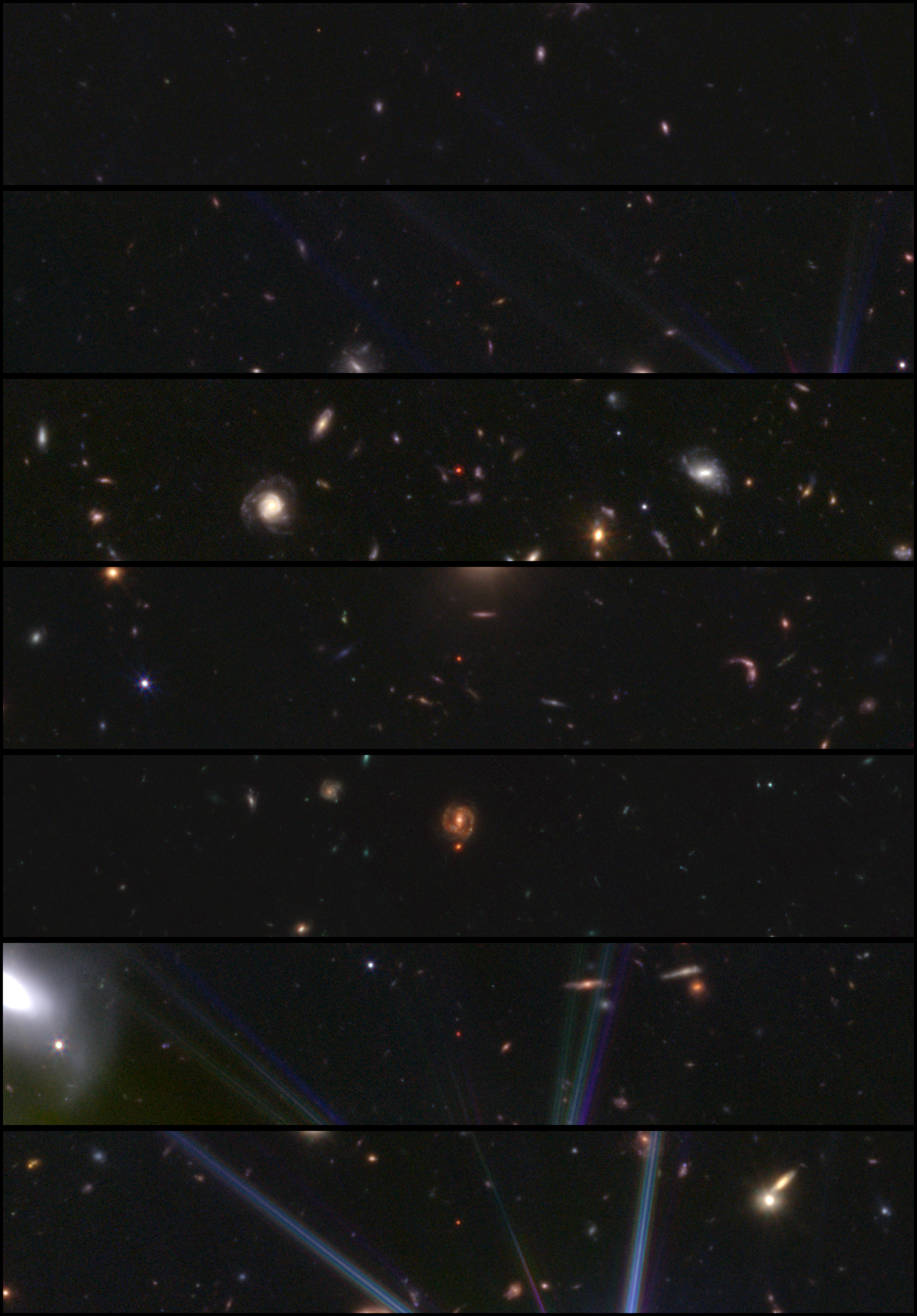
In a new study, researchers took a closer look at the light emitted by these objects to better understand their properties. The scientists studied spectra from 30 tiny red dots, each collected by JWST’s infrared instruments.
The light emitted by the tiny red dot closely matches the light the researchers predicted would come from a supermassive black hole surrounded by a dense cloud of gas. The gaseous cocoon may have captured X-ray and radio emissions from the growing black hole, preventing them from reaching JWST.
When the researchers recalculated the mass of the little red dot based on their new interpretation, they found that it was about 100 times less massive than previously thought. Together, this evidence suggests that the tiny red dot is growing a supermassive black hole that is accreting surrounding gas.
“These are the lowest-mass black holes at high redshift to our knowledge, suggesting the presence of a young population. [supermassive black holes](Redshift describes how light stretches toward the redder end of the electromagnetic spectrum as it traverses the expanding universe; higher redshifts mean more distant objects).
“With the revised mass estimate, [little red dots] Confirming this finding will include studying more of the tiny red dots to investigate whether this “cocoon” stage is common and determine what role it plays in black hole growth, Nemen wrote.
Source link
