
Blacklist more than 50 Chinese tech companies to curb the advances of AI and quantum in China
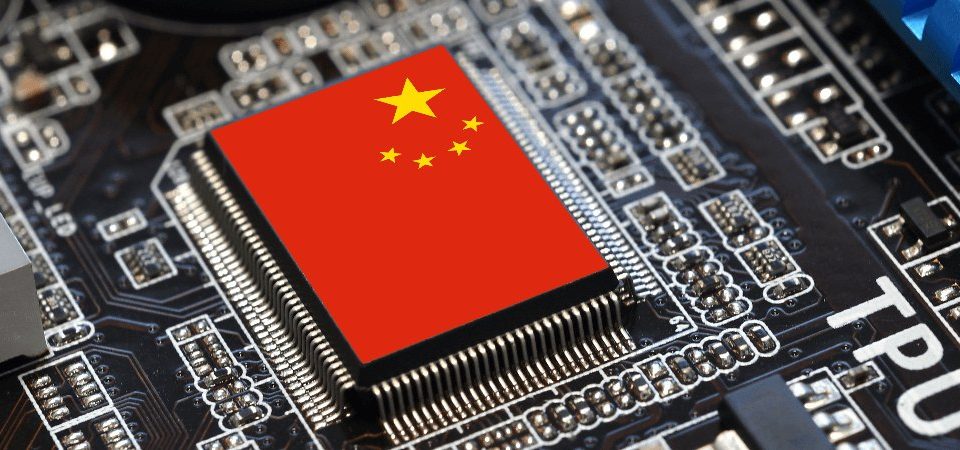
The sudden success of Chinese AI startup DeepSeek in January surprised technology leaders, causing over $1 trillion in the US technology market crash. Now, Washington policymakers are aiming to slow China’s momentum in other emerging technologies such as artificial intelligence and quantum computing.
On Tuesday, the US Department of Commerce added more than 80 companies to its blacklist exports. The move marks the first major blacklist expansion under the Trump administration, highlighting a new push to block access to Beijing’s high-performance computing and next-generation technology.
The move comes more than a week after Openai CEO Sam Altman urged the US government to ban AI models developed by Chinese organizations. In the policy proposal, Altman flagged Deepseek as “national control,” raising a red flag over security threats and possible IP theft. Openai has picked out Deepseek and other Chinese open source models as potential risks associated with China’s broader national technology agenda.
“Today, the Department of Commerce’s Industrial Security Agency (BIS) has added 80 entities to its entities lists in China, the United Arab Emirates (UAE), South Africa, Iran and Taiwan to operate against US security and foreign policy,” the Department of Commerce said in a statement on its website.
The US is blocking Chinese companies over alleged military use of AI and quantum technology
These entities were added to oppose the interests of US national security and foreign policy, according to the Industrial and Security Bureau. The blacklist blocks American companies from providing technology to listed organizations unless they secure government approval.
Many target companies have been accused of developing advanced AI chips, supercomputers and quantum tools that can boost China’s military capabilities. The two companies were flagged for allegedly supplying restricted technology to Huawei and its chip arm Hisilicon. Both are already under US sanctions.
The US has also targeted 27 Chinese companies that acquired American technology to support military modernization, and seven more Chinese technologies to promote China’s quantum technology program.
The latest action included six subsidiaries of Inspur Group, a leading cloud computing company already blacklisted under Biden’s term. China’s foreign ministry called the move a “strongly condemned” escalation, urging the US to halt its use of national security, according to Reuters.
“These are the most important aspects of our efforts to create a wide range of technical and national universities,” said Alex Capri, Senior Lecturer at National University of Singapore and author of Techno-Nationalism.
“US officials will continue to intensify their tracing and tracking operations aimed at smuggling advanced semiconductors made by Nvidia and advanced microdevice,” Capri told CNBC.
Capri pointed to loopholes that allowed Chinese companies to skirt restrictions through indirect channels and access strategic US technology. He said US officials are expected to increase surveillance of high-end chips smuggled, especially from Nvidia and AMD.
The timing is no coincidence. Tensions between Washington and Beijing continue to grow. The Trump administration has already tightened tariffs and is now tightening its control of technology exports.
Meanwhile, the emergence of startups like Deepseek is accelerating the shift towards low-cost AI models in China. This contrasts with the unique, high-cost system that US companies prefer.
A broader strategy shaped under the so-called “small gardens, high fence” policy is to allow trade regularly in less sensitive areas, while limiting a small set of technology with strong military potential.
“We’re sending a clear and overwhelming message,” said Jeffrey I. Kessler, Commerce Secretary of Industry and Security, “The Trump administration will prevent US technology from being misused due to high-performance computing, hypernic missiles, military aircraft training, and UAVs that threaten national security.”
“Entity lists are one of many powerful tools to identify and block foreign enemies who are trying to exploit American technology for malignant purposes,” he added.
Deepseek made headlines in January after outperforming ChatGpt on the App Store and sending shockwaves through high-tech inventory. The talk around Deepseek began in December after the V3 model surpassed top US AI models, including the Meta’s Llama 3.1, Openai’s GPT-4O, and Alibaba’s Qwen 2.5 on third-party benchmarks.
Source link

