
Close Menu
  • Home
  • Identity
  • Inventions
  • Future
  • Science
  • Startups
  • Spanish
What's Hot

Mandiant discovers ShinyHunters-style Vishing attack that steals MFA and compromises SaaS platforms

CERT Polska details coordinated cyberattacks on over 30 wind and solar farms

Stripe veteran Lachy Groom’s latest bet, Physical Intelligence, is building Silicon Valley’s most active robot brain

Facebook X (Twitter) Instagram
  • Home
  • About Us
  • Advertise with Us
  • Contact Us
  • DMCA
  • Privacy Policy
  • Terms & Conditions
  • User-Submitted Posts
Facebook X (Twitter) Instagram
Fyself News
  • Home
  • Identity
  • Inventions
  • Future
  • Science
  • Startups
  • Spanish
Fyself News
Home » Breakthrough in cell division reveals hidden weaknesses in cancer
Inventions

Breakthrough in cell division reveals hidden weaknesses in cancer

userBy userJanuary 30, 2026No Comments4 Mins Read
Share Facebook Twitter Pinterest Telegram LinkedIn Tumblr Email Copy Link
Follow Us
Google News Flipboard
Share
Facebook Twitter LinkedIn Pinterest Email Copy Link

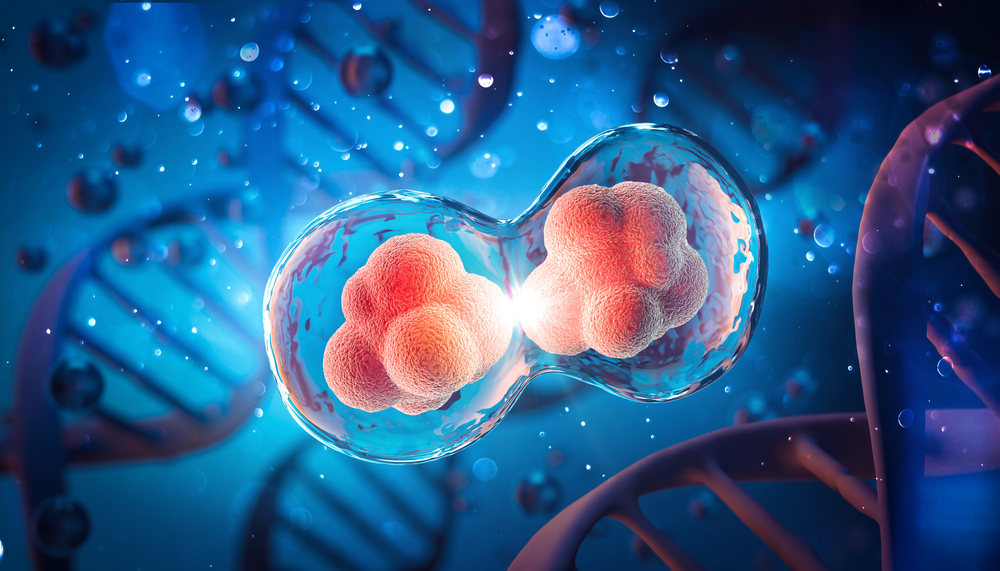
For decades, biologists have been grappling with a fundamental mystery of life: how cells can copy their DNA without getting confused during cell division.

Every day, trillions of cells in the human body divide, each replicating its entire genetic blueprint with incredible precision. If this process runs unchecked, cells will quickly run out of resources and errors will accumulate, causing disease and death.

Researchers now believe they have identified an important built-in safety mechanism that tightly controls DNA replication and, by extension, cell division.

Why does DNA replication require precise timing?

Cell division is not a single movement, but a tightly choreographed sequence that unfolds over approximately 24 hours.

Before DNA copying can begin, cells must manufacture and pre-store all the proteins and molecular components needed for replication. If replication starts too early, too late, or too frequently, the system will collapse.

Without precise control, cells begin copying DNA repeatedly and in vain, a scenario molecular biologists describe as a “replication catastrophe.”

This failure mode can stress cells, damage their genomes, and ultimately stop cell division altogether or drive cells into cancerous behavior.

Quest for natural limiters

Over the past few decades, increasing evidence has suggested that cells must be equipped with limiting factors, or molecular brakes, that prevent uncontrolled DNA replication during cell division. The challenge was to identify what that brake actually was.

This breakthrough was made by researchers studying how DNA strands are completed during replication. One side of the DNA molecule is synthesized as many short segments known as Okazaki fragments.

These fragments must be carefully processed and sewn together to form a continuous chain, an essential step for successful cell division.

This finishing process relies on a ring-shaped protein called PCNA. PCNA acts like a clamp, holding important replication proteins in place and regulating their activity.

PAF15: Built-in brake for cell division

The researchers discovered that in healthy cells, this suturing step has inherent limitations and is controlled by a protein called PAF15. Rather than accelerating replication, PAF15 does the opposite. That is, it limits the amount of DNA processing that occurs.

Cells produce a limited supply of PAF15. Once that supply is exhausted, DNA replication must stop. In fact, PAF15 acts as a molecular countdown timer, ensuring that replication proceeds only within safe boundaries, protecting genome integrity and preventing replication catastrophe.

Of note, PAF15 is only found in higher organisms, including humans, suggesting that it is a relatively recent evolutionary adaptation to manage the complexities of advanced cell division.

When the system collapses due to cancer

In cancer cells, this delicately balanced system looks completely different. Tumors grow by driving cell division into overdrive, copying DNA faster and more aggressively and promoting uncontrolled growth.

In support of this, cancer cells often produce much higher levels of PAF15, allowing them to continue replicating beyond normal limits.

Although this adaptation may aid tumor growth, it also exposes weaknesses. Scientists believe that by targeting the replication control system involving PAF15, it may be possible to destabilize cancer cells while selectively sparing healthy cells.

New possibilities for cancer treatment

Current cancer treatments often aim to slow cell division, but rarely eliminate cancer cells completely. The discovery of the role of PAF15 in regulating cell division opens the door to alternative strategies. It involves intentionally disrupting DNA replication to such an extent that cancer cells cannot survive.

Future research will focus on studying this mechanism in cells taken directly from cancer patients. By understanding how tumor cells rely on changes in replication control, scientists hope to design treatments that take advantage of this vulnerability.

Fundamental discoveries with far-reaching implications

At the heart of this discovery is an answer to a question that has puzzled scientists for nearly 60 years: Why does DNA replication spin out of control every time a cell divides?

By revealing how cell division is naturally restricted at the molecular level, this study suggests a promising new approach in the fight against cancer.


Source link

#CreativeSolutions #DigitalTransformation. #DisruptiveTechnology #Innovation #Patents #SocialInnovation
Follow on Google News Follow on Flipboard
Share. Facebook Twitter Pinterest LinkedIn Tumblr Email Copy Link
Previous ArticleBadges, Bytes and Intimidation January 30, 2026 Cybercrime / Threat Intelligence Behind the scenes of law enforcement in cyber: What do we know about the cybercriminals we have arrested? What brought them to us, where did they come from, and what role did they play at the crime scene? Introduction: One look at the decentralized fight against cybercrime The sophistication and diversification of cybercrime is forcing law enforcement agencies around the world to respond through increasingly coordinated and publicized actions. However, despite the visibility of these activities, to our knowledge, a comprehensive overview of how law enforcement agencies respond to cybercrime globally does not yet exist. Publicly available information includes agency, jurisdiction, and incident-specific reports (e.g. "operation endgame") [1] and reporting formats provide piecemeal insights rather than a coherent understanding of what types of crimes are being targeted, what actions are being taken, and who the offenders are. The result is isolated glimpses rather than a coherent picture. therefore…
Next Article Snow moon will ‘engulf’ one of the brightest stars in the sky this weekend: where and when to see it
user
  • Website

Related Posts

€1.6 million electrolyser to produce green hydrogen in Chemnitz

January 30, 2026

Appeal for €11.85 million to accelerate semiconductor quantum technology

January 30, 2026

New UK funding to tackle regional inequalities in cancer screening

January 30, 2026
Add A Comment
Leave A Reply Cancel Reply

Latest Posts

Mandiant discovers ShinyHunters-style Vishing attack that steals MFA and compromises SaaS platforms

CERT Polska details coordinated cyberattacks on over 30 wind and solar farms

Stripe veteran Lachy Groom’s latest bet, Physical Intelligence, is building Silicon Valley’s most active robot brain

OnlyFans considers selling majority stake to Architect Capital

Trending Posts

Subscribe to News

Subscribe to our newsletter and never miss our latest news

Please enable JavaScript in your browser to complete this form.
Loading

Welcome to Fyself News, your go-to platform for the latest in tech, startups, inventions, sustainability, and fintech! We are a passionate team of enthusiasts committed to bringing you timely, insightful, and accurate information on the most pressing developments across these industries. Whether you’re an entrepreneur, investor, or just someone curious about the future of technology and innovation, Fyself News has something for you.

Castilla-La Mancha Ignites Innovation: fiveclmsummit Redefines Tech Future

Local Power, Health Innovation: Alcolea de Calatrava Boosts FiveCLM PoC with Community Engagement

The Future of Digital Twins in Healthcare: From Virtual Replicas to Personalized Medical Models

Human Digital Twins: The Next Tech Frontier Set to Transform Healthcare and Beyond

Facebook X (Twitter) Instagram Pinterest YouTube
  • Home
  • About Us
  • Advertise with Us
  • Contact Us
  • DMCA
  • Privacy Policy
  • Terms & Conditions
  • User-Submitted Posts
© 2026 news.fyself. Designed by by fyself.

Type above and press Enter to search. Press Esc to cancel.