

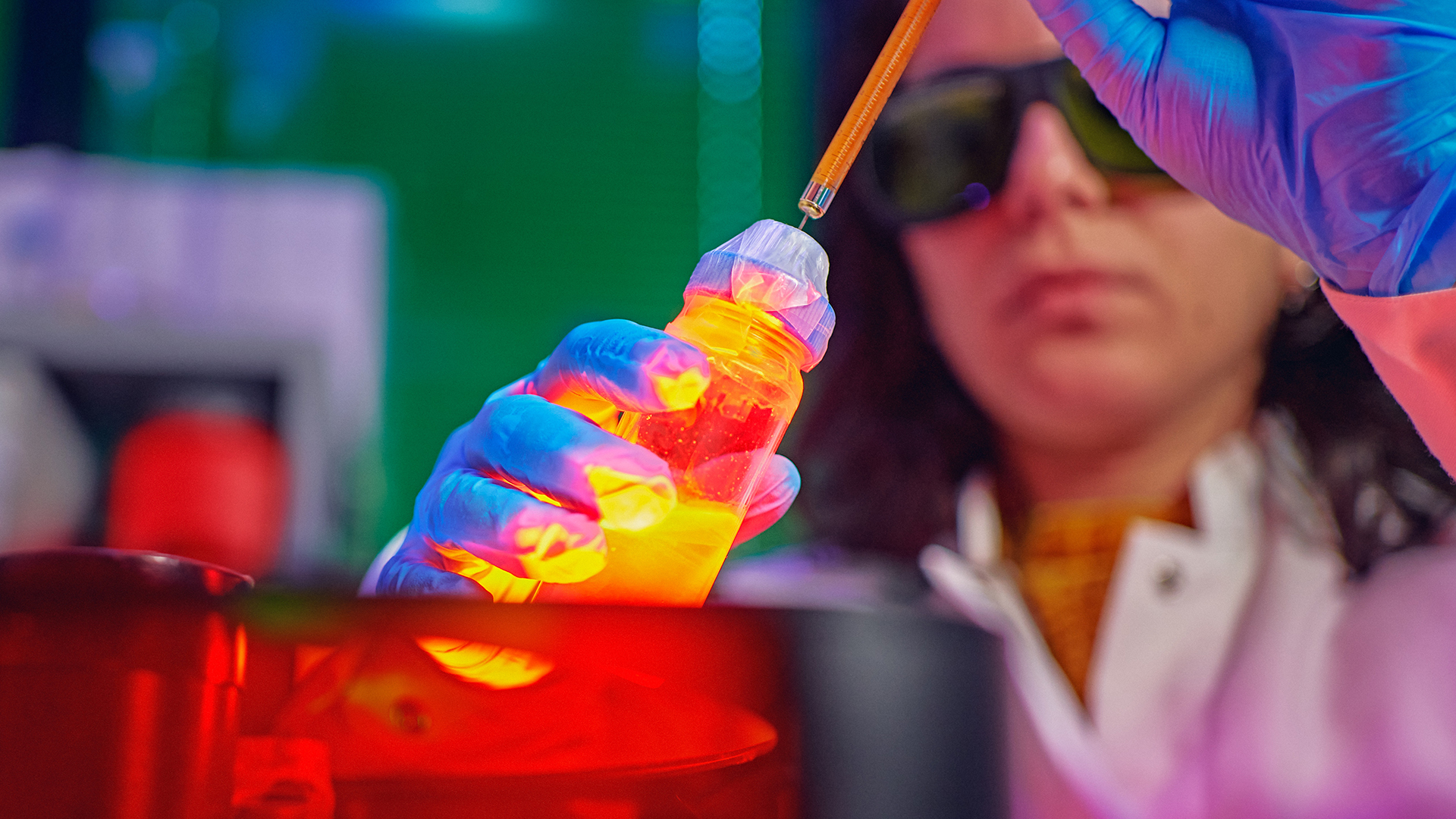
Finland’s clean hydrogen revolution is accelerating in Oulu thanks to the University of Oulu’s cutting-edge research program H2FUTURE.
Finland is rapidly establishing itself as a hub for clean hydrogen development, and the northern city of Oulu is at the forefront of this green revolution. In 2025, the City of Oulu and the French company Verso Energy signed a contract to build Finland’s largest hydrogen purification plant, a €1.4 billion facility that will produce 80,000 tonnes of sustainable aviation fuel (SAF) per year and create 250 jobs. The project will make Oulu a major hydrogen hub in Northern Europe and demonstrate how regional cooperation can attract large-scale Power-to-X (PtX) investment.
German company Hy2gen has similarly secured land for a 200 MW renewable hydrogen and e-fuels plant in Oulu’s Vihlesaari port, positioning Oulu as a key location for PtX projects in the Baltic Sea region. In fact, Oulu currently has more synthetic fuel initiatives under development than any other city in the region, with multiple companies (Verso, Hy2gen, Energiequelle, ABO, P2X Solutions, Oulun Energia) planning hydrogen-based facilities. This momentum is being fueled by Oulu’s favorable conditions of abundant, low-cost renewable energy, strong research infrastructure and excellent logistics, which together create the ideal environment for a flourishing hydrogen economy.
Importantly, Oulu is leveraging its national and international networks to expand its hydrogen ambitions. It plays a key role in BotH₂nia, an international alliance to build a large-scale hydrogen economy around the Gulf of Bothnia and the Baltic Sea. The city of Oulu’s active participation in the BotH₂nia network embodies the collaborative spirit of the region. The city hosts Nordic Hydrogen Week and the Northern Power Forum, which convene industry leaders, researchers and policy makers on advancing hydrogen solutions. These efforts highlight Finland’s commitment to putting words into action and turning visionary plans into concrete projects. With supportive policies (such as streamlined zoning and permitting) and public-private collaboration, Finland is emerging as a global hub for green hydrogen innovation, and Oulu’s rapid progress shows how a mid-sized Arctic city can punch above its weight in the transition to clean energy.
University of Oulu: A powerhouse of hydrogen research
At the heart of Oulu’s hydrogen ecosystem is the University of Oulu, which is one of the key Nordic research centers for hydrogen and green transition technologies. The University coordinates more than 60 hydrogen-related projects with a total funding of more than €64 million, covering the entire hydrogen value chain, from production and storage to utilization, materials, circular economy, education and the social aspects of transition. This comprehensive portfolio, backed by a state-of-the-art research infrastructure and an open and collaborative culture, puts Oulu in a unique position to shape the future of sustainable energy in the Arctic and beyond.

Beyond research: University of Oulu is equally committed to hydrogen education and workforce development
In addition to research, the University of Oulu is also focused on promoting hydrogen-related education and developing the workforce of the future. Through initiatives such as the FITech Hydrogen Learning Module and the H2School project, universities and their partners are developing the next generation of hydrogen technology, from the basics of the hydrogen economy and fuel cells to hydrogen safety and industrial applications. New hydrogen-focused courses have been integrated into the engineering curriculum (e.g. Hydrogen and Fuel Cells, Hydrogen as a Source of Flexibility), reflecting a holistic approach across undergraduate, graduate and continuing education. By incorporating hydrogen across disciplines, universities ensure a pipeline of skilled professionals ready to drive the green transition.
Importantly, the University of Oulu also spearheaded the creation of the Hydrogen Research Forum Finland (often referred to as Hydrogen Research Finland), a national platform that brings together Finnish universities and research institutes to coordinate hydrogen research and development efforts. The forum will foster cross-institutional knowledge sharing and collaborative projects, expanding Finland’s influence in the world’s hydrogen phase. Interdisciplinary and international cooperation is central to Oulu’s philosophy. For example, the university’s H2FUTURE team represented Finland at the 2024 World Hydrogen Summit in Rotterdam, promoting Oulu as a dynamic hydrogen hub and forging new connections with industry and academia around the world. Such initiatives ensure that Oulu’s innovations contribute to and benefit from the broader hydrogen community.
Inside the H2FUTURE program: clean hydrogen and sustainable steel
The culmination of Oulu’s hydrogen efforts is the H2FUTURE program, a five-year (2023-2028) research initiative funded by the Finnish Research Council’s PROFI7 scheme. H2FUTURE, which stands for “The Future of Hydrogen as a Climate Change Solution,” aims to develop breakthrough solutions for clean hydrogen production and fossil-free steel manufacturing. This interdisciplinary program brings together chemists, physicists, materials scientists, and engineers under one umbrella to holistically address hydrogen challenges from production to end use. H2FUTURE’s research portfolio consists of four interrelated themes.
Solar Hydrogen – Development of water splitting technology using direct solar power generation
Researchers in this field are designing advanced photocatalysts (such as novel halogenated bismuth perovskites) to maximize sunlight absorption and increase hydrogen production without consuming electricity. The team, led by Professor Marko Huttula (H2FUTURE program lead) and tenure-track professor Matti Silveri, is also researching quantum computing algorithms to better model photocatalytic materials at the molecular level. Silveri’s group aims to optimize catalyst design and chemical processes for hydrogen production by leveraging next-generation computing. This is a cutting-edge approach that links quantum technology to sustainable energy.
Direct solar hydrogen technology has recently reached an important stage, allowing the creation of a world-class spin-off company, ZUN‑H Oy, to commercialize the technology developed at the University of Oulu.
H₂ without carbon emissions – scaling up methane pyrolysis and other CO₂-free hydrogen production methods
This theme focuses on catalytic processes that split methane (natural gas or biogas) into hydrogen and solid carbon without releasing CO₂. Under the guidance of sustainable chemistry experts Professor Ulla Lassi and Associate Professor Satu Ojala, the team is designing robust catalysts and reactors to increase the energy efficiency of methane pyrolysis.
Solid carbon by-products can be of high value (such as battery-grade nanocarbon), turning by-products into assets. “If the production of even one of the key components of a battery becomes more sustainable, it would be a big step towards improving the sustainability of energy in general,” Professor Rassi said.
A shining example of that impact is Hycamite TCD Technologies, a Finnish start-up that has built Europe’s largest methane cracking pilot plant. Hikamite’s core technology, an emissions-free hydrogen production process, is rooted in long-term research carried out at the University of Oulu by Professor Rassi’s group.
H2FUTURE researchers participated in the opening of Hycamite’s Kokkola factory in 2024, celebrating the translation of laboratory discoveries into industrial-scale solutions.
“It’s great to see scientific research transformed into new business,” said Rassi, noting that Hikamite’s founders are Oulu graduates and their innovations came from the university’s research and the catalytic materials developed. This academia-to-industry success story shows that H2FUTURE can have an impact beyond the paper and enable the real-world deployment of clean hydrogen technology.
Sustainable use of H₂ in metal production – revolutionizing metallurgical processes by replacing fossil fuels with hydrogen
This theme addresses the production of steel and ferroalloys, one of the most difficult sectors to reduce. Under the direction of Professor Timo Fabritius (Head of Process Metallurgy in Oulu) and Professor Pasquale Cavaliere, researchers are advancing the technology of reducing metal oxides using hydrogen instead of carbon. By improving the reaction speed and energy efficiency of processes such as iron ore reduction, the company aims to significantly reduce CO₂ emissions from steelmaking.
“Reducing carbon emissions in steel production depends critically on replacing carbon-based reductants with hydrogen as a carbon-free technology,” said Professor Fabritius, deputy leader of the H2FUTURE program.
Cavaliere, a prominent metallurgist employed by Oulu, highlighted the versatility of hydrogen in decarbonizing industries, saying: “Hydrogen has so many uses that it will play an important role in a sustainable future.” His team is optimizing hydrogen reduction in shaft furnaces and new methods (such as hydrogen plasma or fluidized bed reactors) for fossil-free steel production. This is in line with initiatives such as Sweden’s Hybrid, which aims for completely fossil-free steel by 2030. By developing hydrogen-based metallurgical processes, H2FUTURE is currently helping pave the way for a green transition for the steel industry in Finland and across Europe.

Optimizing ultra-high strength steel – enabling next generation metals to withstand hydrogen use
The Achilles heel of hydrogen in metals is embrittlement. Hydrogen atoms can penetrate the steel and cause it to crack and break. Under the direction of Professor Jukka Kömi and tenure-track Professor Vahid Javaheri (physical metallurgist), the theme is to devise steels and processes that withstand the harmful effects of hydrogen.
“If we are to build a hydrogen-based society where hydrogen is widely used as a fuel or energy source, we need to really focus on research into what materials can be used in such an environment,” Professor Komi said.
Dr. Javaheri’s group uses advanced microscopy and atomic-scale simulations to understand how hydrogen interacts with metal microstructures. Their research achieved a steel that is nearly three times stronger than common high-strength alloys (up to 2.5 GPa) while maintaining ductility. Using such super-strong steel reduces the carbon footprint of construction by requiring less material for the same job.
Additionally, by tuning the microstructure and adding traps designed for hydrogen atoms, we are developing alloys that maintain toughness and reliability even in hydrogen-rich environments. These breakthroughs are essential to building the infrastructure for a hydrogen economy that requires steel to safely handle hydrogen, from pipelines and storage tanks to fuel cell vehicles. Javaheri explains: “This research is essential for the safe and efficient use of hydrogen as an energy carrier and reducing agent in steelmaking,” contributing to both cleaner energy and greener steel production.
H2FUTURE’s multidisciplinary ecosystem bridges basic science and industrial applications
Together, these four themes form a synergistic pipeline. H2FUTURE covers hydrogen production (solar and pyrolysis routes), through storage and transport (materials compatibility), to end use in heavy industry (steel production). This is a truly interdisciplinary ecosystem that bridges basic science and industrial applications. The structure of this program also encourages cross-pollination. For example, material discoveries in the steel theme feed back into better catalysts, while insights from hydrogen production inform process engineers about the optimal hydrogen quality for metallurgy. H2FUTURE brings together experts in physics, chemistry, and engineering to create the holistic innovations needed to solve complex sustainability challenges.
We are always interested in collaboration, so please get in touch with our active team.
Please note: This is a commercial profile
This article will also be published in the quarterly magazine issue 25.
Source link
