

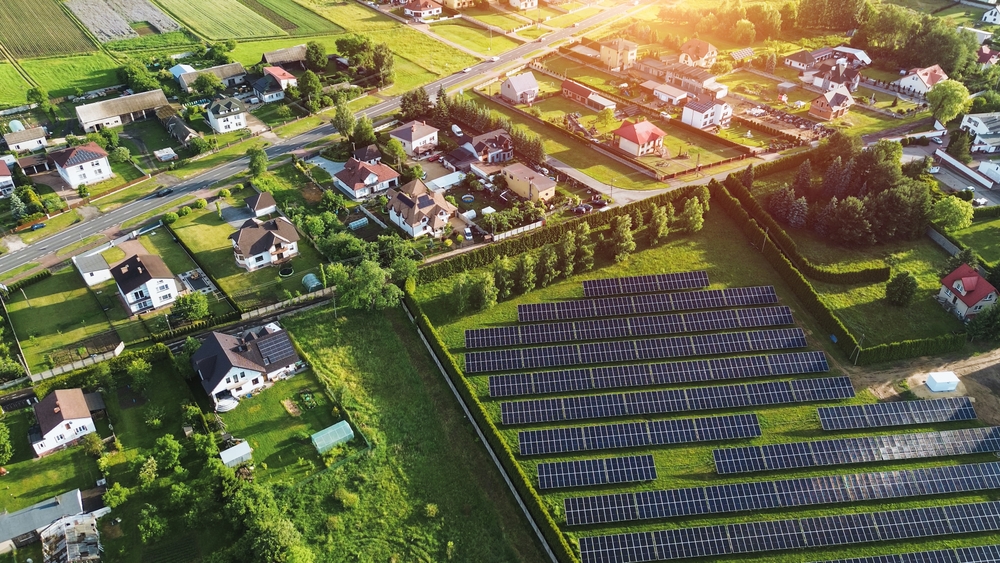
The STREACS initiative, led by the American University of Armenia, aims to strengthen Armenia’s research capacity in the energy transition, bring it in line with European standards, and foster cooperation with experts in the field of European research.
Against the backdrop of accelerating climate change and energy policy reforms, energy security occupies an important position in global and Armenian policy-making. Evidence-based guidance on this complex transformation requires strong research capacity that engages policymakers, business, and society. The EU-funded STREACS, led by the American University of Armenia (AUA) Akopian Environmental Center, provides this support with the aim of strengthening Armenia’s energy research ecosystem, contributing to national and regional policy-making, and enabling further integration of Armenian researchers into European research areas and networks.
Armenia seeks to align its national energy transition agenda with broader European climate and security objectives. The country’s energy system reflects challenges shared by many net energy importing countries, making it a relevant case for the pan-European debate on resilience, diversification and decarbonisation.
Currently, Armenia’s energy supply is dominated by imported fossil fuels. With no proven domestic coal, natural gas, or oil reserves, the country is highly dependent on external actors for most of its energy needs. This situation reinforces the importance of advanced energy system modeling and long-term transition planning capabilities, which are essential to the dual objectives of pursuing climate neutrality and strengthening energy security. Despite huge potential and rapid growth, the country’s renewable resources remain underutilized.
Armenia is built on a strong scientific tradition and is investing in modernizing its research ecosystem to meet modern international standards of excellence, openness and impact.
“Without strong research capacity and science-policy dialogue, policy-making can become reactive rather than strategic, leading to risks associated with misallocation of resources and failure to achieve security and sustainability goals,” said Aren Gasparian Amirkhanian, director of the AUA Akopian Center.
STREACS Initiative: Accelerating the integration of the European research area into the energy transition
The Strengthening Research in Armenia for Energy Transition towards Climate Change Solutions (STREACS) project is an EU Horizon Europe initiative aimed at accelerating Armenia’s integration into the European research area through excellence-led cooperation. Its overarching goal is to reinvigorate Armenia’s research capabilities and align them with key European institutions, strengthening Armenia’s role as an active contributor and actor in the European Research Area (ERA), especially in topics related to the energy transition.
STREACS operates on a cooperation model that combines the Armenian beneficiary institutions American University (AUA) Acopian Center for the Environment, Research Institute of Energy Sciences of Armenia (SRIE) and National Technical University of Armenia (NPUA) with key EU scientific partners such as Maynooth University (Ireland), University of Campania (Italy) and University of Genoa (Italy). The consortium’s business partner Artemat Srl (Italy) provides highly valuable scenario simulation and serious game development capabilities. The project’s strategy is built on three integrated pillars.

Pillar 1: Research cooperation
STREACS expands the structured collaboration between Armenian researchers and leading research centers in Europe. This enabled the movement and exchange of 29 early-stage researchers through a two-week scientific mission to partner with EU institutions to share agendas and approaches, identify common interests and explore new research methods. By 2026, 40 early-stage researchers and international experts will be participating in the project, summer school, winter school, and future science missions.
Pillar 2: Human capital and organizational development
To ensure long-term impact, STREACS invests in training on advances in the energy sector and institutional capacity building in research grant management. This pillar employs innovative educational tools.
Micro-credentials and MOOCs: This project is developing 15 micro-credentials (MCs). These short, specialized learning units cover hard skills such as energy demand modeling and power generation and storage technologies, as well as soft skills such as grant writing, grant management, and research ethics. Gamification: In partnership with technology developer Artemat, STREACS has introduced “Serious Games”. This web-based simulation immerses users in the lifecycle of a research project, coordinates interdisciplinary consortia, and trains users to handle the pressures of proposal writing.
Pillar 3: Conducting interdisciplinary and interdisciplinary research
The third pillar translates strong academic expertise into practical knowledge by engaging multiple academic disciplines (policy, engineering, law, data analytics, environmental science, etc.) and is an interdisciplinary approach, as well as integrating government, business and civil society through an interdisciplinary framework.
Thirty-four early-stage researchers from a variety of disciplines collaborate on research projects, consulting not only with colleagues from other disciplines (recognizing that complex problems require expertise from multiple disciplines) but also with multiple non-academic stakeholders. They consult with governments, regulatory bodies, businesses and civil society to increase the relevance of research. In the context of research in Armenia, this is an important and far-reaching advance and innovation.
Research under this pillar focuses on:
• Modeling the energy system of Armenia in the context of climate and energy.
• Assessing the regional impact of renewable energy generation
• Analysis of electricity market liberalization and its role in the energy transition
• Exploring regulatory innovations, including testing a regulatory sandbox in Armenia’s energy sector.
Expected impact
STREACS will achieve a tangible and long-term strengthening of Armenia’s research and innovation ecosystem through strong and sustained connections with the European energy transition research community. For the research community, the impact is concrete and specialized. STREACS supports sustainable career paths for early career researchers and deeper integration into European research cooperation by increasing their participation in international networks and improving their success in competitive funding schemes.
Designed to survive the end of the original subsidy, this self-supporting hub will serve as a permanent interface for EU and partner cooperation. This effort will culminate in the final international scientific conference “Energy Transition for Climate Solutions: Towards Sustainability, Resilience and Security” to be held in Yerevan in 2027, which will further establish Armenia as an active and reliable contributor to European energy transition research and dialogue. Before this conference, STREACS will support the creation of the Energy Transition Cluster for Climate Change Solutions (CET4CS), a broad network of Armenian and EU energy researchers, laying the foundations for permanent cooperation and deeper integration with the European research community.
“STREACS is not just an academic activity, but a structural investment in sustained international research capacity and collaboration,” said Alen Gasparyan Amirkhanian, director of the Acopian Environmental Center at the American University of Armenia.

Please note: This is a commercial profile
This article will also be published in the 25th issue of the quarterly magazine.
Source link
