

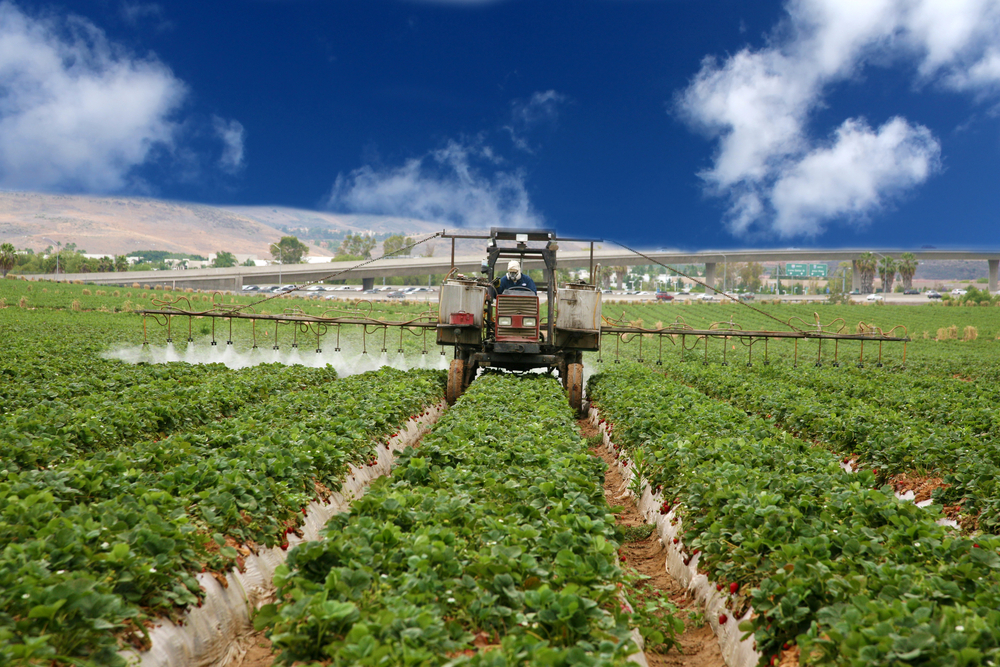
A new bill introduced in the California Legislature aims to phase out the use of PFAS pesticides, a class of persistent synthetic chemicals that are increasingly linked to environmental pollution and human health risks.
The proposal follows recent testing that found these substances in a significant portion of conventionally grown fruits and vegetables across the state.
The bill, Assembly Bill 1603 (AB 1603), would establish a timeline for eliminating PFAS pesticides from California agriculture, and the interim measures focus on transparency and regulatory oversight.
The move would bring California more closely aligned with jurisdictions that already impose restrictions on these chemicals.
Evidence of contamination drives policy progress
A recent analysis of state data shows that PFAS pesticide residues are present on a significant percentage of California produce.
When 930 non-organic fruit and vegetable samples were tested, detectable levels were found in about 37% of cases. More than half of the produce types tested had at least some degree of contamination.
Separate test results revealed that detection rates were particularly high for stone fruits, with the majority of peaches, nectarines and plums tested containing measurable residues.
PFAS (short for per- and polyfluoroalkyl substances) are widely used in industrial applications due to their chemical stability.
However, the same stability means that they persist in the environment and accumulate in organisms. Its resistance to deterioration has earned it the label “eternal chemical.”
What AB 1603 proposes
This bill outlines a phased approach to restricting PFAS pesticides in California.
The main provisions are as follows.
2027: Suspension of new national approvals of PFAS-based pesticides 2027: Required public disclosure and reporting of their use 2030: Ban on 23 PFAS pesticide active ingredients already banned in the European Union 2035: Complete ban on the use, sale and manufacture of all PFAS pesticides
The measure has been referred to the Congressional Committee on Environmental Safety and Toxic Substances and is expected to be reviewed in the coming weeks.
Scale of PFAS pesticide use in California
Although PFAS pesticides make up a relatively small proportion of registered pesticides, they make up a disproportionate proportion of detected residues. Of the approximately 70 pesticides registered at the federal level, more than 50 are approved for use in California.
These substances account for approximately 5% of active pesticide ingredients registered with the state, but are responsible for an estimated 15% of residues in agricultural products.
Usage data suggests widespread use. From 2018 to 2023, California farmers sprayed about 15 million pounds of PFAS pesticides, averaging about 2.5 million pounds per year across all counties.
The highest levels of use were reported in major agricultural regions such as Fresno, Kern, San Joaquin and Imperial counties.
These chemicals are commonly applied to high-value crops such as almonds, pistachios, wine grapes, and tomatoes.
Environmental sustainability and by-products
One of the main concerns surrounding PFAS pesticides is their environmental durability. The carbon and fluorine bonds that define these compounds are among the strongest in organic chemistry, making them extremely resistant to decomposition.
Over time, PFAS can break down into secondary compounds such as trifluoroacetic acid (TFA). This byproduct is increasingly detected in water systems, wildlife, and human populations.
Estimates suggest that pesticide-related PFAS use in California could generate hundreds of thousands of pounds of TFA annually.
Recent studies have linked TFA exposure to possible reproductive and immunological effects, although the full range of these effects is still being investigated.
Gaps in toxicity data
Regulatory oversight has increased, due in part to incomplete toxicological data for many PFAS pesticides. A recent analysis by federal regulators found that dozens of these chemicals lack up-to-date research on developmental and reproductive toxicity.
Furthermore, immunotoxicity testing, which is important for understanding the effects on the immune system, is not always required in the pesticide approval process. This has raised concerns among scientists about whether existing safety assessments are adequate.
Another complicating factor is the presence of PFAS as so-called “inert” ingredients in pesticide formulations. Although these substances may improve performance, they are not necessarily disclosed individually, limiting visibility of overall exposure risk.
Route of human exposure
PFAS contamination in agriculture has multiple exposure routes. Residues in food are one pathway, but environmental runoff can contaminate groundwater and affect drinking water supplies.
Biomonitoring data from U.S. health agencies shows that PFAS compounds are detectable in the blood of the majority of Americans, including young children. Some PFAS, even at low concentrations, are associated with immunosuppression, developmental effects, and increased cancer risk.
Regulatory differences and global context
California’s regulatory framework allows the state to independently evaluate and approve pesticide use, separate from federal decisions. This autonomy has allowed for stricter standards in some regions, but PFAS pesticides are still widely allowed.
Other governments are moving more aggressively. Several U.S. states have enacted or proposed bans on PFAS for various uses, including agriculture.
Internationally, the European Union has already banned many PFAS pesticide ingredients still in use in California, and Denmark has introduced targeted regulations.
Impact on agriculture and public health
If enacted, AB 1603 would represent a major change in California’s approach to pesticide regulation, especially given California’s role as a major agricultural producer.
Although the proposed schedule allows for a gradual transition, the bill raises broader questions about the balance between agricultural productivity, chemical risk management, and public health protection.
As scientific understanding of PFAS continues to evolve, policymakers face increasing pressure to address both past contamination and ongoing sources of exposure, particularly those directly related to the food supply.
Source link
