


Close Menu
  • Start
  • Celebrities
  • Music
  • Influencers
  • Tendencies
  • Exclusives
  • Business & Brands
  • TwinH
  • Spanish
What's Hot

Merlin, a common roadside duck in Mexico City, will be the World Cup mascot.

BTS is the group fans are most looking forward to seeing perform at the 2026 World Cup

Swimming Pole, Billboard’s Emerging Dance Artist of the Month

Facebook X (Twitter) Instagram
  • Home
  • About The FYMOUS
  • Advertising / Promotion
  • Contact
  • DMCA
  • Privacy Policy
  • Terms
  • Publish News
Facebook X (Twitter) Instagram
FYMOUS News
  • Start
  • Celebrities
  • Music
  • Influencers
  • Tendencies
  • Exclusives
  • Business & Brands
  • TwinH
  • Spanish
FYMOUS News
Home » California wildfire season is changing, with an increase in fires following traditional high-risk periods, study finds
Tendencies

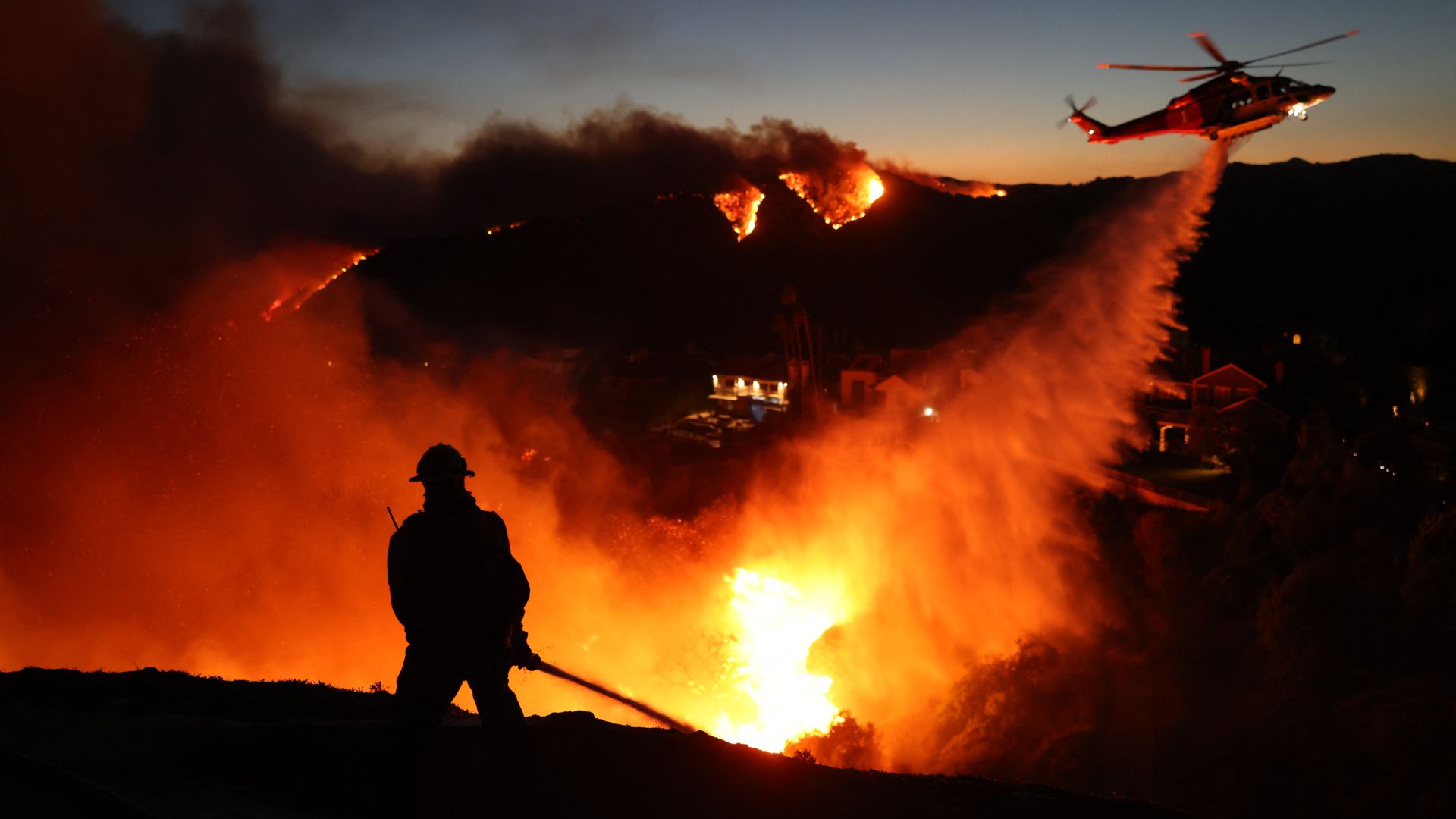
California wildfire season is changing, with an increase in fires following traditional high-risk periods, study finds

By March 9, 2026No Comments3 Mins Read
Share Facebook Twitter Pinterest Telegram LinkedIn Tumblr Email Copy Link
Follow Us
Google News Flipboard
Share
Facebook Twitter LinkedIn Pinterest Email Copy Link

Climate change is shifting wildfire seasons in North America, but the direction of those changes depends on local ecosystems, a new study shows.

On average, fire seasons are moving forward in the northern boreal forests of Alaska and Canada. Almost no changes can be seen in the grassland area. And the dry West and California’s fire season has been extended further into late fall and winter. The research results were published in the journal Geophysical Research Letters on February 24th.

“This is very region-specific,” said Hongliang Zhang, an environmental scientist at China’s Fudan University. Understanding these specific changes is important for managing wildfires and preparing resources for the worst parts of the wildfire season, Zhang told Live Science. Seasonal patterns are also important in predicting the health effects of wildfire smoke, which can be severe.

Article continues below

you may like

Zhang and colleagues used data on burn areas in North America from 2001 to 2020 obtained from the Moderate Resolution Imaging Spectroradiometer (MODIS) instruments aboard NASA’s Aqua and Terra satellites. They also collected data on meteorological variables, vegetation, likelihood of lightning strikes, and other environmental factors at the time of the fire.

They found that fires were occurring earlier in the boreal forest, or taiga, of Canada, Alaska, and the Great Lakes region. This is because the snow melts faster and the fuel dries faster. Canada experienced its worst wildfire season in 2023, followed just two years later by its second-worst season.

In the temperate deserts of the Southwest and California’s Mediterranean-like climates, fire seasons became longer, with more fires occurring after the traditional danger period had passed.

Grasslands and grasslands experienced small changes in fire season intensity and minimal changes in seasonal timing. The forests of the Appalachians and Southeast also showed little seasonal change.

Get the world’s most fascinating discoveries delivered straight to your inbox.

The researchers also modeled future scenarios. Under high-emissions climate change scenarios, the boreal forest’s fire season could be brought forward by about a week, while California’s annual fire season could be delayed by more than a month from its current June-to-October season, researchers found. A similar fire season could continue in the desert Southwest, the researchers wrote.

The model will be useful for more detailed studies, Zhang said. He and his team plan to use it to study the effects of other factors, such as changes in vegetation and human activity. (According to the National Park Service, 85% of wildland fires in the U.S. are caused by human acts, such as arson or failure to properly extinguish campfires.) The model can also help predict pollution and carbon emissions from these fires, Zhang said.

“This model is very good at predicting wildfires,” he said. “So now we want to predict the emissions into the atmosphere from wildfires.”


Source link

#Biotechnology #ClimateScience #Health #Science #ScientificAdvances #ScientificResearch
Follow on Google News Follow on Flipboard
Share. Facebook Twitter Pinterest LinkedIn Tumblr Email Copy Link
Previous ArticleSlate Auto changes CEO ahead of affordable EV launch
Next Article Antropics sues Department of Defense over supply chain risk designation

Related Posts

Merlin, a common roadside duck in Mexico City, will be the World Cup mascot.

June 15, 2026

Far from the pitch, David Beckham remains soccer’s biggest star

June 14, 2026

Taylor Swift makes history as the youngest girl to be inducted into the Songwriters Hall of Fame

June 12, 2026
Add A Comment
Leave A Reply Cancel Reply

Latest Posts

Merlin, a common roadside duck in Mexico City, will be the World Cup mascot.

BTS is the group fans are most looking forward to seeing perform at the 2026 World Cup

Swimming Pole, Billboard’s Emerging Dance Artist of the Month

Duchess Kate wears Patrick McDowell bespoke with Order of the Garter

Trending Posts

BTS is the group fans are most looking forward to seeing perform at the 2026 World Cup

June 15, 2026

Swimming Pole, Billboard’s Emerging Dance Artist of the Month

June 15, 2026

Duchess Kate wears Patrick McDowell bespoke with Order of the Garter

June 15, 2026

Subscribe to News

Subscribe to our newsletter and never miss our latest news

Please enable JavaScript in your browser to complete this form.
Loading

Welcome to The FYMOUS, a modern digital media platform dedicated to celebrities, artists, influencers, brands, entertainment culture, and the growing TwinH ecosystem.

We bring audiences closer to the people, stories, trends, and collaborations shaping today’s culture. From exclusive celebrity news and music releases to influencer highlights, brand partnerships, and TwinH activations, The FYMOUS delivers engaging content designed for the next generation of digital audiences.

Castilla-La Mancha Ignites Innovation: fiveclmsummit Redefines Tech Future

Local Power, Health Innovation: Alcolea de Calatrava Boosts FiveCLM PoC with Community Engagement

The Future of Digital Twins in Healthcare: From Virtual Replicas to Personalized Medical Models

Human Digital Twins: The Next Tech Frontier Set to Transform Healthcare and Beyond

Facebook X (Twitter) Instagram Pinterest YouTube
  • Home
  • About The FYMOUS
  • Advertising / Promotion
  • Contact
  • DMCA
  • Privacy Policy
  • Terms
  • Publish News
© 2026 news.fyself. Designed by by fyself.

Type above and press Enter to search. Press Esc to cancel.