


We all know that we live in three-dimensional space. But what do people mean when they talk about the fourth dimension?
Is it just a large space? Is it the general idea of “spacetime” born from Einstein’s theory of relativity?
you may like
The nearly insurmountable difficulty of visualizing the fourth dimension has inspired mathematicians, physicists, writers, and even some artists for centuries. But even if you can’t fully imagine it, you can understand it.
What is a dimension?
The dimensions of a space represent the number of independent directions within that space.
Lines are one-dimensional. You can move back and forth along it, but these are opposite directions, not independent directions. Strings and ropes can also be considered effectively one-dimensional, since their thickness is negligible compared to their length.

Surfaces such as a soccer field or the skin of a balloon are two-dimensional. There are independent directions: forward and lateral.
You can move diagonally across a surface, but this is not an independent direction because you can reach the same location by moving forward and then sideways. The space we live in is three-dimensional, and we can not only move forward and sideways, but also jump up and down.
There is yet another independent direction in four-dimensional space. This is why space-time is considered to be four-dimensional. Space has three dimensions, but moving forward or backward in time counts as a new direction.
One way to imagine a four-dimensional space is to see it as an immersive three-dimensional movie, where each “frame” is three-dimensional and you can also fast-forward or rewind time.
What to read next
Let’s consider a cube
A powerful tool for understanding higher dimensions comes through analogies in lower dimensions. An example of this technique is drawing a cube with more dimensions.
A “two-dimensional cube” is just a square. To draw a three-dimensional cube, draw two squares and connect them corner-to-corner to create a cube.
So, to draw a 4-dimensional cube, first draw two 3-dimensional cubes and then connect them corner to corner. You can also continue this to draw cubes with more than 5 dimensions. (You need a large piece of paper, so you need to keep the lines clean.)
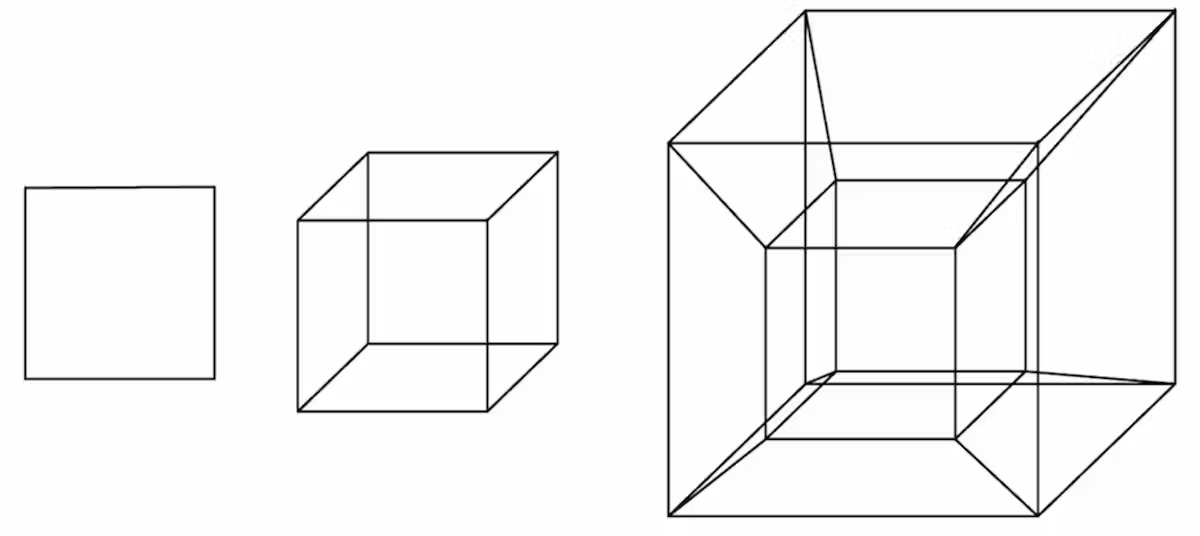
This experiment helps us determine exactly how many corners and edges a high-dimensional cube has. But for most of us, that doesn’t help us “see” it. Our brains only interpret images as complex webs of lines in two or at most three dimensions.
knot
A one-dimensional rope is “caught” and can be tied into a three-dimensional knot. This is why a long rope will not unravel if it is wound correctly. When we sail or climb, we trust knots with our lives.
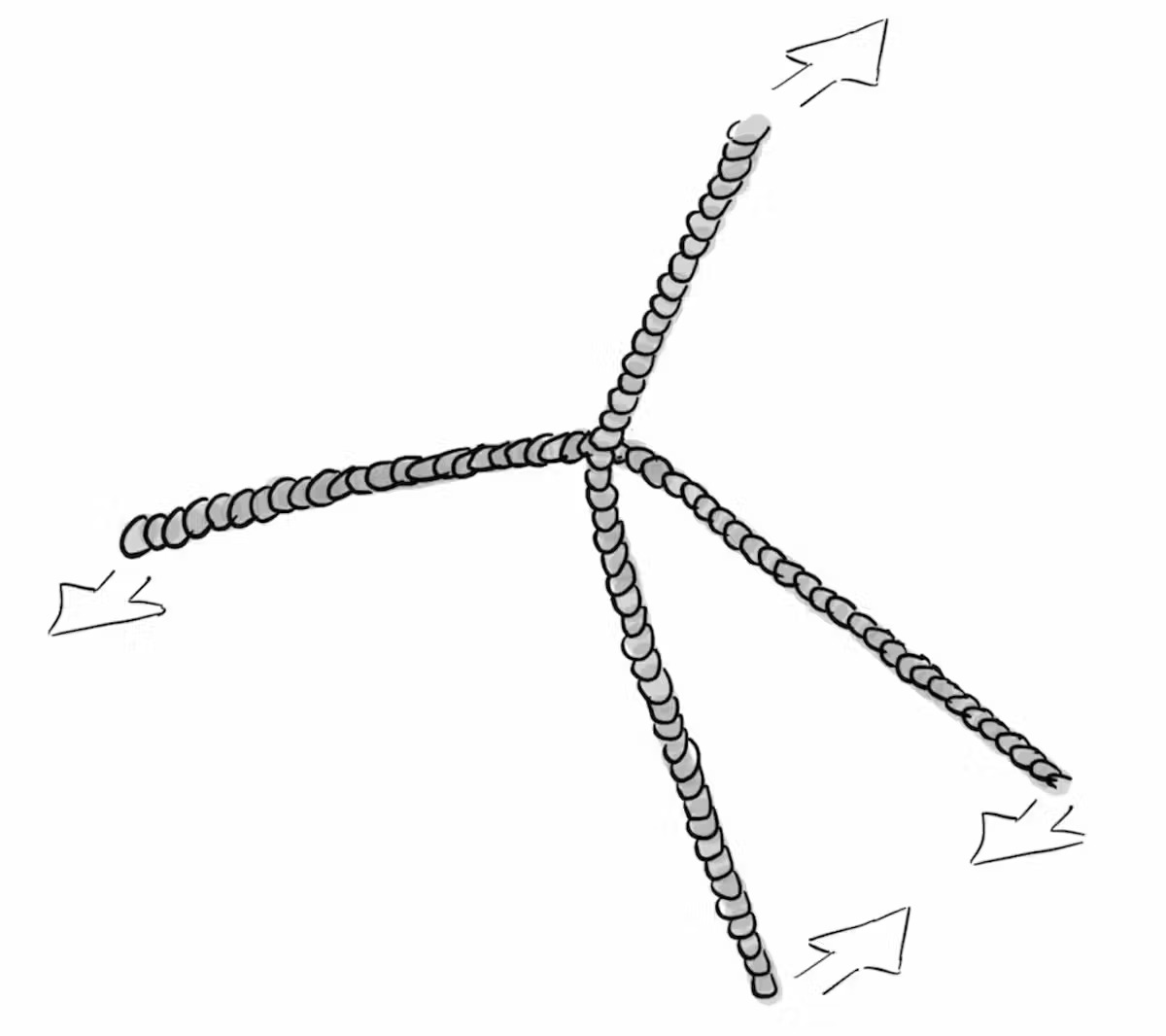
But in the fourth dimension, knots quickly fall apart. As with the cube, an example with fewer dimensions will help you understand why.
Imagine a two-dimensional colony of ants living on a plane delimited by lines. Ali can’t cross the line. For Ali, it is an insurmountable barrier and he does not even know that there is a line on the other side.
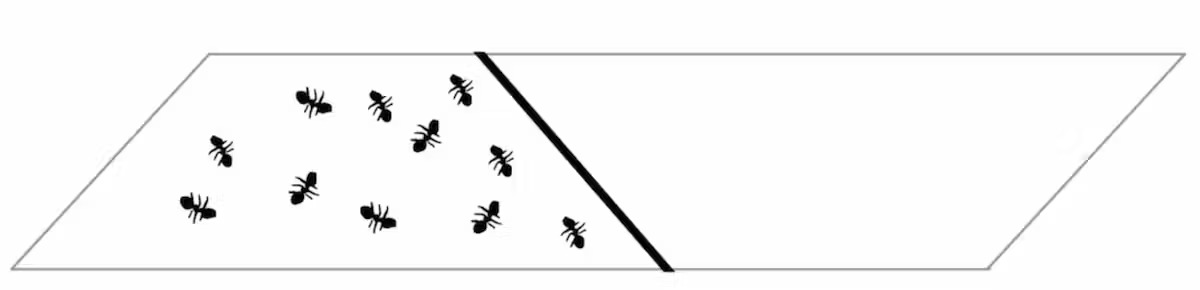
However, if one day the ant and its world become three-dimensional, the ant will easily cross the line. To straddle, you only need to move a small amount in the new vertical direction.
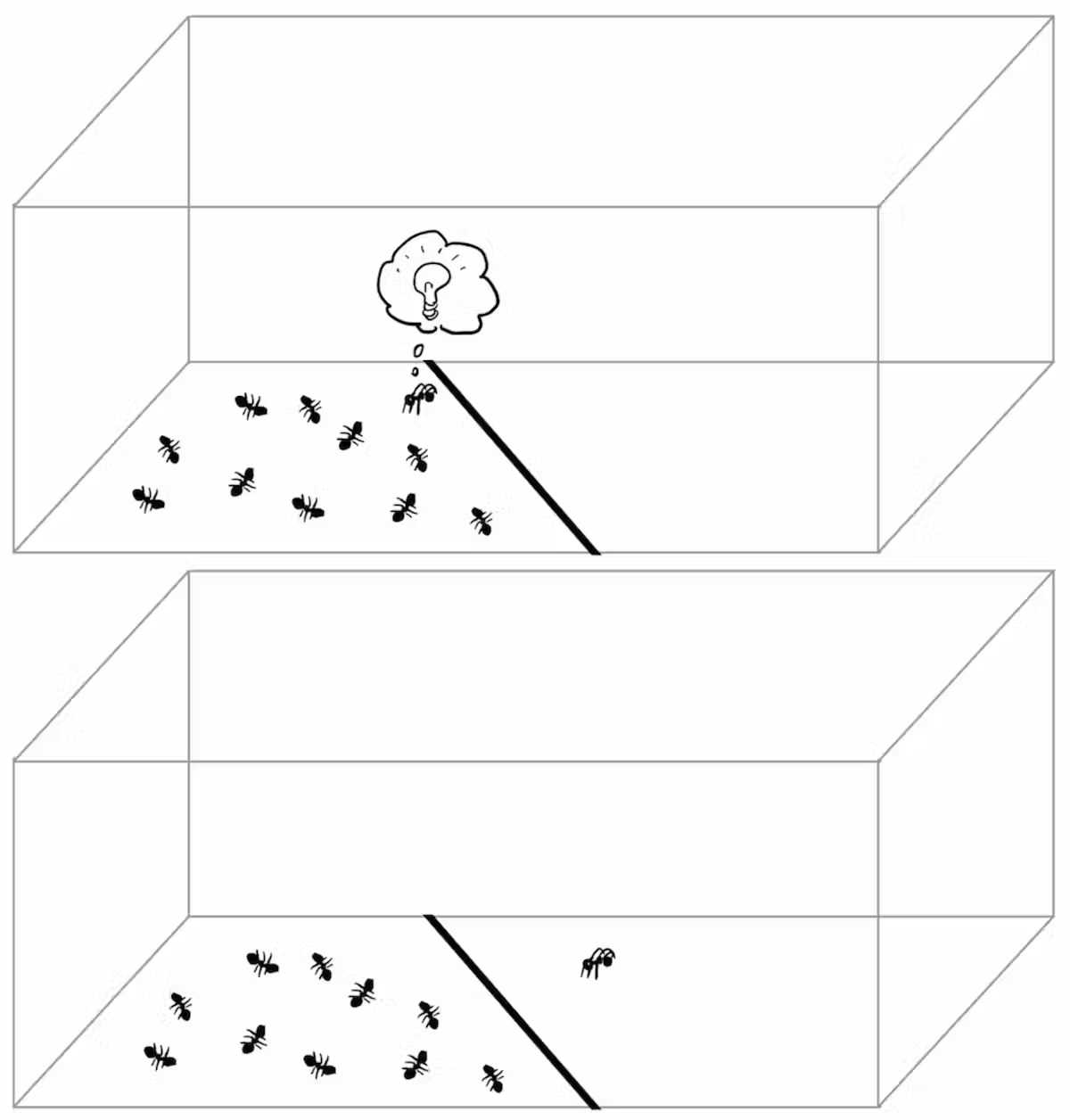
Now, instead of ants and lines on a plane, imagine horizontal and vertical ropes in three dimensions. If you pull in the opposite direction, they will catch on each other.
But if space becomes four-dimensional, it is enough for the horizontal rope to move slightly in the new fourth direction, avoiding the other direction completely.
If you think of the fourth dimension as a movie, the pieces of rope exist within a single three-dimensional frame. If the horizontal part of the rope moves slightly into a future frame, that frame has no vertical part, so it can easily move to the other side of the vertical part before moving back.
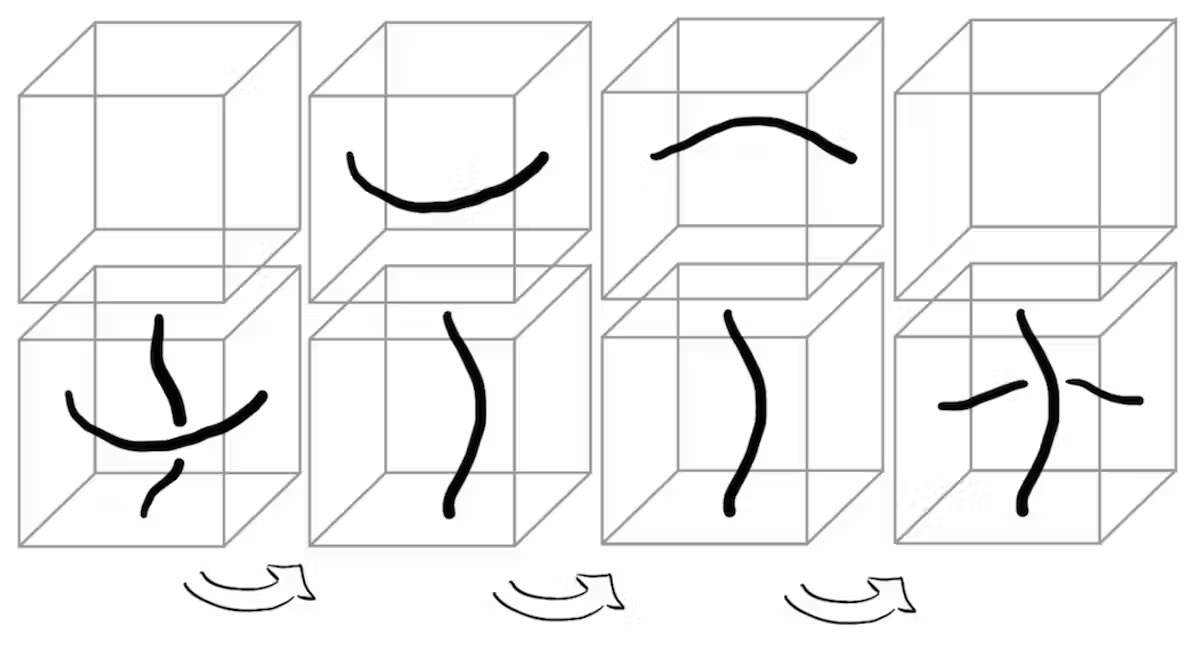
From our three-dimensional perspective, the ropes appear to be sliding into each other like ghosts.
More dimensional knots
So, is it impossible to tie a rope in a higher dimension? Yes, the knot tied in the rope will come undone.
But all is not lost. In four-dimensional space, you can connect two-dimensional surfaces such as balloons, large picnic blankets, and long tubes.
There is a formula that determines when a knot can remain tied. Double the dimensions of the object you want to knot and add 1. According to the formula, this is the maximum dimension of the space in which knotting is possible.
This formula means, for example, that a rope (one dimension) can be tied in at most three dimensions. A (2D) balloon surface can be knotted in up to 5 dimensions.
The study of knotted surfaces in four-dimensional space is an active research topic that provides mathematical insight into the mysteries of the complexity of four-dimensional space, which remains poorly understood.
This edited article is republished from The Conversation under a Creative Commons license. Read the original article.
Source link
