

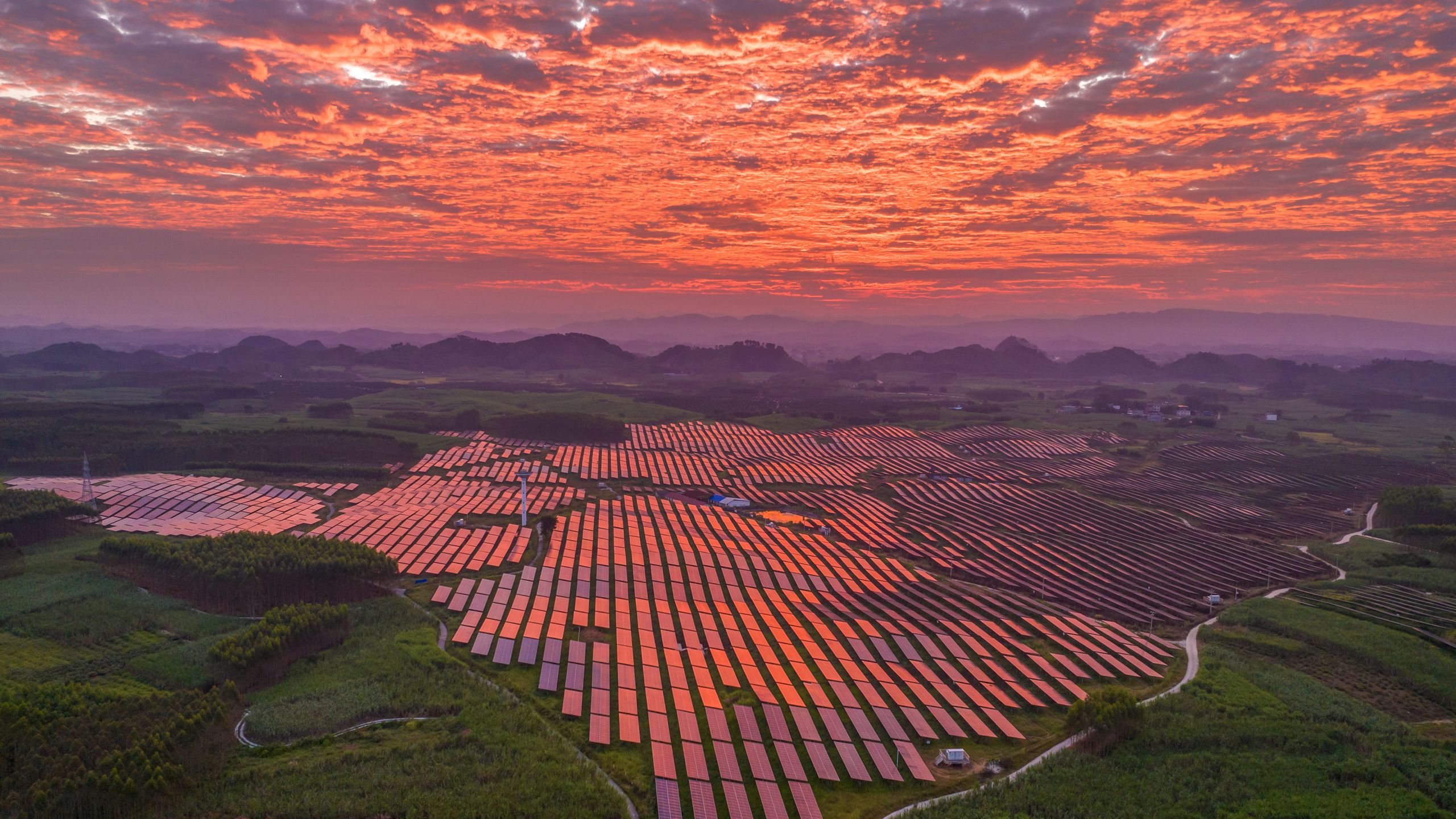
Carbon dioxide emissions from China have been flat or falling for 21 months, meaning the world’s biggest greenhouse gas emitter may have reached a global tipping point sooner than expected.
China’s carbon dioxide (CO2) emissions fell by 1% in the final quarter of 2025, and likely by 0.3% for the year, just below the record high set in May 2024, according to a new analysis by the Finland-based Center for Energy and Clean Air Research (CREA) Carbon Brief. The nearly two-year period of flatness or decline is the longest on record and is not due to an economic slowdown in the country, which emits more than a third of the world’s carbon dioxide emissions.
If this trend holds, China’s emissions could reach record highs before or even before the country’s official target date of 2030, marking a key victory in global efforts to curb fossil fuel use and slow global warming. However, it remains an open question whether this decline will be sustained or whether demand will spur a rebound in emissions before reaching the formally targeted peak.
you may like
“CO2 emissions in 2025 decreased year-on-year in almost all major sectors, including transport (3%), electricity (1.5%) and building materials (7%),” Lauri Milivirta, lead author of the analysis and co-founder of CREA, wrote in Blue Sky. “The main exception was the chemical industry, where emissions increased by 12%.”
“The figures suggest that China’s carbon intensity (fossil fuel emissions per unit of GDP) decreased by only 12% from 2020 to 2025, falling short of the target of 18%,” Millivirta added. “China needs to reduce its carbon intensity by about 23% over the next five years to meet the Paris Agreement.” [Agreement] promise. ”
Driving this trend are declining demand for cement and steel, as well as developments in renewable energy technology and electrified transportation in China. China is the world’s largest producer of both commodities, accounting for about 48% and 54% of global production of cement and steel, respectively, and each contributing about 15% of the country’s total greenhouse gas emissions.
The stagnation occurred even as China’s electricity consumption increased by 520 terawatt hours (TWh) in 2025, according to CREA’s analysis. That’s because clean energy production increased in line with electricity consumption, with solar power output increasing by 43%, wind by 14%, and nuclear by 8% year-on-year, providing approximately 530 TWh of new electricity. Energy storage capacity also increased by 75 gigawatts (GW), outpacing demand growth of 55 GW.
However, whether this plateau is maintained, there is a temporary recovery, or there is a permanent decline will depend on the decisions made by the Chinese government in its next five-year plan, which will be announced in March.
CREA’s analysis points out some ambiguities in the Chinese Communist Party’s plans. Explainers of the next plan refer to a “plateau” in coal consumption from 2027, suggesting that absolute reductions in emissions may have to wait until 2030 or later.
“Furthermore, allowing coal consumption in the power sector to increase beyond the peak of overall coal use and emissions would mean a slowdown in China’s clean energy boom,” the CREA report states. So far, the boom continues to far exceed official targets.”Clean energy technologies drove more than a third of China’s economic growth in 2025.
China is complementing its clean energy investments with environmental engineering projects, such as reforestation around the Taklamakan Desert, which has turned one of the world’s largest and driest deserts into a carbon sink.
Meanwhile, today (February 12), the Trump administration plans to rescind the 2009 “crisis designation” that established a legal mechanism to regulate U.S. greenhouse gas emissions. And on Wednesday (Feb. 11), the Washington Coal Club awarded President Trump its “Undisputed Coal Champion” award, a day after Trump issued an executive order to the Pentagon to buy coal-generated electricity.
Source link
