
Close Menu
  • Home
  • Identity
  • Inventions
  • Future
  • Science
  • Startups
  • Spanish
What's Hot

Hackers release personal information stolen during Harvard, University of Pennsylvania data breaches

Microsoft develops scanner to detect backdoors in open weight large-scale language models

DEAD#VAX malware campaign deploys AsyncRAT via VHD phishing files hosted on IPFS

Facebook X (Twitter) Instagram
  • Home
  • About Us
  • Advertise with Us
  • Contact Us
  • DMCA
  • Privacy Policy
  • Terms & Conditions
  • User-Submitted Posts
Facebook X (Twitter) Instagram
Fyself News
  • Home
  • Identity
  • Inventions
  • Future
  • Science
  • Startups
  • Spanish
Fyself News
Home » Dark energy research results: Standard model of cosmology supported by six years of space research, with one big caveat
Science

Dark energy research results: Standard model of cosmology supported by six years of space research, with one big caveat

userBy userJanuary 27, 2026No Comments4 Mins Read
Share Facebook Twitter Pinterest Telegram LinkedIn Tumblr Email Copy Link
Follow Us
Google News Flipboard
Share
Facebook Twitter LinkedIn Pinterest Email Copy Link

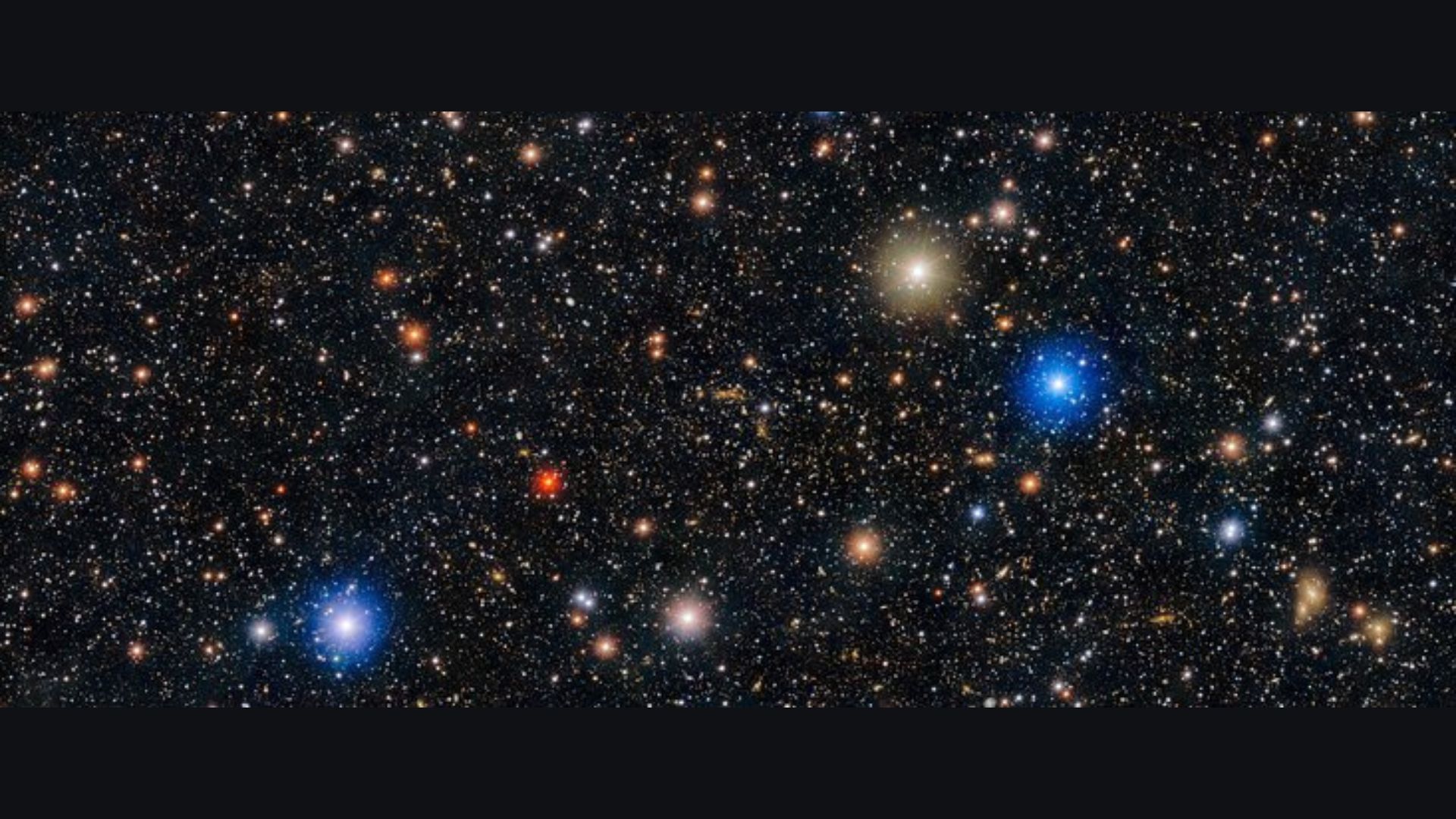
A six-year study of 669 million galaxies has revealed insights into dark energy, the mysterious phenomenon driving the accelerating expansion of the universe.

This groundbreaking study paints a complex picture of our understanding of the universe, showing that the two major theories of cosmology are both equally compatible with new observations of the expansion of the universe. However, both theories are still insufficient to explain why there are such clumps of matter in the universe, suggesting there is still work to be done.

The Dark Energy Survey (DES) analysis combines four types of data collected by the Victor M. Blanco telescope in Chile, covering about one-eighth of the sky. The study focuses on the past and present expansion of the universe, and imposes about twice as many constraints on models of that expansion as previous studies.

you may like

“These results from the Dark Energy Survey shed new light on our understanding of the universe and its expansion,” Regina Lameika, deputy director of the U.S. Department of Energy’s Office of High Energy Physics, said in a statement. “It shows how a combination of long-term investment in research and multiple types of analysis can provide insight into some of the universe’s greatest mysteries.”

expand your knowledge

Dark energy is thought to make up about 70% of the total energy in the universe, but astronomers still know little about its true nature. Scientists proposed this concept to explain observations that suggest the universe is expanding at an ever-accelerating rate. DES is one of several collaborations developed to study the phenomenon in more detail.
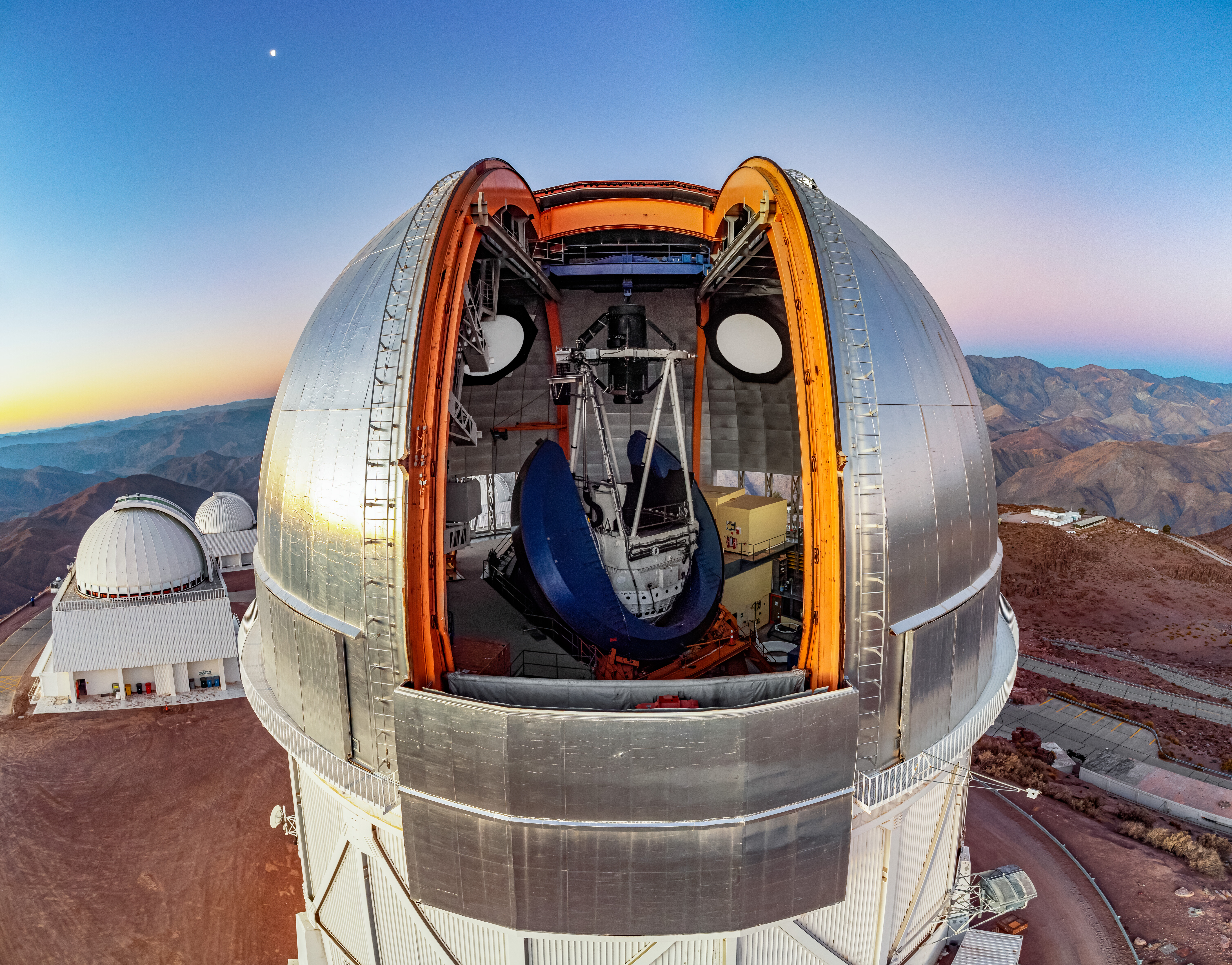
Aerial photo of telescope. The image shows a view of the telescope's open dome.

Scientists used the Victor M. Blanco Telescope in Chile to observe the rate of expansion of the universe in four different ways. (Image credit: CTIO/NOIRLab/NSF/AURA/T. Matsopoulos)

In a new paper posted on the preprint server arXiv on January 21, DES scientists investigated the expansion of the universe using four types of markers. Type Ia supernovae are stellar explosions that help scientists measure the distances of objects in the universe. Galaxy cluster. Weak gravitational lensing occurs when a galaxy cluster warps space-time and distorts the apparent shape of objects behind it. A series of 18 supporting papers delves into the findings.

Overall, the data and analysis are consistent with previous research on dark energy, but the new study places tighter constraints on models of how the universe behaves. The data are broadly consistent with the standard model of cosmology, in which the density of dark energy is constant. The data also agreed with a related model in which the dark energy density changes over time, but the agreement was less good than with the standard model.

Get the world’s most fascinating discoveries delivered straight to your inbox.

“Based on all the data, it feels incredible to see results like this for all four of DES’ planned spacecraft,” study co-author Yuanyuan Zhang, an astronomer at the National Science Foundation’s NOIR Lab, which manages the telescope, said in a statement. “This was something we were only brave enough to dream about when DES started collecting data, but now that dream has become a reality.”

Although the fit between the data and the standard model is relatively good, several questions remain. The galaxy clustering patterns still do not match exactly what the standard model predicts, but the differences are not large enough to conclude that the standard model is wrong, the researchers added.

Still, DES researchers plan to continue testing this and other dark energy models in collaboration with Chile’s Vera C. Rubin Observatory to better understand the mysterious phenomenon.

“Rubin’s unprecedented exploration of the southern sky will enable new experiments in gravity and shed light on dark energy,” Chris Davis, NSF program director at NOIRLab, said in a statement.

DES Collaboration, TMC Abbott et al. (January 21, 2026). Dark Energy Survey Year 6 Results: Cosmological Constraints Due to Galaxy Clustering and Weak Lensing. arXiv.org. https://arxiv.org/abs/2601.14559


Source link

#Biotechnology #ClimateScience #Health #Science #ScientificAdvances #ScientificResearch
Follow on Google News Follow on Flipboard
Share. Facebook Twitter Pinterest LinkedIn Tumblr Email Copy Link
Previous ArticleAnthropic and OpenAI CEOs condemn ICE violence, praise Trump
Next Article Bluesky previews 2026 roadmap: Discover feed, real-time features, and more improvements
user
  • Website

Related Posts

A deer carrying the rotting head of a vanquished enemy and a playful lynx shortlisted for the Nuveen People’s Choice Award for Wildlife Photographer of the Year.

February 4, 2026

Terrifying photo of polar bear mother and cub resting in the mud in the summer heat

February 4, 2026

Research suggests that men develop cardiovascular disease seven years earlier than women. but why?

February 3, 2026
Add A Comment
Leave A Reply Cancel Reply

Latest Posts

Hackers release personal information stolen during Harvard, University of Pennsylvania data breaches

Microsoft develops scanner to detect backdoors in open weight large-scale language models

DEAD#VAX malware campaign deploys AsyncRAT via VHD phishing files hosted on IPFS

China-linked Amaranth-Dragon exploits WinRAR flaws for espionage

Trending Posts

Subscribe to News

Subscribe to our newsletter and never miss our latest news

Please enable JavaScript in your browser to complete this form.
Loading

Welcome to Fyself News, your go-to platform for the latest in tech, startups, inventions, sustainability, and fintech! We are a passionate team of enthusiasts committed to bringing you timely, insightful, and accurate information on the most pressing developments across these industries. Whether you’re an entrepreneur, investor, or just someone curious about the future of technology and innovation, Fyself News has something for you.

Castilla-La Mancha Ignites Innovation: fiveclmsummit Redefines Tech Future

Local Power, Health Innovation: Alcolea de Calatrava Boosts FiveCLM PoC with Community Engagement

The Future of Digital Twins in Healthcare: From Virtual Replicas to Personalized Medical Models

Human Digital Twins: The Next Tech Frontier Set to Transform Healthcare and Beyond

Facebook X (Twitter) Instagram Pinterest YouTube
  • Home
  • About Us
  • Advertise with Us
  • Contact Us
  • DMCA
  • Privacy Policy
  • Terms & Conditions
  • User-Submitted Posts
© 2026 news.fyself. Designed by by fyself.

Type above and press Enter to search. Press Esc to cancel.