
Close Menu
  • Home
  • Identity
  • Inventions
  • Future
  • Science
  • Startups
  • Spanish
What's Hot

Orchid Security brings continuous identity observability to enterprise applications

LanzaTech aims for Humberside as sustainable aviation fuel facility

How early decisions shape incident response investigations

Facebook X (Twitter) Instagram
  • Home
  • About Us
  • Advertise with Us
  • Contact Us
  • DMCA
  • Privacy Policy
  • Terms & Conditions
  • User-Submitted Posts
Facebook X (Twitter) Instagram
Fyself News
  • Home
  • Identity
  • Inventions
  • Future
  • Science
  • Startups
  • Spanish
Fyself News
Home » Discover the critical moment when El Nino started eroding Russia’s Arctic sea ice
Science

Discover the critical moment when El Nino started eroding Russia’s Arctic sea ice

userBy userJanuary 29, 2026No Comments3 Mins Read
Share Facebook Twitter Pinterest Telegram LinkedIn Tumblr Email Copy Link
Follow Us
Google News Flipboard
Share
Facebook Twitter LinkedIn Pinterest Email Copy Link

Scientists have identified a tipping point that amplifies El Niño’s impact on Arctic sea ice loss.

Researchers have known for years about the feedback loop linking El Niño Southern Oscillation (ENSO) and high-latitude sea ice. However, in a new study, researchers found that starting around 2000, the transition between ENSO phases became faster and had a stronger impact on ice loss in northeastern Russia. These changes lead to warmer and wetter weather in the region, reducing sea ice extent in the fall after the transition.

The results of the new study could help improve predictions of sea ice extent for ships passing through the region. It could also help scientists better understand the effects of long-term changes in Earth’s climate. “Sea ice can have a significant impact on the Arctic climate and ocean security,” study co-author Sen Wang, an atmospheric scientist at the Hong Kong University of Science and Technology, told Live Science.

you may like

ENSO is a climate phenomenon that involves multi-year fluctuations in pressure and sea surface temperature in the tropical Pacific Ocean. These fluctuations can affect climate and weather patterns around the world, including the frequency of hurricanes, tropical cyclones, and droughts.

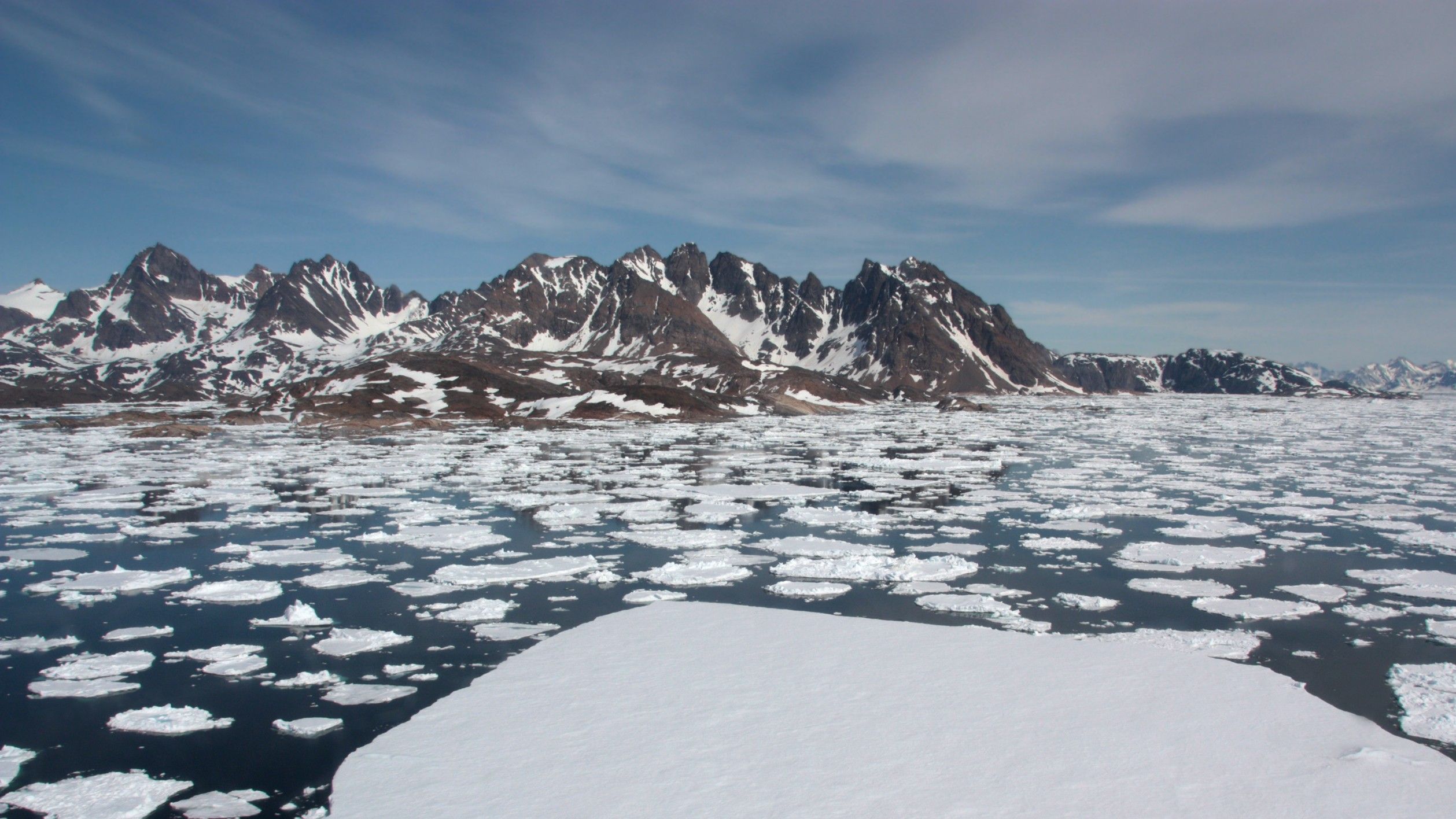
In a new study published January 14 in the journal Science Advances, researchers investigated how ENSO affects sea ice in the Arctic, focusing specifically on the Laptev Sea and East Siberian Sea in northeastern Russia. The researchers scrutinized monthly data on sea surface temperature and sea ice density collected from 1979 to 2023 and found patterns between the evolution of ENSO and the following year’s sea ice coverage.

The results showed that the transition from the El Niño period led to the formation of cold surface waters in the near-tropical central and eastern Pacific Ocean the following fall. After 2000, the transition from El Niño began to accelerate. This is likely due to interactions with the Pacific Decadal Oscillation, another long-term climate cycle that influences Pacific temperatures.

These rapid transitions caused cold regions to become even colder. These cold regions then pushed an anticyclone known as the Western North Pacific High (WNPAC) north toward the North Pole. Pushing WNPAC northward creates another anticyclone over the Laptev Sea and East Siberian Sea. These connected processes work together to pull heat and moisture from the North Pacific Ocean into the Arctic, melting ice along the way.

Get the world’s most fascinating discoveries delivered straight to your inbox.

Before 2000, the link between cold regions and WNPAC was not strong enough to influence Arctic sea ice extent, the researchers found.

The changes that have occurred since 2000 are due to natural cycles in the Earth’s climate, not human activity, the researchers said. But anthropogenic climate change “brings great uncertainty to how we predict ice changes over decades,” said Xiaojun Yuan, an ocean physicist at Columbia University’s Lamont-Doherty Earth Observatory who was not involved in the study.

Human-induced climate change could reverse some of the natural patterns observed in these long-term changes, Yuan told Live Science.

In future studies, the research team plans to investigate the effects of anthropogenic climate change on sea ice in the region, Wang said.


Source link

#Biotechnology #ClimateScience #Health #Science #ScientificAdvances #ScientificResearch
Follow on Google News Follow on Flipboard
Share. Facebook Twitter Pinterest LinkedIn Tumblr Email Copy Link
Previous ArticleThe Romans used human feces as medicine 1,900 years ago and used thyme to mask the smell.
Next Article Waymo robot taxi hits child near Santa Monica elementary school
user
  • Website

Related Posts

‘Groundbreaking’ elephant bones discovered in Spain may date from Hannibal’s war against Rome

February 3, 2026

‘System in flux’: Scientists reveal what happened when wolves and cougars returned to Yellowstone

February 3, 2026

In their search for bees, Mozambique’s honey hunters and birds share a language with regional dialects.

February 3, 2026
Add A Comment
Leave A Reply Cancel Reply

Latest Posts

Orchid Security brings continuous identity observability to enterprise applications

LanzaTech aims for Humberside as sustainable aviation fuel facility

How early decisions shape incident response investigations

EU’s Destination Earth project enters phase 3

Trending Posts

Subscribe to News

Subscribe to our newsletter and never miss our latest news

Please enable JavaScript in your browser to complete this form.
Loading

Welcome to Fyself News, your go-to platform for the latest in tech, startups, inventions, sustainability, and fintech! We are a passionate team of enthusiasts committed to bringing you timely, insightful, and accurate information on the most pressing developments across these industries. Whether you’re an entrepreneur, investor, or just someone curious about the future of technology and innovation, Fyself News has something for you.

Castilla-La Mancha Ignites Innovation: fiveclmsummit Redefines Tech Future

Local Power, Health Innovation: Alcolea de Calatrava Boosts FiveCLM PoC with Community Engagement

The Future of Digital Twins in Healthcare: From Virtual Replicas to Personalized Medical Models

Human Digital Twins: The Next Tech Frontier Set to Transform Healthcare and Beyond

Facebook X (Twitter) Instagram Pinterest YouTube
  • Home
  • About Us
  • Advertise with Us
  • Contact Us
  • DMCA
  • Privacy Policy
  • Terms & Conditions
  • User-Submitted Posts
© 2026 news.fyself. Designed by by fyself.

Type above and press Enter to search. Press Esc to cancel.