

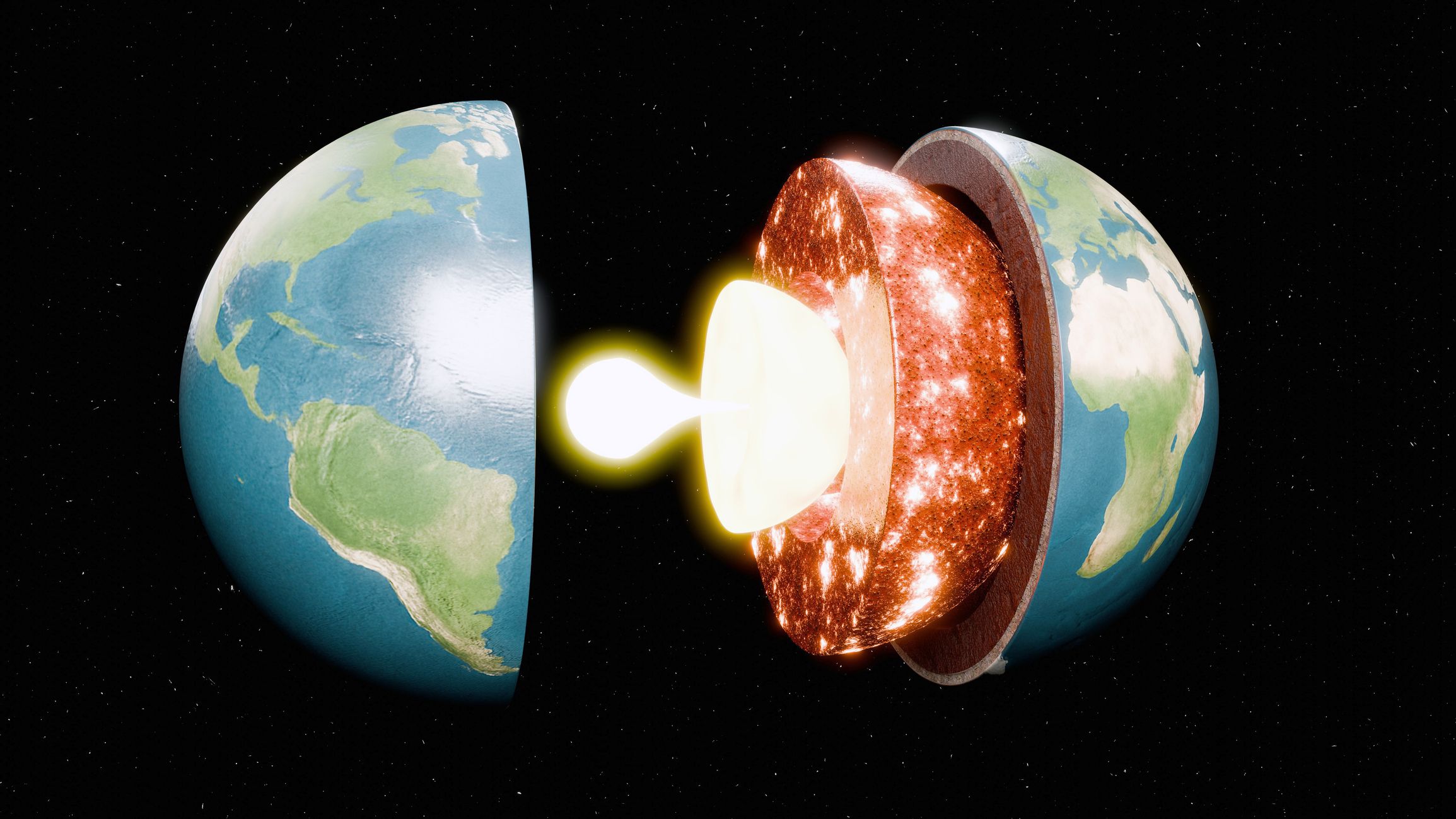
The Earth’s core contains up to 45 times more hydrogen than the oceans, making it the planet’s largest reservoir of hydrogen, new research suggests.
The researchers found that this vast amount of hydrogen entered the core during its formation about 4.5 billion years ago, and did not arrive via a comet that hit Earth after the core was established. The discovery could settle debates about when and how hydrogen was delivered to Earth.
you may like
This debate continues because it is extremely difficult to quantify hydrogen deep within the Earth. Because hydrogen is the smallest and lightest element in the universe, most technologies do not have the resolution to adequately detect it in high-pressure, high-temperature environments like the Earth’s core.
But estimating how much hydrogen is trapped in the core is key to understanding how it got there in the first place, Huang said.
Previous research used a technique called X-ray diffraction to estimate the amount of hydrogen in Earth’s core. This method quantifies minerals and other substances within a material by analyzing how the material scatters X-rays. Because Earth’s core is made almost entirely of iron, the scientists added hydrogen to a sample of iron in the lab and measured the expansion of the iron’s crystal structure to calculate how much hydrogen would be trapped inside the core.
The disadvantage of X-ray diffraction in this case is that it makes some important assumptions, Huang says. First, it assumes that researchers have an accurate understanding of iron’s crystal structure and how it reacts under certain conditions. Second, we assume that the silicon and oxygen present in the core do not deform the crystal structure when dissolved in iron, but it turns out that they do.
In the new study, Huang and colleagues employed an alternative method known as atom probe tomography. The technology can “provide 3D nanoscale compositional mapping of all elements in the periodic table,” and is “ideal for high-pressure samples,” Huang said.
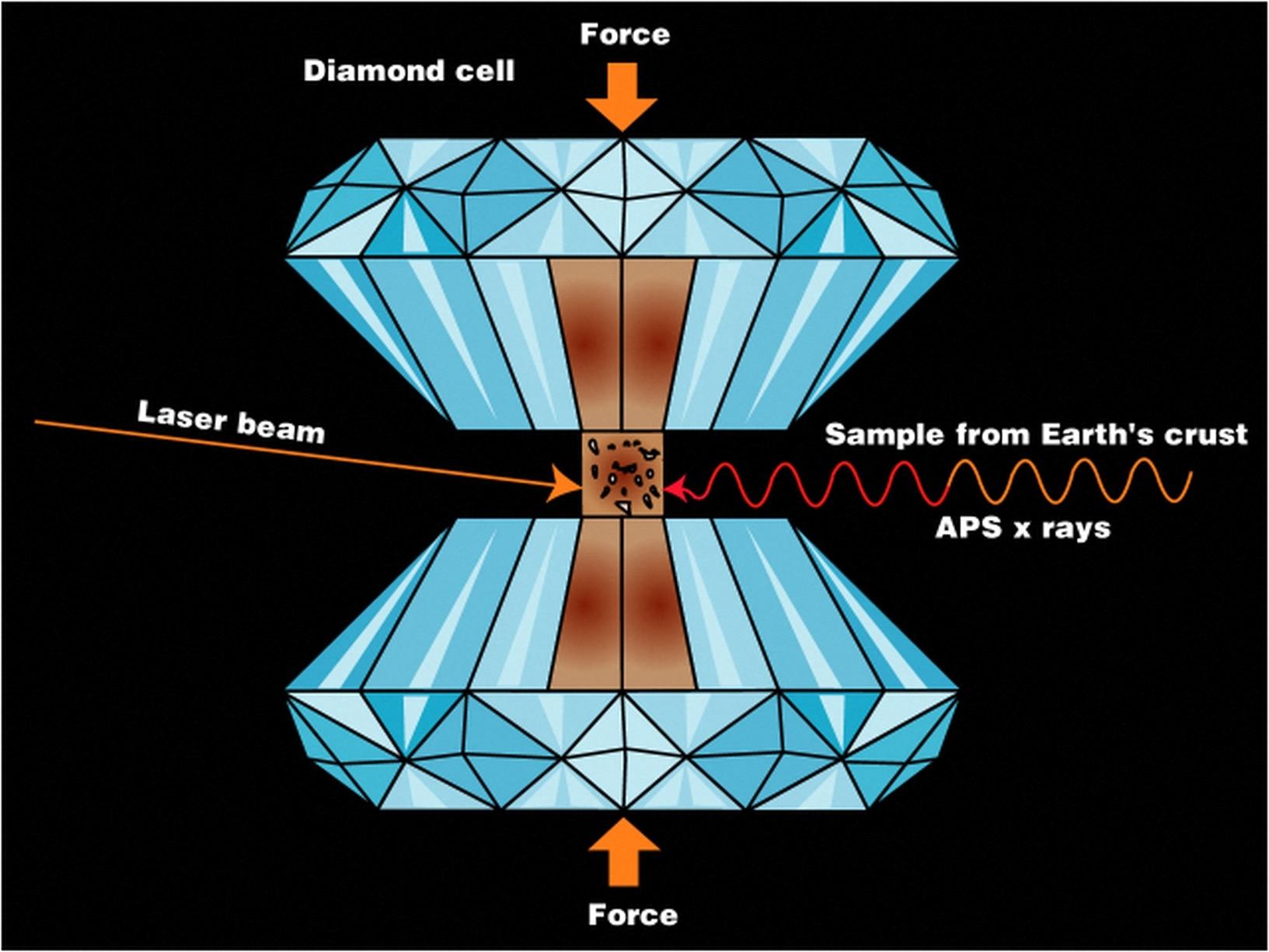
The researchers simulated conditions that may have existed when the Earth’s core was forming. First, they coated a small sample of metallic iron with hydrous silicate glass to model the magma-covered core. They then placed this object inside a diamond anvil cell. This device forces two diamond crystals together to create extreme pressures similar to those found in the Earth’s core. To create the high-temperature conditions, the scientists used a laser that heated the object to about 8,730 degrees Fahrenheit (4,830 degrees Celsius).
The researchers used atom probe tomography in this context. They discovered that hydrogen, oxygen, and silicon dissolve simultaneously into the iron crystal structure under extreme conditions, changing the crystal in a previously unknown way.
Importantly, equal amounts of hydrogen and silicon entered the core from the magma in the experiment, helping researchers estimate that hydrogen makes up between 0.07% and 0.36% of the Earth’s core by weight.
The results, published Tuesday (February 10) in the journal Nature Communications, suggest that Earth’s core contains between nine and 45 times more hydrogen than Earth’s oceans. If a comet were to deliver hydrogen to Earth after its core has completed forming, it would occur primarily in the shallow layers of the Earth. But the discovery that the core is Earth’s largest reservoir of hydrogen indicates that the hydrogen was supplied before the core was fully formed, Huang said.
“This is the first time that the mechanism of how hydrogen enters the reactor core has been elucidated,” he said.
What’s Inside the Earth Quiz: Test your knowledge about Earth’s hidden layers
Source link
