

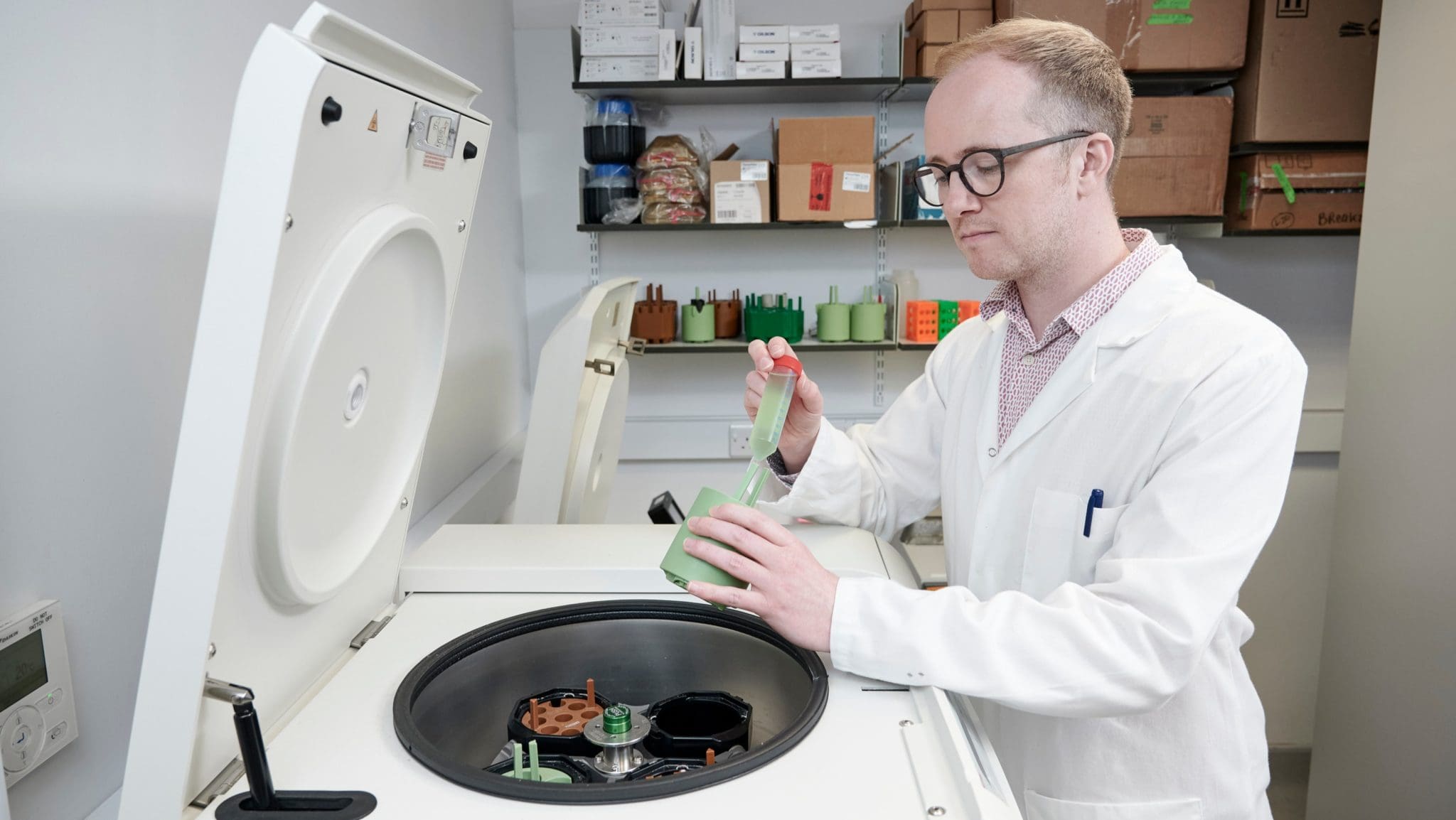
Researchers have demonstrated a new method to produce L-dopa, which is widely used as a treatment for Parkinson’s disease, by using engineered bacteria to convert discarded plastic bottles into a pharmaceutical compound.
The method, developed by scientists at the University of Edinburgh, uses genetically engineered E. coli bacteria to convert ingredients from polyethylene terephthalate (PET), a plastic commonly used in food and drink packaging, into L-DOPA.
This study shows how biological systems can be designed to convert post-consumer plastic waste into medically valuable molecules.
The findings, published in Nature Sustainability, point to a potential new route to combating plastic pollution while simultaneously producing medicines.
Dr. Liz Fletcher, Director of Impact and Deputy CEO of the Industrial Biotechnology Innovation Center (IbioIC), emphasized the importance of the research: “This project highlights the potential of biology to reshape the way we think about waste.
“Turning plastic bottles into Parkinson’s medicine is not just a creative recycling idea, it’s a way to work with nature to redesign processes that benefit the real world.
“By demonstrating that harmful substances can be transformed into substances that improve human health, the team is proving that sustainable and high-value applications of biology are practical and effective.”
Biological pathway from PET waste to pharmaceuticals
PET is one of the most widely produced plastics in the world, with approximately 50 million tons produced each year.
Because it comes from fossil sources and is difficult to recycle efficiently, much of it ends up in landfills, incinerators, or the environment.
In the new study, researchers first broke down PET waste into its core chemical component, terephthalic acid. The team then engineered E. coli to convert this molecule to L-DOPA through a series of enzymatic reactions.
L-dopa is a basic treatment for Parkinson’s disease, a neurological disease characterized by the progressive loss of dopamine-producing neurons in the brain. This drug acts as a dopamine precursor, reducing symptoms such as tremors, stiffness, and movement disorders.
The researchers say this modified pathway demonstrates that plastic waste has the potential to serve as a raw material for synthesizing complex pharmaceutical molecules.
Rethinking pharmaceutical manufacturing
Traditional pharmaceutical production often relies on petrochemical feedstocks and energy-intensive chemical synthesis. The Edinburgh team says their approach could provide a more sustainable alternative by recycling the carbon contained in plastic waste.
By using microorganisms to convert plastic-derived compounds into pharmaceuticals such as L-DOPA, the process can create value from materials that would otherwise go to waste, while reducing dependence on fossil fuel-based raw materials.
The research also focuses on a broader concept known as bioupcycling, the use of biological systems to convert waste into high-value products, rather than simply recycling materials into lower-grade plastics.
The researchers suggest that similar microbial engineering strategies could eventually be applied to the production of a variety of chemicals, including ingredients used in cosmetics, fragrances, fragrances, and industrial materials.
Transition to industrial use
The research team reported successful production and isolation of L-DOPA on a preparative scale, demonstrating that the method works beyond small-scale laboratory experiments.
The next stage will focus on improving the efficiency of the microbial conversion process and assessing how well it can be scaled to industrial production. Further studies will also evaluate the environmental and economic performance of the system compared to existing manufacturing methods.
If successfully scaled up, this approach could contribute to circular production models that convert waste plastics into high-value chemicals and pharmaceuticals.
Research funding and cooperation
This project was funded by UK Research and Innovation (UKRI) and IBioIC. Industry partner Impact Solutions contributed testing and laboratory support.
The research was carried out within the Carbon Loop Sustainable Biomanufacturing Hub (C-Loop), a £14 million research initiative exploring ways to turn industrial waste streams into useful chemicals and materials.
The hub is supported by the Engineering and Physical Sciences Research Council (EPSRC), which is part of UKRI.
Research commercialization support is provided through Edinburgh Innovations, the University of Edinburgh’s technology transfer and business development arm.
Plastic waste and its impact on pharmaceutical production
The ability to convert PET waste into L-DOPA shows how biotechnology can combine two major challenges: reducing global plastic pollution and developing more sustainable pharmaceutical supply chains.
Although further optimization is required before the process can be adopted commercially, this study provides initial evidence that the microbial manufacturing platform could help reshape the way future Parkinson’s disease drugs and other pharmaceutical compounds are made.
Source link
