

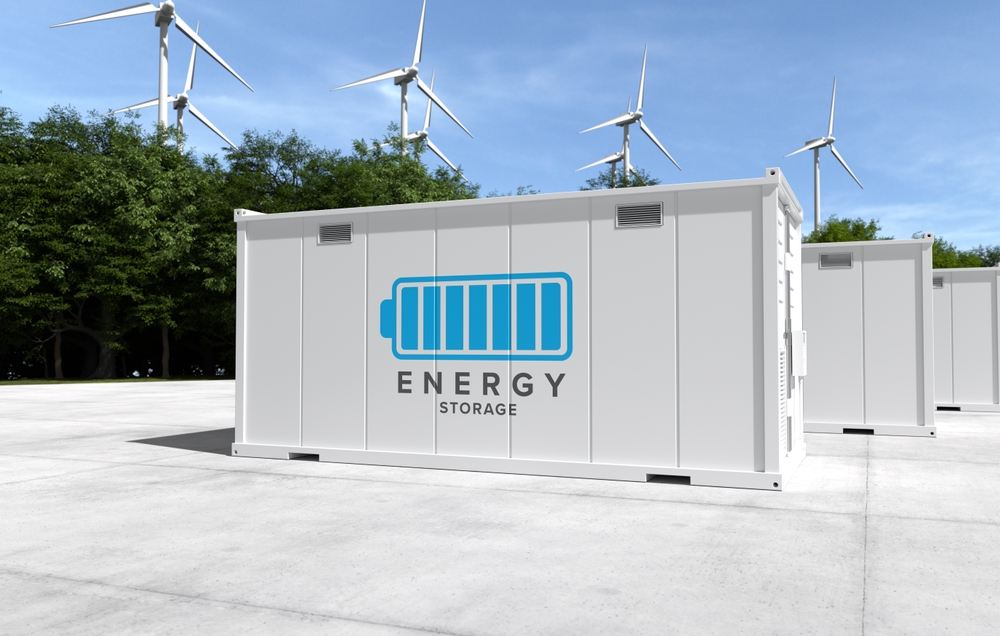
As renewable energy grows, so does the need for reliable long-term energy storage to balance intermittent power generation.
Elestor’s new white paper suggests that the company’s hydrogen-iron flow battery architecture has the potential to provide a durable and cost-effective solution for grid-scale energy storage, with tests showing an operating life of up to 25 years.
This study evaluates the technology under continuous commercially relevant conditions and examines how the system performs over extended cycle periods.
The company says the results suggest the design can maintain stable efficiency and performance over tens of thousands of charge-discharge cycles while avoiding many of the material supply constraints associated with other battery chemistries.
Long-term storage issues
Energy storage systems for grid applications must meet stringent requirements. They must operate for decades, cycle frequently without significant deterioration, and remain economically competitive.
Although many battery technologies have shown promising results in laboratory settings, long-term data from realistic operating environments is limited. Elestor’s research aims to address that gap by testing large prototypes designed on the same principles as commercial systems.
The company’s hydrogen-iron flow batteries use hydrogen gas and dissolved iron salts as active materials in an electrochemical process that converts chemical energy into electricity and back again.
Unlike traditional batteries, which store both power and energy in the same cell, flow batteries separate their functions.
In this architecture, the power output is determined by the electrochemical stack, while the energy storage capacity is determined by the size of the electrolyte tank. This separation provides more flexibility in scaling the system’s capacity for different storage periods.
Common materials, scalable design
An important feature of hydrogen-iron chemistry is its dependence on relatively abundant materials. Hydrogen is used at the anode, and the cathode reaction involves a reversible redox process between ferric and ferrous ions in solution.
Because the electrolyte is water-based and relies on widely available elements, the company claims the design avoids many of the supply chain risks associated with metals such as lithium, cobalt, and vanadium.
However, the study emphasizes that low-cost materials alone are not enough to make the storage technology commercially viable.
For long-term applications, durability becomes one of the biggest factors in the total cost of the system. Storage economics quickly deteriorate if equipment needs to be replaced frequently.
Tested under realistic conditions
To assess durability, the researchers operated large cell stacks with active surface area comparable to deployable commercial units.
The system includes a hydrogen-supplying anode, a proton-conducting membrane, and a carbon-based cathode designed to efficiently support iron redox reactions.
The electrolyte (aqueous acidic iron salt solution) was continuously circulated through the system. Tests were conducted at high temperatures and constant current densities intended to reflect real industrial operations.
During the trial period, the battery was automatically monitored through an industrial control system that recorded electrochemical and operational data.
Stable efficiency over thousands of cycles
The validation campaign involved continuous operation over tens of thousands of charge/discharge cycles. During that period, hydrogen-iron flow batteries maintained energy efficiency levels that exceeded the minimum targets typically required for commercial deployment.
According to the report, the system achieved energy efficiency of over 80% and round trip efficiency of over 75% at the system level. Importantly, the electrochemical core maintained stable performance throughout the testing period with no evidence of structural degradation.
Regular tuning procedures were used to restore the system to its optimal performance window. These maintenance procedures involve controlled operational adjustments rather than hardware changes and are described as routine practices that are compatible with industrial energy systems.
The researchers also observed that short periods of rest can reduce the internal resistance within the cell, suggesting that the material enters a reversible equilibrium state during operation.
Resilience to operational interruptions
Real-world energy infrastructure must deal with unexpected events such as shutdowns and power outages. During the validation program, the system experienced several external interruptions unrelated to the battery itself.
In both cases, the system was restarted without adversely affecting the electrochemical components or long-term performance. The company says this resiliency demonstrates the chemical stability inherent in the hydrogen-iron flow battery approach.
Expected lifespan of several decades
Based on the stability observed during long-term testing, the study predicts that systems using this technology can operate for 20 to 25 years in grid-scale applications.
Lifetime estimates are derived based on measured performance trends, rather than assumptions about future improvements or new materials. The data shows that when adjusted to the typical annual cycle profile of grid storage, this technology can support deployment over decades.
Such lifetimes can have a significant impact on the economics of large-scale storage. Longer life reduces replacement costs and spreads capital investment over a longer operating life.
Impact on storage costs
Elestor argues that by combining durable performance with low-cost materials, hydrogen-iron flow batteries have the potential to achieve competitive economics for long-term energy storage.
The company estimates that the technology could reach capital expenditure levels of approximately 15 euros per kilowatt hour, with the levelized cost of storage over the life of the system being close to 0.02 euros per kilowatt hour.
Although these numbers are dependent on large-scale implementation and manufacturing, they highlight the potential economic benefits of chemistry.
Candidates for long-term storage
As electricity systems incorporate a higher proportion of renewable electricity, technologies that can store energy for long periods or even days are becoming increasingly important.
The results presented in Elestor’s white paper suggest that hydrogen-iron flow batteries have the potential to provide a durable and scalable option for long-term storage.
If this technology performs similarly in a fully commercial installation, it could help provide the long-life infrastructure needed to support a low-carbon electricity grid.
Source link
