

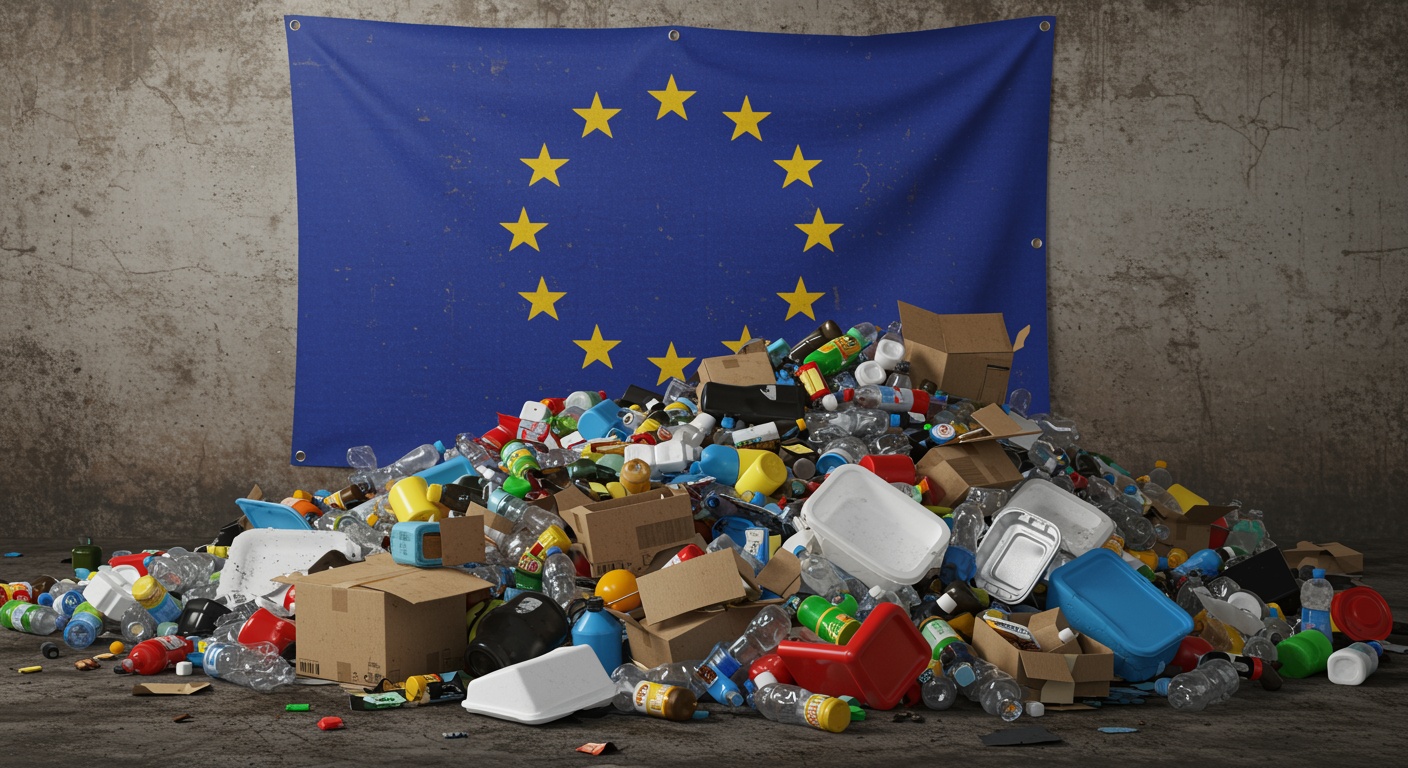
The European Commission has published new guidance to support the rollout of the Packaging and Packaging Waste Regulation (PPWR), providing much-needed clarity on how the regulation should be applied across Member States.
The move aims to reduce legal ambiguity, harmonize national approaches and ease the compliance burden for companies operating across borders.
The PPWR, which came into force on 11 February 2025, is a central element of the EU’s strategy to reduce packaging waste and move towards a more circular economy.
However, as implementation begins, regulators and industry participants face uncertainty about how certain provisions should be interpreted in practice. The newly published guidance addresses these gaps without changing the legal framework itself.
Jessica Roswall, Secretary for Environment, Resilience, Competitive and Circular Economy, explained:
“We encourage all stakeholders to take advantage of this guidance and collaborate on the smooth implementation of packaging and packaging waste regulations, so that we can achieve our ambitious goals and create resilience based on competitiveness and a sustainable footprint.”
Addressing inconsistencies in a fragmented regulatory environment
One of the main challenges that the European Commission is trying to resolve is the lack of consistency in the way packaging regulations are applied across EU Member States.
Compliance has traditionally been complex due to varying national requirements, especially for companies operating in multiple markets.
This guidance document provides a more precise definition of the key roles and concepts under the Packaging and Packaging Waste Regulation, including criteria for determining whether a company qualifies as a “producer” or “manufacturer”.
We also clarify what we mean by “packaging,” which has been a hot topic of discussion among stakeholders.
By standardizing interpretations, the European Commission aims to strengthen the integrity of the single market while reducing administrative costs for companies.
Environmental pressures drive regulatory urgency
The reason for the tightening of regulations is the increase in packaging waste across Europe. In 2023, the average packaging waste per person reached 178 kilograms.
It is predicted that without intervention, overall packaging waste could increase by nearly a fifth by 2030 compared to 2018 levels. In particular, plastic waste is expected to increase further.
PPWR introduces several binding targets designed to reverse these trends. These include a requirement that all packaging be recyclable by 2030, minimum standards for recycled content in plastic packaging, and measures to reduce unnecessary or excessive packaging.
According to the European Commission, these provisions are expected to reduce greenhouse gas emissions, reduce water consumption and reduce the broader environmental impacts associated with packaging production and disposal.
Operational guidance on key compliance areas
Beyond definitions, the new guidance addresses several operational aspects of the regulation that were found to be complex in early discussions with industry.
This includes clarifying restrictions on single-use packaging formats and enforcing restrictions on PFAS (per- and polyfluoroalkyl substances) in food contact materials. The document also explains how reuse targets can be applied across sectors.
Another focus is Extended Producer Responsibility (EPR), a system that places financial and organizational responsibility on producers for waste management.
This guidance outlines how EPR obligations should be implemented under the PPWR and the requirements for establishing a deposit and return system.
FAQ reveals real-world implementation challenges
The key document is accompanied by a set of frequently asked questions that summarize issues raised by stakeholders since the regulations were adopted. These FAQs address practical issues ranging from classification issues to reporting obligations.
The Commission notes that this resource will remain dynamic and is expected to be updated as new questions arise during implementation.
Importantly, both the Guidance and the FAQ are interpretive tools rather than legislative amendments. These are intended to assist with compliance, but do not change the legal obligations set out in the regulations.
Further technical rules are under development
The Commission continues to develop additional measures to support packaging and packaging waste regulation, including delegated and implementing legislation that defines technical requirements in more detail.
These upcoming regulations are expected to cover a harmonized system for data reporting under the EPR regime, standardized labeling to improve the segregation of consumer waste, criteria for assessing recyclability, and methodologies for calculating the recycled content of plastic packaging.
These efforts are being implemented in collaboration with Member States, industry representatives and international partners, reflecting the cross-border impact of packaging supply chains.
The guidance document, which will be translated into all EU official languages before its formal adoption, marks another step towards the full implementation of one of the EU’s most comprehensive waste reduction frameworks to date.
Source link
