

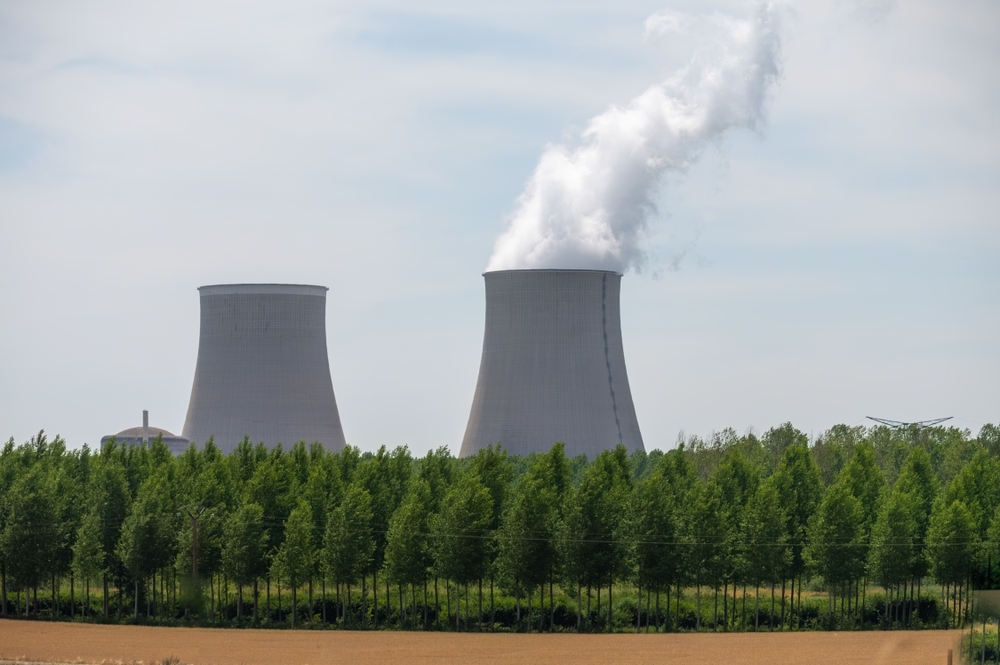
The European Commission has launched a detailed investigation into France’s proposed financial support for a new generation of nuclear reactors.
The investigation will examine whether the planned aid package aimed at funding six new nuclear reactors complies with EU state aid rules, particularly with regard to competition and proportionality.
Officials stress that opening a formal investigation is a procedural step in a complex case and does not indicate a predetermined outcome.
French reactor project scale and schedule
France has formally notified Brussels of its intention to take over six nuclear reactors with a total capacity of nearly 10 gigawatts at the end of 2025.
The units will be built at existing nuclear facilities at Penley, Gravelins and Baggy, with commissioning scheduled between 2038 and 2044.
With an expected total cost of €72.8 billion, it is the most significant nuclear infrastructure initiative currently planned in Europe. Each reactor is designed for a 60-year operating life.
The project will be implemented by Electricity France (EDF), which operates France’s nuclear power plants. A dedicated project organization, fully funded by EDF, will oversee development and implementation.
The strategic role of nuclear reactors in the French energy mix
Under EU law, member states retain sovereignty over their energy strategies. France has long prioritized nuclear power as the basis of its electricity system, and the planned expansion reflects efforts to maintain power generation capacity while advancing decarbonization goals.
According to the European Commission’s preliminary opinion, new nuclear reactors have the potential to contribute both to energy security and emissions reduction, not only domestically but also across the interconnected European market.
Support package configuration
The proposed financial framework includes three main mechanisms:
subsidized financing
Government-backed financing at below-market rates is expected to cover approximately 60% of construction costs, reducing upfront capital risk.
Earnings stabilization system
The two-way Contract for Difference (CfD), which lasts for 40 years, guarantees a stable income by compensating EDF if market prices fall below the agreed level, while requiring repayments if prices rise above it.
Risk sharing provisions
Targeted mechanisms can protect projects from certain external risks, such as major regulatory changes or unexpected natural events.
Key concerns driving the EU investigation
Despite recognizing the potential benefits of this project, the committee identified several areas that require further investigation.
Proportionality of state aid
Regulators are assessing whether a mix of financial products provides more support than necessary. The concern is that excessive risk transfer to the state could weaken incentives for cost control and operational efficiency.
Market competition risk
The Commission is also assessing whether this aid has the potential to strengthen EDF’s dominant position in the electricity market. Particular attention will be paid to safeguards designed to prevent distortions in wholesale transactions and indirect benefits to certain market players.
Compliance with EU electricity market rules
The review will further test alignment with broader EU energy market regulation, including provisions governing state intervention in the electricity pricing framework.
Next steps in the review process
A formal investigation opens the opportunity for input from stakeholders such as competitors, energy analysts, and member states. Their submissions will influence the Commission’s final decision on whether the support measures are permissible under EU law.
The European Commission’s initial assessment recognizes the strategic rationale for reactor expansion in France, but the outcome will depend on whether the financial structure strikes an acceptable balance between investment possibilities and maintaining fair competition.
The decision will be closely watched across Europe as it could set a precedent for how large-scale nuclear projects will be financed within the EU’s evolving energy and climate policy framework.
Source link
