

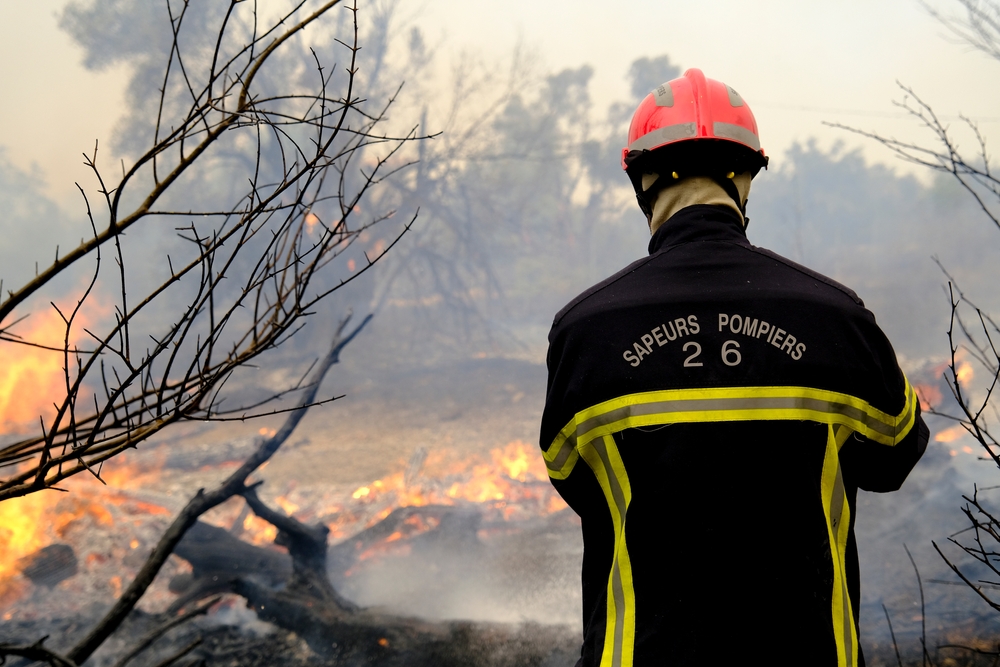
The European Commission has outlined a continent-wide framework focused on prevention, preparedness and recovery from the record bushfire disaster.
Wildfires in Europe are entering a more destructive phase due to rising temperatures and prolonged droughts linked to climate change. European authorities say the scale of the threat is no longer temporary but structural and requires a coordinated long-term response.
In 2025, more than 1 million hectares burned across the continent, making it the most severe wildfire season on record. Scientists and policymakers increasingly see this as a sign of what wildfires will look like in Europe in the future if underlying environmental pressures continue.
Against this backdrop, the European Commission has introduced a new integrated bushfire risk management strategy that aims to reshape the way countries predict, respond and recover from fires.
Roxana Minzatou, Executive Vice President for Social Rights and Skills, Quality Employment and Preparedness, emphasized the importance of the plan:
“That means building a true culture of preparedness, including equipping people with the right skills, supporting firefighters and first responders, and helping communities understand the risks they face.
“This strategy shows that prevention, preparedness and solidarity must work together if we want to save lives and strengthen Europe’s resilience to the worsening bushfire threat.”
Transitioning to integrated wildfire management
The new framework goes beyond emergency response and emphasizes a full-cycle approach: prevention, preparedness, response, and recovery.
The core of this strategy is to standardize the way national and local authorities manage wildfire risk, while being flexible to local conditions. The updated risk assessment guidelines are expected to support long-term planning and improve consistency of reporting across Member States.
Officials described the approach as an effort to align wildfire policy with broader climate adaptation goals, especially as wildfire seasons lengthen and expand into areas where risk was previously low.
Prevention based on ecosystem resilience
A central pillar of this strategy is prevention, with a focus on land and ecosystem management. There is growing evidence that degraded landscapes are more vulnerable to fire ignition and rapid fire spread.
To address this, the Commission is promoting ecosystem-based measures designed to create fire-resistant landscapes. These include restoring natural habitats, improving forest management practices, and integrating wildfire risk into land use planning.
New guidance associated with the Natura 2000 network outlines how protected areas can adapt to climate pressures while maintaining conservation objectives.
The document also clarifies how emergency interventions can be carried out when rapid action is required to protect life and biodiversity.
Expanding preparedness and early warning systems
In parallel to prevention efforts, preparedness measures are also being stepped up. The commission plans to expand the pre-positioning of fire service personnel in high-risk areas and strengthen cross-border cooperation through expert exchanges.
Technology will play an increasingly important role. Strengthening the European Forest Fire Information System with Copernicus satellite data is expected to improve early detection and real-time monitoring.
In parallel, new pan-European risk modeling tools and AI-assisted forecasting systems are being developed to support decision-making before and during fire outbreaks.
Raising public awareness is also part of the preparedness agenda. Research shows that around half of Europeans are concerned about the risk of wildfires.
In response, the Commission is promoting training initiatives, education programs, and public engagement efforts to improve local-level readiness.
Strengthening response capabilities across Europe
With the expansion of rescEU’s fire brigade, operational capacity will increase. The plan includes purchasing an additional 12 firefighting aircraft and five helicopters.
The first helicopters of this expanded fleet will be delivered to Romania in early 2026 and will be deployed during the next fire season.
In addition, a new European firefighting hub is planned for Cyprus. The facility will serve as a training center as well as a regional base for rapid deployment in wildfire emergencies.
Coping with long-term effects and recovery
Beyond immediate response, this strategy places greater emphasis on post-fire recovery and the long-term health impacts of wildfires.
The committee plans to improve data collection on firefighters’ exposure to hazardous conditions, including smoke and toxic substances. This information is expected to be useful for occupational health policy and safety standards.
Efforts will also focus on restoring burned landscapes in ways that reduce future risks, rather than simply returning them to their pre-fire condition. This includes promoting resilient ecosystems that are better adapted to a warming climate.
Hajah Rabib, Secretary for Equality, Preparedness and Emergency Management, added: “Wildfires know no borders, and neither does our response. These steps demonstrate Europe’s unwavering commitment to stand together in the face of the climate crisis.”
“By strengthening prevention, sharing resources and investing in resilience, we are protecting lives, livelihoods and the future of the continent.”
Towards a coordinated European response to wildfires
The new measures build on existing mechanisms, including the EU Civil Protection Mechanism, which facilitates cross-border assistance in emergencies.
The Commission is also preparing formal recommendations to embed integrated wildfire risk management across Member States.
Implementation will require coordination across multiple levels of governance, from EU institutions to local authorities and land managers. Progress will be monitored and reported to European institutions, reflecting the scale and complexity of the challenge.
As wildfires in Europe become more frequent and severe, the effectiveness of this strategy will depend on how quickly it translates into operational changes on the ground.
Source link
