

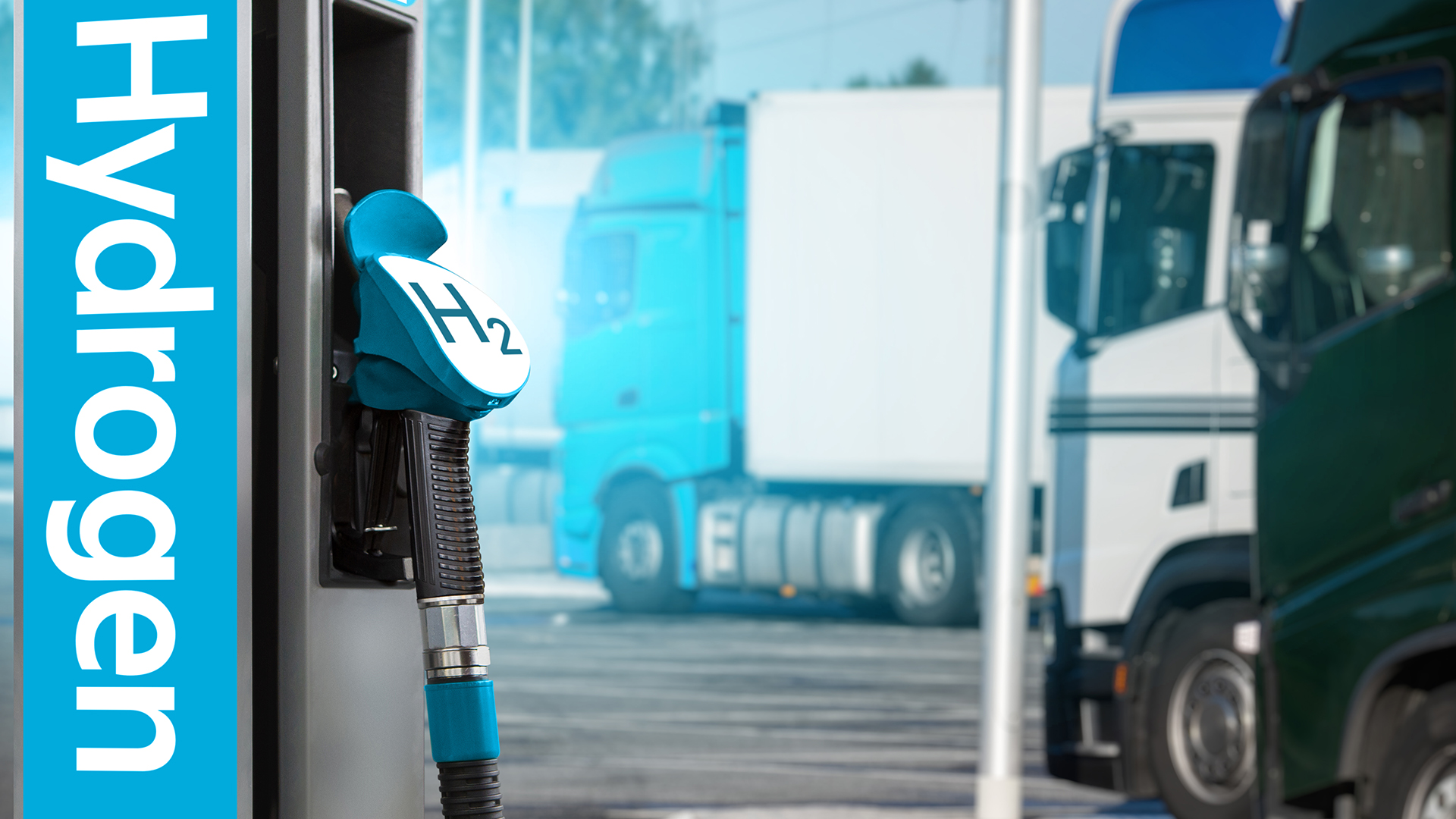
In 2026, the H2REF-DEMO project will demonstrate and test hydrogen compression technology, moving towards providing reliable hydrogen refueling systems for heavy-duty vehicles.
Europe’s transition to a net-zero economy relies on clean and reliable hydrogen infrastructure that can support both light and heavy mobility. Continued investment, research and innovation in hydrogen technology is clearly needed to enable growth in the hydrogen sector and meet future demand. One example of such research and innovation is the H2REF-DEMO project, which aims to develop a cost-effective and reliable hydrogen fuel cell vehicle refueling system.
Demonstrations: From the laboratory to full-scale prototypes
H2REF-DEMO is being coordinated by the French Mechanical Industry Technology Center CETIM and will operate for a total of 42 months (2023-2026). This project brings together industry leaders and research institutions to validate a hydraulic compression and refueling system that can deliver hydrogen at an unprecedented flow rate of 150 kg per hour with a consumption of less than 3.5 kWh per kilogram.
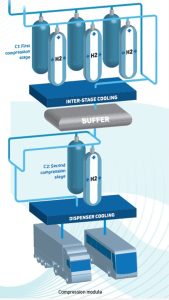
In its final year, the project will install and test a full-scale hydrogen refueling prototype at a dedicated HRS station in Champagnier (France), refueling heavy trucks under real-world conditions. The one-year campaign aims to achieve Technology Readiness Level 7 (TRL 7) through 500 hours of testing to verify both the mechanical durability of the compression system and the operational reliability of the integrated hydrogen refueling station. This milestone marks the transition from laboratory innovation to commercial-scale deployment and showcases how high-capacity compression modules can compress or distribute hydrogen at scale.
The H2REF-DEMO system targets a delivery of 35 MPa (350 bar) at 150 kg H₂/h and supports hydrogen throughput of up to 1.2 tons per day. Optimized for on-site production and distribution, the prototype demonstrator achieves an energy efficiency of less than 3.5 kWh/kg, which is a significant improvement over traditional mechanical compaction.
The innovative ‘direct filling’ process is one of two key innovations recognized by the European Commission’s Innovation Radar as having high market potential and Tech Ready maturity level.
Targeting the heavy goods transportation sector
Co-funded by the Horizon Europe program under the Clean Hydrogen Partnership (grant agreement number 101101517), H2REF-DEMO builds on the proven success of the original H2REF project (2015-2019), which developed a breakthrough compression concept for passenger vehicle refueling. Currently, the H2REF DEMO project targets the heavy transport sector and is demonstrating hydraulic compression for high-capacity H2 refueling where heavy vehicles need to be supplied with hydrogen at hundreds of kg/h.
Heavy vehicles cause a significant portion of the harmful gas emissions associated with the automotive industry. To address this challenge, Europe is accelerating efforts to promote hydrogen as a fuel that will play a key role in decarbonizing heavy transport vehicles. The H2REF-DEMO project addresses hydrogen refueling issues and contributes to these efforts.
modular advancement
In addition to capacity scale-up, the demonstrator focuses on process optimization, cost reduction and further durability testing. Full optimization is achieved by first developing a digital twin of the scaled-up process.
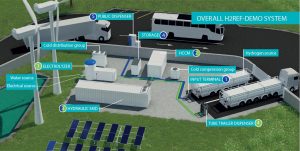
The main completed modules of the demonstrator include:
The Hydraulic Power Pack (HPP) provides power to the hydraulic blade accumulator. HPP has been tested and is ready to be installed at the HRS demo site. High Capacity Compression Module (HCCM): This is designed to seamlessly integrate with hydrogen storage systems and dispensers. The HCCM achieves a hydrogen flow rate of 150 kg per hour, setting a new standard for efficiency in bulk fuel delivery. Hydraulic Bladder Accumulator System: This innovative design replaces traditional mechanical compressors with a bladder accumulator-based approach. This transition enables improvements in reliability, performance, and energy efficiency, which are critical to meeting the demanding requirements of heavy goods transportation. Advanced bladder materials: Research into durable materials such as epichlorohydrin rubber (ECO) and hydrogenated nitrile rubber (HNBR) is critical to ensuring hydrogen compatibility while complying with stringent environmental regulations. Composite reinforced accumulator shells: Developed by partner companies FABER and HYDAC, these new shells combine a steel liner with carbon fiber reinforcement, significantly increasing safety and longevity.
From digital twins to real-world demonstrations
To simulate performance before hardware testing, the H2REF-DEMO team created a digital twin of the entire compression and distribution process. The model enables the dimensioning of the various components of the system in the initial stage and the real-time optimization of parameters such as flow rate, temperature, and pressure drop in the second stage, helping to fine-tune the operation to ensure efficiency and safety.
Now in its second year, the project has made great progress so far. One of the main focuses is testing and developing durable, hydrogen-compatible bladder materials. This project has explored several elastomer compounds, particularly epichlorohydrin rubber (ECO) and hydrogenated nitrile rubber (HNBR), to replace PFAS-based formulations that are being phased out under new EU regulations.
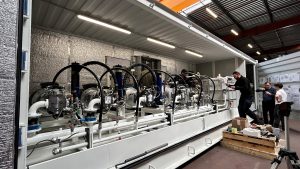
At the same time, FABER and HYDAC designed a new accumulator shell that combines a steel liner and carbon fiber reinforcement for increased safety and longevity. The test plan includes over 50,000 cycles of burst, fatigue, and hydrostatic testing to ensure structural integrity under extreme conditions.
Meanwhile, the hydraulic power pack HPP (CETM) and the high capacity compression module HCCM (HRS) have been developed and work on their integration is just beginning. System safety is verified through a complete Failure Modes and Effects Analysis (FMEA) to ensure CE compliance for final market introduction.
Joint efforts to advance the clean hydrogen vision
The H2REF-DEMO consortium is made up of seven partners from three EU countries, each contributing its own expertise.
CETIM: Project Coordinator, Design and Testing of Hydroelectric Power Systems. HYDAC: Innovation in Bladder Accumulator Design and Materials. H2NOVA: Diffusion, industrial integration, and exploitation. HRS: Hydrogen refueling station design and demonstration. FABER: Manufacture of high pressure vessels. UNIMORE and UTC: Advanced modeling, digital twin development, and systems analysis.

Impact: Promoting hydrogen mobility in Europe
Once validated, the H2REF-DEMO system promises to reduce energy consumption, operational costs, and maintenance requirements across the hydrogen fuel supply chain. Its modular architecture allows for deployment in a variety of environments, from urban bus stops to motorway freight corridors, supporting Europe’s Fit for 55 and REPowerEU goals.
Beyond its technical achievements, this project sets an important precedent for sustainable manufacturing. H2REF-DEMO contributes to both environmental responsibility and industrial resilience in the EU’s hydrogen sector by eliminating PFAS materials and optimizing hydraulic components to extend their lifetime.
Towards a scalable hydrogen future
As the project moves towards its final demonstration stage, H2REF-DEMO embodies a pan-European ambition to build a robust, efficient and sustainable hydrogen refueling infrastructure capable of powering the heavy transport sector. By advancing hydrogen compression toward commercialization, the consortium is not only refining the technology, but also laying the foundation for a cleaner, interconnected, and independent energy future.

The H2REF-DEMO project is co-funded by the European Union’s Horizon Europe program under the Clean Hydrogen Partnership.
(Gift contract number: 101101517)
This article will also be published in the quarterly magazine issue 24.
Source link
