

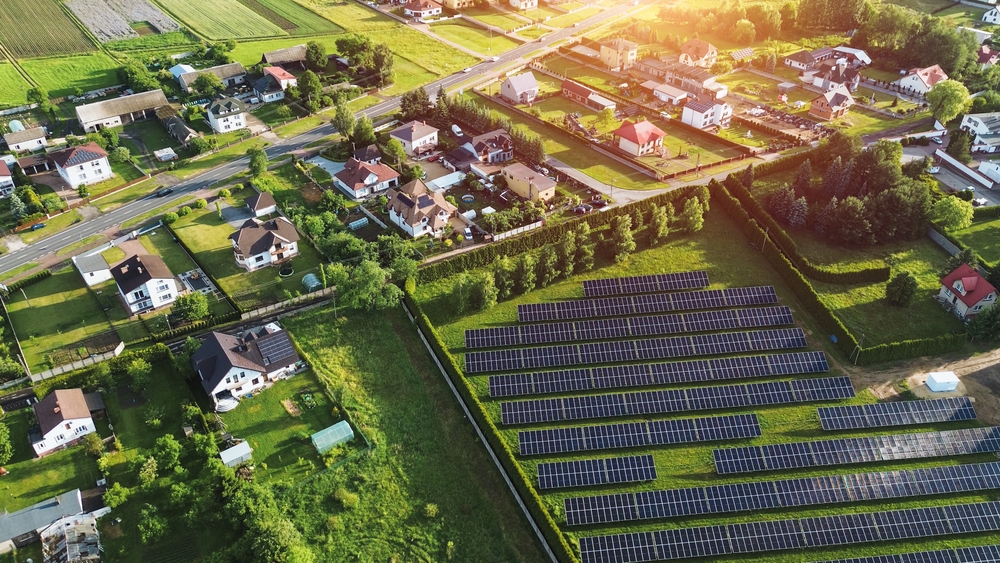
Chris Vrettos, Senior Policy Advisor and Sara Tachelet, Human Resources Director at EUUSEW partner organization REScoop explore how the EU Citizen Energy Package will deliver community energy projects and promote clean power across the continent.
Yesterday, the European Commission announced its long-awaited National Energy Package (CEP). The package includes 1) broad and ambitious European targets for community energy projects (90 GW by 2030), and 2) a commitment from the European Commission to provide much-needed guidance to Member States on developing regulatory frameworks and financing instruments for the energy community.
But will the package live up to expectations despite not being legally binding?
Connecting the Pieces of the Legislative Puzzle
There is great potential for public participation in the energy transition: by 2050, one in two EU citizens will be able to produce their own energy, covering 45% of the EU’s energy needs. Importantly, these lofty goals will lead to immediate and tangible benefits for EU citizens and businesses. By joining our energy community, you can save up to 1,100 euros per year.
However, the energy community continues to struggle with basic enabling regulatory frameworks, access to the grid, and project financing.
Citizens Energy Package does not require reinventing the wheel. Rather, it should be the glue that connects existing key legislative files, ensuring horizontal citizen participation in the energy transition.
governance
The transition of renewable energy and national electricity market directives remains uneven across Member States. Governance mechanisms at EU level are needed to bridge this gap.
The European Commission should mainstream the energy community into the European Semester. In this way, the National Recommendations can be used as a horizontal and harmonized tool for Member States to develop enabling legislation for their energy community. Through the revision of the governance regulations, DG CLIMA and ENER should set legally binding targets for regional energy in the post-2030 framework.
finance
As part of the proposed new EU budget structure for 2028-2034, each member state is drafting a National and Regional Partnership Plan (NRPP), which outlines a series of reforms and investments in key sectors of the economy, including energy. NRPPs therefore have the potential to become an important vehicle for national investment in energy communities (e.g. community-led district heating projects, electricity storage, population-led retrofitting) and reforms (e.g. simplifying permitting, creating national enabling frameworks). DG ENER must therefore work closely with DG ECFIN and SG REFORM to clarify the link between the next EU budget and the national energy package. For this reason, REScoop.eu and Friends of the Earth have launched a major effort to connect the energy community with the NRPP, including fact sheets for 18 member states. Major EU funding is currently not reaching the terrestrial energy community. The Cohesion 4 Transitions initiative has published dedicated guidance to national governing authorities on how to design (national) funding calls for the energy community. Future Commission guidance for Member States should build on this work, by highlighting ways to support energy communities, especially in rural, transitional, least developed and most peripheral regions.
grid
As part of the Grid package, the European Commission recommended that Member States abandon the first-come, first-served model and prioritize projects with clear climate and social values. Future European Commission guidance for Member States should be developed on this basis and direct Member States to explicitly prioritize energy communities (e.g. by ring-fencing grid capacity for community projects with proven social impact).
warm home
The FitFor55 package emphasized the energy community’s role in “second generation activities” such as heating and cooling and (citizen-initiated) building renovations. Future Commission guidance to Member States should encourage the inclusion of the energy community in national building renovation plans.
Connecting the dots with the reality of people’s lives
In turbulent times of geopolitical and economic uncertainty, the energy community can be a strong glue that connects the EU’s values and goals with the issues that matter to people’s daily bread, such as affordability and security. The potential for citizens to drive the EU’s energy transition is huge. The legislative files are also there. Now is the time to put everything together.
This opinion editorial was produced in collaboration with European Sustainable Energy Week (EUSEW), the largest annual event dedicated to renewable energy and efficient energy use in Europe. #EUSW2026 is in its 20th year, once again bringing together a community of people interested in building a safe and clean energy future for generations to come.
Check out current calls and join.
Useful links
Source link
