

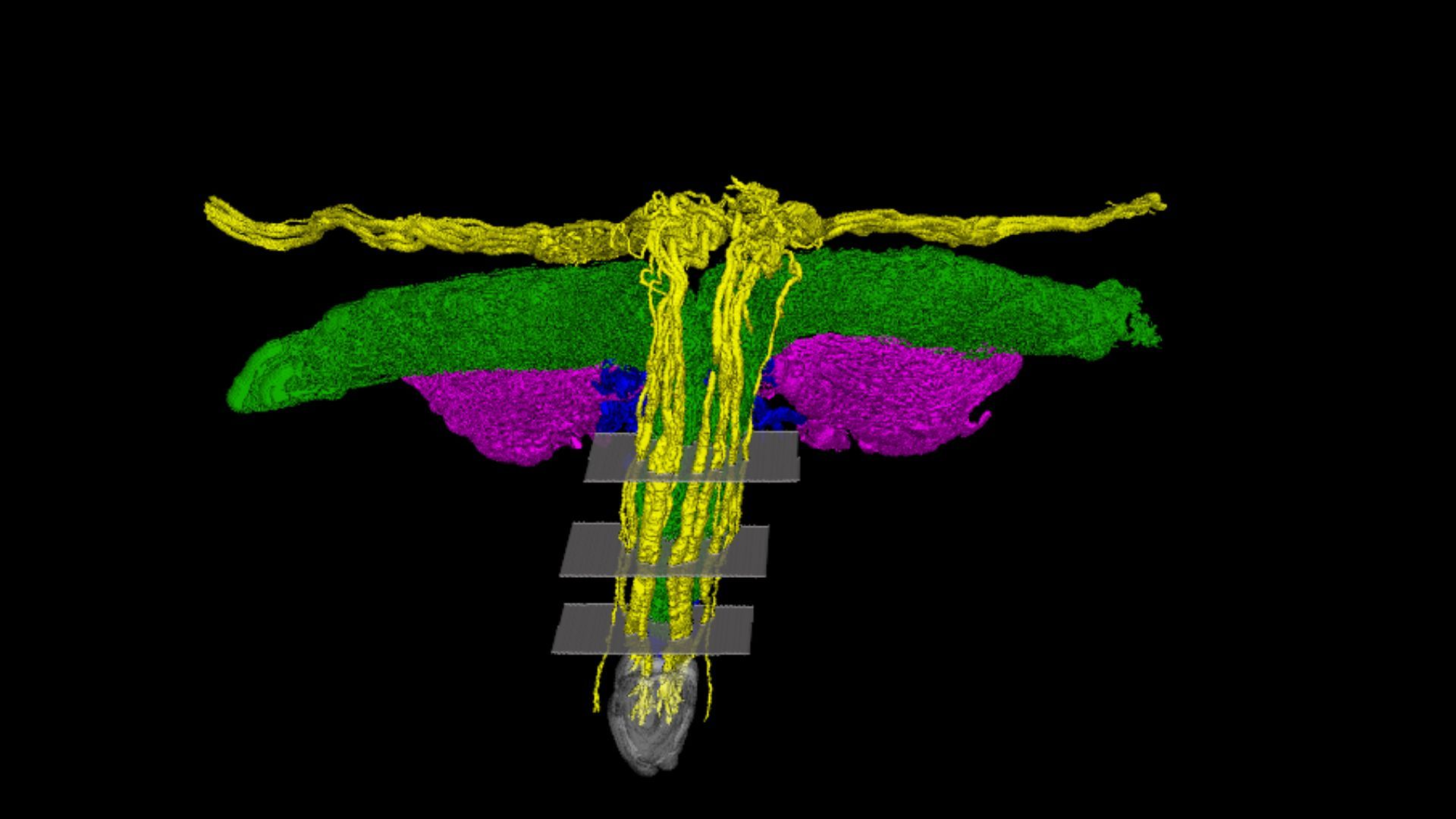
A new study takes a closer look at one of the least studied organs in the human body: the clitoris, the structure responsible for female sexual pleasure.
Once described as a “shameful part” by a 16th century anatomist, the clitoris has historically been ignored in research due to taboos. Additionally, dissection of the clitoral nerve tissue is difficult due to its position in relation to the surrounding pelvic organs.
you may like
“In our study, we were able to show different parts of the clitoris,” study lead author Dr. Ju Young Lee, a postdoctoral researcher at the University Medical Center of Amsterdam, told Live Science via email. She and her collaborators imaged two pelvises that were donated to the university posthumously. The project was part of the Human Organ Atlas initiative, which aims to provide detailed renderings of whole organs.
The results of their study, which have not yet been peer-reviewed, were published on March 20 on the preprint server bioRxiv.
The researchers used CT images to trace the organ’s main sensory nerve, the dorsal clitoral nerve (DNC), from its origin in larger pelvic nerve structures. Previous studies reported that the DNC tapers as it approaches the outer part of the clitoris, the glans clitoris, but the new images instead reveal that the DNC extends an array of solid branches into the glans. The DNC also branches toward the mons pubis (fatty tissue over the pubic joint) and the clitoral prepuce.
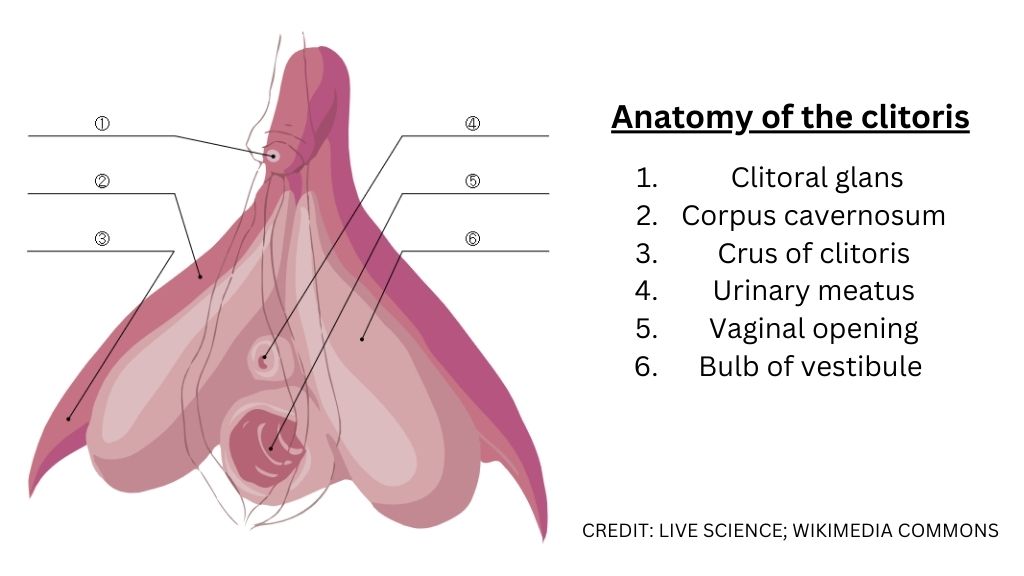
This study could be used to improve reconstructive procedures to restore the clitoris and clitoral function in patients who have undergone female genital mutilation, the study authors wrote. These surgeries, which involve the partial or complete removal of a woman’s external genitalia, are primarily performed on girls from infancy to 15 years of age, can cause serious complications and are considered a human rights violation, the World Health Organization says.
The new study may also help surgeons avoid injury to the clitoral nerve during other surgeries on or near the vulva, the authors added.
Dr. Blair Peters, associate professor of surgery at Oregon Health & Science University School of Medicine, said it’s important to avoid nerve injury because there is usually little overlap between surgeons trained in genital surgery and those who treat peripheral nerves. Dr. Peters, who specializes in genital nerve procedures, and his colleagues published the results of a 2022 tally of all 10,000 nerves in the human clitoris.
Peters, who was not involved in the new study, told Live Science that the results are consistent with his own observations.
What to read next
“I have the privilege of actually seeing these things with my own eyes,” Peters said. Until now, it has “not been meaningfully quantified in the medical literature.”
Peters added that medical awareness of the importance of the reproductive nerves is increasing in part due to insights from gender reassignment surgery. However, further progress is needed.
“We do peripheral nerve treatments for everything else from head to toe, but the genital area is kind of an unexplored black box,” Peters says. “This anatomical study is very important to better treat many medical conditions, for which options are very limited in most cases.”
Lee said he would like to expand the study to a larger sample size that covers a wider age range. Both pelvic images featured in the new work came from postmenopausal organ donors.
“I see this study as the beginning of a long journey toward new clitoral science,” she said.
Source link
