

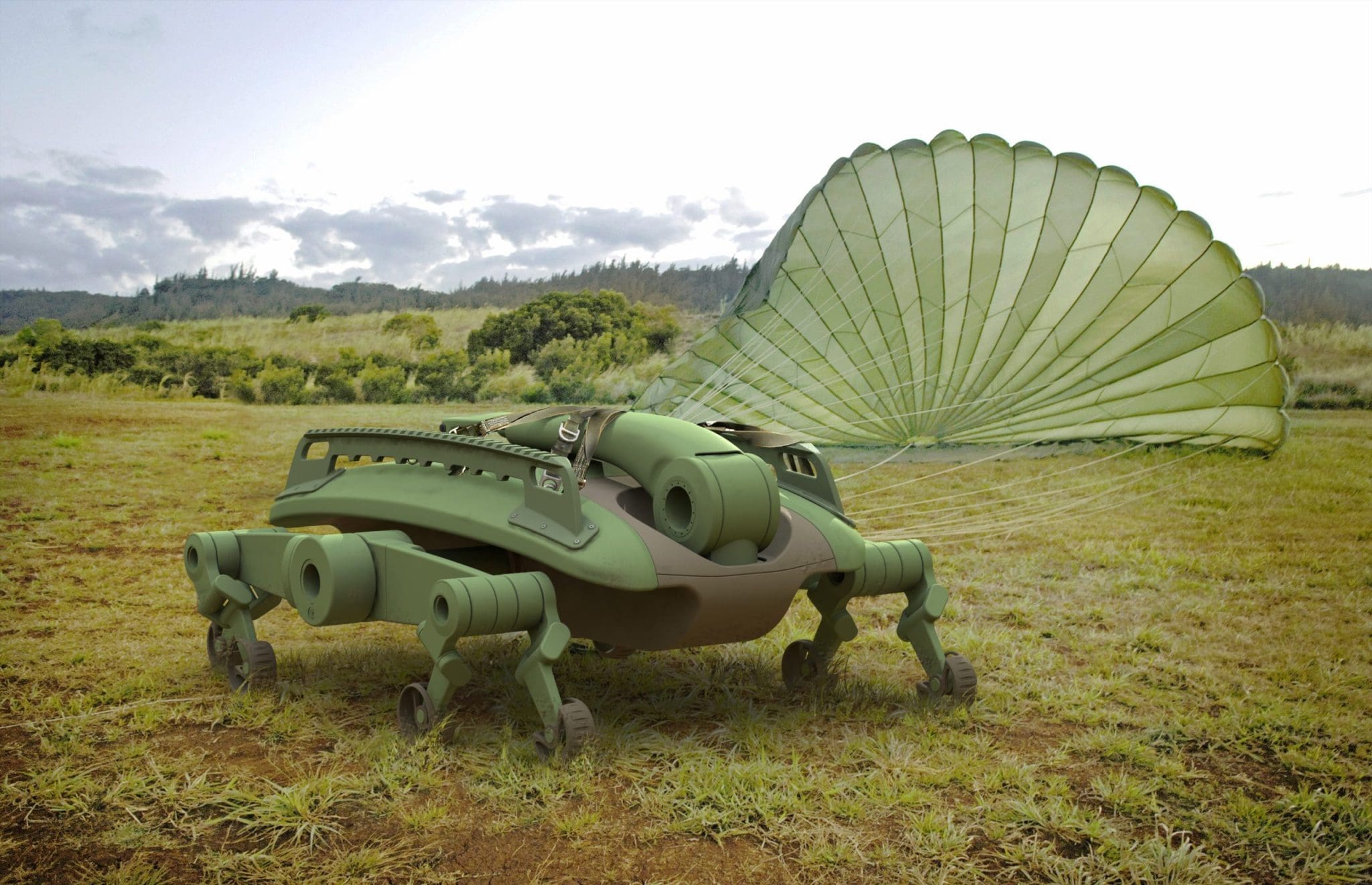
The updated Letter of Intent (LOI) grants the company exclusive worldwide rights to develop and commercialize a patented unmanned ground vehicle (UGV) designed for both autonomous and remote operation.
Unmanned ground vehicles are land-based robotic systems that rely on remote control or autonomous navigation to operate without a human on board.
These systems are increasingly used in security surveillance, military operations, hazardous environments, and material handling.
AI reshapes the capabilities of unmanned ground vehicles
Artificial intelligence is playing a central role in the evolution of unmanned ground vehicle systems, especially in defense applications. Systems that were once focused on passive monitoring are now being developed as active, responsive platforms.
Advances in AI have enabled sensor fusion, real-time target recognition, and autonomous response capabilities.
This is becoming increasingly important as the threat of drone swarms and high-speed aviation increases the demand for faster, more adaptable ground support systems.
Hybrid powered UGV designed for all terrains
The UGV under development will employ a hybrid energy system that combines solar power, batteries, and hydrogen fuel cell technology. This configuration is intended to provide extended run time, low-noise operation, and zero-emissions performance.
This platform is built on a modular chassis designed to operate in a variety of terrains. The main feature is eight articulated semi-robotic legs with integrated wheel assemblies.

This hybrid leg wheel design allows the vehicle to move efficiently on smooth surfaces while maintaining stability and traction on uneven surfaces.
In practice, it bridges the gap between traditional wheeled systems and fully legged robots, which often struggle outside of controlled environments.
Growing demand for unmanned ground vehicle services
The growth of the UGV market is closely related to the expansion of drone-based service models. Drones as a Service (DaaS) gives organizations access to robotic systems, software, and operational support without upfront ownership costs.
This approach is gaining traction across sectors such as agriculture, defense, construction, and infrastructure monitoring.
According to Precedence Research, the global drone services market is currently valued at $20.2 billion and is projected to reach $142.2 billion by 2035, growing at a compound annual rate of 24.04%.
At the same time, global defense spending now exceeds $2 trillion annually, further supporting investment in unmanned ground vehicle platforms for logistics, inspection, and high-risk tasks.
Modular platform supports a wide range of use cases
Mounted on top of the robot chassis is a modular cargo platform designed for flexibility. The system can be configured for a variety of roles, from serving as a drone launch and refueling station to transporting equipment, tools, and emergency supplies.
This unmanned ground vehicle is intended to act as a mobile robotic assistant in a variety of environments, including military operations, campus security, construction sites, and last-mile deliveries. Its adaptability allows it to perform both routine and mission-critical tasks.
Flexible operations reduce labor demands
The platform is expected to support autonomous navigation, remote control, and user-follow modes.
This flexibility allows operators to deploy unmanned ground vehicles in a manner that suits the task at hand, such as predefined routes or real-time control.
The system is designed to combine maneuverability and payload capacity to reduce manual labor and increase efficiency, especially in environments where materials need to be frequently moved over uneven terrain.
It also opens up opportunities for use in academic research, industrial automation, defense programs, and autonomous navigation testing.
The path to commercialization and intellectual property ownership
Under the agreement, First Hydrogen will move toward commercialization of the UGV within a two-year development period. If this milestone is achieved, the company will secure exclusive worldwide rights for the remaining life of the patent.
First Hydrogen will fund all development costs and retain full ownership of the intellectual property created during the process, including software, design and technical know-how.
Products incorporating the original UGV patent will receive a royalty of 1% of gross sales.
Source link
