

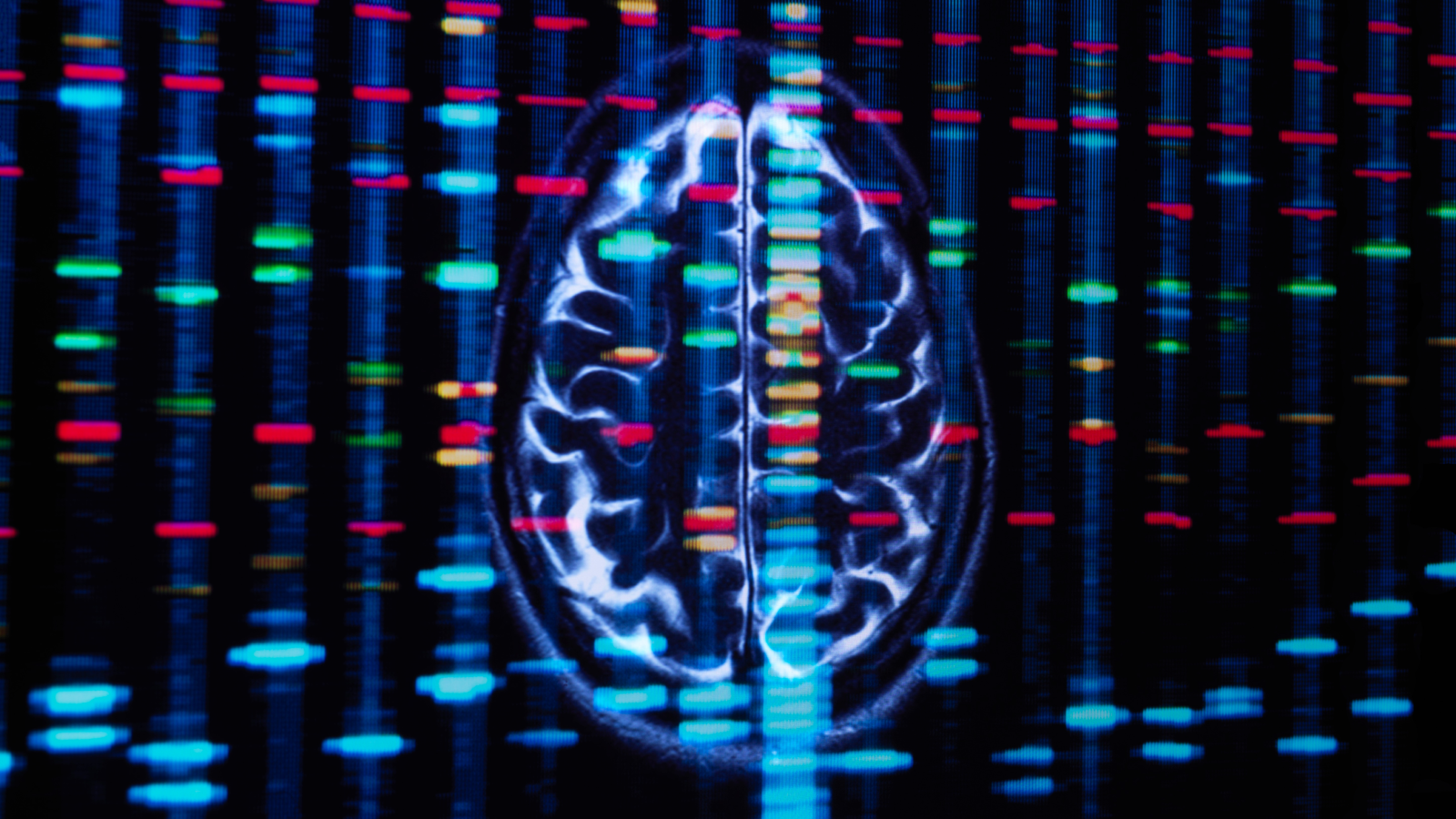
The largest genetic analysis of mental disorders to date shows that most relevant genetic variants are associated with multiple mental health conditions, not just one.
The study found that 14 psychiatric disorders can be classified into five major groups depending on the genetic variations associated with them. For example, the findings group anorexia nervosa, obsessive-compulsive disorder (OCD), and Tourette syndrome according to a common genetic profile.
you may like
Chunyu Liu, a professor of psychiatry and behavioral sciences at New York State Upstate Medical University who was not involved in the study, said the findings make sense based on existing research.
“This is what you would generally expect even before you see the results,” Liu told Live Science via email. “The common genetics between schizophrenia and bipolar disorder pointed us in this direction.” [as a field]. ”
He agrees with the study authors’ conclusion that common genetics point to common biological mechanisms. However, Liu noted that the study does not explain why clinical symptoms vary so widely between these diseases, even when the underlying genetics overlap.
“This is an important paper, but it’s only a small step toward understanding the disorder,” he says.
Genes aren’t everything
The study showed that many of the genetic variants associated with mental disorders are also associated with other traits, such as intelligence. Sleep problems such as insomnia. Personality; social behavior such as aggression. and socio-economic status.
“Not all of these associations are negative,” Abdel Abdellaoui, a geneticist at the University of Amsterdam who was not involved in the study, said in a commentary in Nature. For example, genetic overlap between schizophrenia and bipolar disorder is also associated with traits that can support academic success, such as creativity and tenacity.
This nuance is important because embryos used for in vitro fertilization (IVF) may be screened for psychiatric risk factors, which are measured through the embryo’s genetics. Parents would then be able to select embryos with a lower “risk score” for mental illness. However, Abdellaoui argued that this choice is not always clear-cut. He pointed out that having a particular genetic trait does not necessarily mean a person will develop a disease, and that the same gene can influence positive traits such as creativity or resilience.
you may like
Abdellaoui said mental illnesses often manifest at the extremes of natural genetic variation, especially when combined with certain life experiences. In other words, a person may have a genetic predisposition to a particular disorder, but will not eventually develop the disorder unless they encounter a certain adverse event, such as a trauma or environmental disaster.
“This requires reframing mental illness not as a flaw in biology, but as an unfortunate intersection of natural variation and environmental stress,” he said.
5 groupings
To study which genetic variations are unique to each disease and which are common across diseases, Andrew Grotzinger, an assistant professor at the University of Colorado Boulder’s Behavioral Genetics Institute, and his colleagues analyzed the genetic information of more than 1 million people, primarily of European ancestry.
Diseases that share many genetic variations are called “genetically correlated.” Using these correlations, scientists discovered that 14 diseases fall into five genomic factors.
5 genomic factors
Obsessive: Anorexia, OCD, Tourette’s Neurodevelopmental: Autism, ADHD Internalizing: Depression, PTSD, Anxiety Substance Use: Alcohol, Cannabis, Nicotine, Opioid Dependency Schizophrenia-Bipolar Disorder
Each genetic factor exhibited a unique biological pattern in how the associated genes behaved in the brain. For example, genes associated with schizophrenia bipolar factor are strongly activated in excitatory neurons that drive the activation of other neurons and in brain areas involved in interpreting reality.
Genes related to internalization factors are associated with glia, the supporting cells of the brain. Glia act as immune protectors and maintain connections between neurons, among other roles. This suggests that these diseases may involve these supporting cells rather than neurons, Abdellaoui said.
Substance use factors included gene variants encoding enzymes involved in the breakdown of alcohol and gene variants encoding receptors that respond to nicotine.
Liu cautioned that genetic links to mental illness should be interpreted with caution. “Genes or biological pathways that are statistically associated with disease should not be interpreted as causal without additional evidence supporting a direct mechanistic role,” he said. In short, correlation does not imply causation.
“There are multiple alternative explanations for why a gene is associated with a disease or why two diseases show overlapping genetic signals,” he said.
This article is for informational purposes only and does not provide medical advice.
Source link
