


On December 16, 2025, the Trump administration announced plans to dismantle the National Center for Atmospheric Research (NCAR), the world’s premier weather and climate research center. Russell Vought, director of the White House Office of Management and Budget, said in a statement to USA Today that NCAR is “one of the largest sources of climate change concerns in the country.”
But dismantling NCAR could have a serious impact on the nation’s ability to ensure public safety and protect economic stability, Holly Gilbert, the institute’s interim deputy director, told Live Science. “The research we’re doing here has direct application to public protection,” she says.
you may like
For example, flying on a plane used to be a more dangerous activity. Pilots encounter numerous challenges, from turbulence and tornadoes to ice on the wings and rapidly changing wind pockets known as microbursts. But thanks in no small part to the research conducted at NCAR, flying has become safer and pilots can now avoid these dangers. There has not been a single commercial airline crash caused by a sudden sudden change in wind speed for more than 25 years.
But the center’s impact goes far beyond aviation safety. NCAR models help predict the likelihood of tornadoes, hurricanes, floods, heat waves, droughts, and wildfires. “Every time an early warning has been issued, NCAR’s science and models have been instrumental in getting that warning to the people who need to hear it,” Daniel Swain, a climate scientist at the University of California College of Agriculture and Natural Resources, told Live Science.
Swain, a research partner at NCAR, also emphasized that without such early warning, people could lose property or die needlessly from weather-related disasters.
NCAR also partners with the insurance and reinsurance industries to assess the risks these hazards pose to life and property. “NCAR provides cutting-edge climate research that helps keep people safe and protect homes, businesses and jobs,” Nicole Austin, senior vice president and director of federal affairs at the American Reinsurance Association, told Live Science in an email. “Long-term hail and wildfire research and real-time weather data can help reduce damage and help communities recover more quickly after disasters.”
One center, multiple influences
NCAR’s model currently saves the nation’s aviation system an estimated $27 million annually. To increase resilience to land-based disasters, NCAR’s WRF-Hydro system powers the National Water Model (NWM), which monitors flood risk in more than 2.7 million river locations.
NCAR also developed the GPS dropsonde, a package of instruments that measures atmospheric conditions tethered to a small parachute. These dropsondes reduced hurricane path prediction errors by up to 30%. A recent economic analysis estimates that such improved forecast accuracy would optimize protection decisions, reduce unnecessary evacuations, and save up to $2 billion per major storm.
NCAR also partners with private organizations such as The Weather Company, which operates major digital consumer brands such as The Weather Channel and Weather Underground. “Our unique forecasting capabilities, which are critical to national safety and security, economic resiliency, and aviation efficiency, benefit greatly from the fundamental and applied science and technology created at NCAR and used widely across the weather enterprise, including directly at The Weather Company,” Peter Neily, senior vice president of science and forecasting operations at The Weather Company, told Live Science in an email.
you may like
NCAR’s models also predict phenomena beyond the weather. Its Wildland Fire model simulates how wildfires create their own weather and provides critical on-the-ground information to first responders, while NCAR’s Fire INventory (FINN) model tracks the transport of toxic smoke and alerts health officials to air quality hazards thousands of miles downwind.
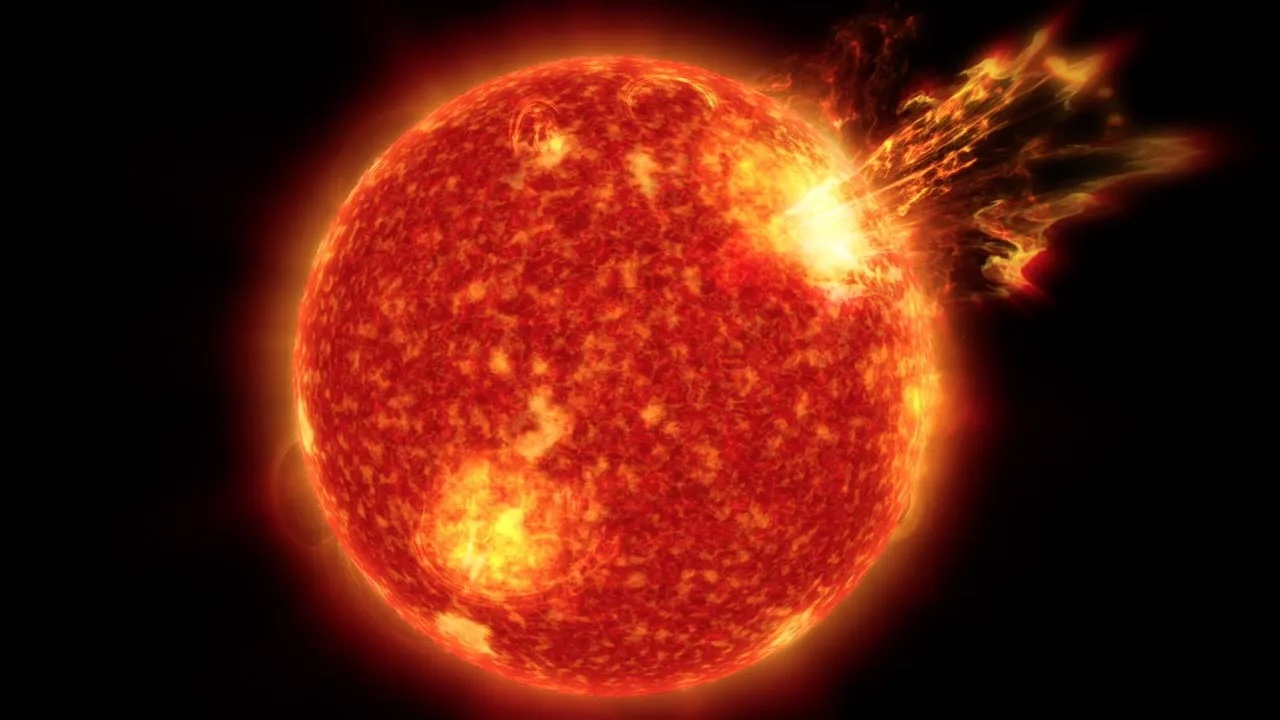
NCAR’s High Altitude Observatory (HAO) also predicts threats to U.S. infrastructure from space-originated events such as geomagnetic storms. Space weather predictions are essential to protecting the nation’s power grid, GPS satellites, and communications networks from solar flares that can cause widespread power outages and equipment failure.
greater than the sum of its parts
NSF said in a statement that it is “reviewing the structure of NCAR’s research and observational capabilities” and will “consider options to transfer management authority” for several strategic projects to “focus on needs such as seasonal weather forecasting, severe storms, and space weather.”
But NCAR’s unique value lies in its ability to treat the Earth as a single system, with different elements such as atmosphere, ocean, land and water all interconnected, Gilbert said. “Risks to public health and safety are complex and multidisciplinary in nature, so it is important to have the expertise and capacity in one organization to consider where the Earth system is clustered,” she said.
For example, modeling the path of a catastrophic wildfire requires more than data about available fuel and local wind patterns. At the same time, scientists need to track how heat from fires drives localized intense winds and determine how multi-year droughts have dried up fuels. Understanding the public health impact also requires modeling how the generated toxic smoke moves. NCAR’s expertise is unique because it can simultaneously model the intertwined components of fire, temperature, dry land, water availability and air quality using shared tools and computational resources, Gilbert said.
Swain said the complexity and interconnectedness of these types of disasters meant that splitting the center into multiple dispersed research sites could have serious consequences.
NCAR’s various research areas, once structurally siled, have evolved to become more integrated and better suited to addressing complex environmental challenges, Swain said. To better understand weather, he said, it must be understood in the context of climate. “Otherwise, you’re like an emergency room doctor who doesn’t have access to 20% to 40% of a patient’s health record.”
Returning to silos is akin to disassembling the central operating system from a custom performance car and distributing the components to three different mechanics. Although each part may function individually, the disassembly process will impact the vehicle’s ability to safely drive at high speeds, Gilbert said.
Similarly, splitting the NCAR would impede its ability to predict highly complex multi-hazard events.
“Focusing on the individual parts is not as important as focusing on this integrated system,” Gilbert said. NCAR researchers use established observational, modeling, and computational resources and leverage multiple established partnerships with industry and universities to look at the ‘whole’. “It would be very expensive to disassemble these parts,” Gilbert added.
Source link
