

When is the next full moon?
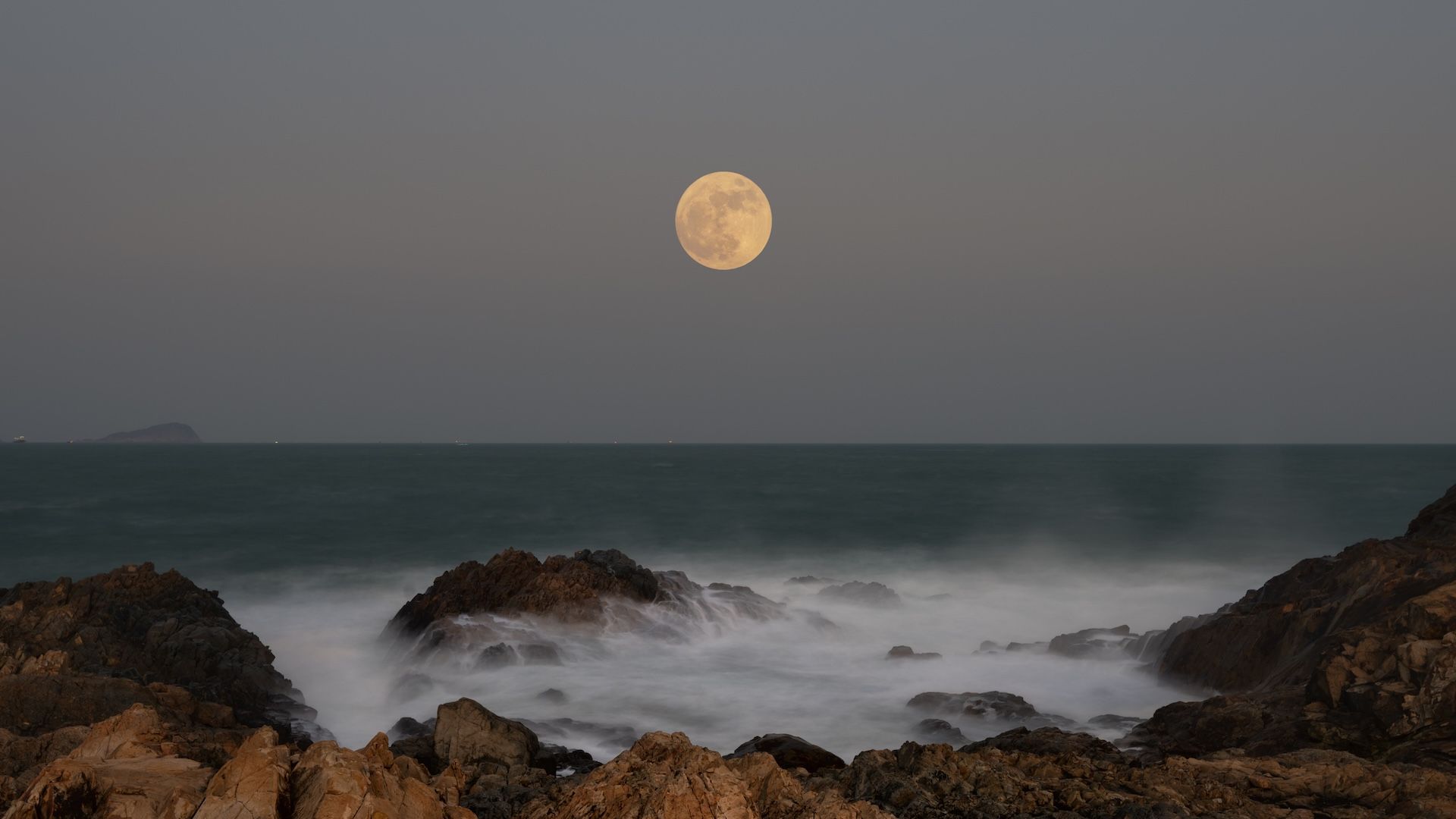
January’s full moon, known as the Wolf Moon, will rise on Saturday, January 3rd, making it the second highest full moon of the year. The moon will be full at exactly 5:03 a.m. ET and will remain bright and full on Friday (January 2) and Sunday (January 4).
A supermoon occurs when a full moon rises near perigee (the point closest to Earth on its elliptical orbit) and appears larger and brighter than a typical full moon. (In contrast, a micromoon occurs when the full moon coincides with apogee, the farthest point from Earth, making the moon appear smaller from our perspective.)
you may like
We’ll show you how to take photos when the moon is at its most beautiful.
Full Moon 2026: Overview
In 2026, you’ll have a chance to see 13 full moons, including three supermoons and two lunar eclipses (one of which will be the last total lunar eclipse until New Year’s Eve 2028). Experienced moonwatchers know that full moon nights aren’t the best for observing the moon’s surface (even with good binoculars), but a full moon rising as a sphere at dusk is an unparalleled view of the sky.
Full Moon Guide: When is the full moon in 2026?
According to timeanddate.com, here are the dates and times for all full moons in 2026, including the most commonly used names in North America.
Saturday, January 3rd: Wolf Moon (10:02am UTC/5:02am ET) — also a supermoon Sunday, February 1st: Snow Moon (10:09am UTC/5:09pm ET) Tuesday, March 3rd: Worm Moon (11:37am UTC/6:37am ET) — also a total lunar eclipse Wednesday, April 1: Pink Moon (2:11 a.m. UTC) 2/April 1, 10:11pm EDT Friday, May 1st: Flower Moon (5:23pm UTC/1:23pm EDT) Sunday, May 31st: Blue Moon (8:45pm EDT) Monday, June 29: Strawberry Moon (23:56 UTC/7:56 p.m. EDT)—Wednesday, July 29, also a micromoon: Buck Moon (2:35 p.m. EDT) Friday, August 28: Sturgeon Moon (04:18 UTC/12:18 AM EDT) — also a partial lunar eclipse Saturday, September 26: Harvest Moon (16:49 UTC/12:49 PM EDT) Monday, October 26: Hunter’s Moon (04:11 UTC/12:11 AM EDT) 24th: Beaver Moon (14:53 UTC/9:53 a.m. ET) — Another supermoon Wednesday, December 23: Cold Moon (1:28 a.m. Dec. 24 UTC/8:28 p.m. Dec. 23 ET) — Another supermoon
Lunar eclipse in 2026
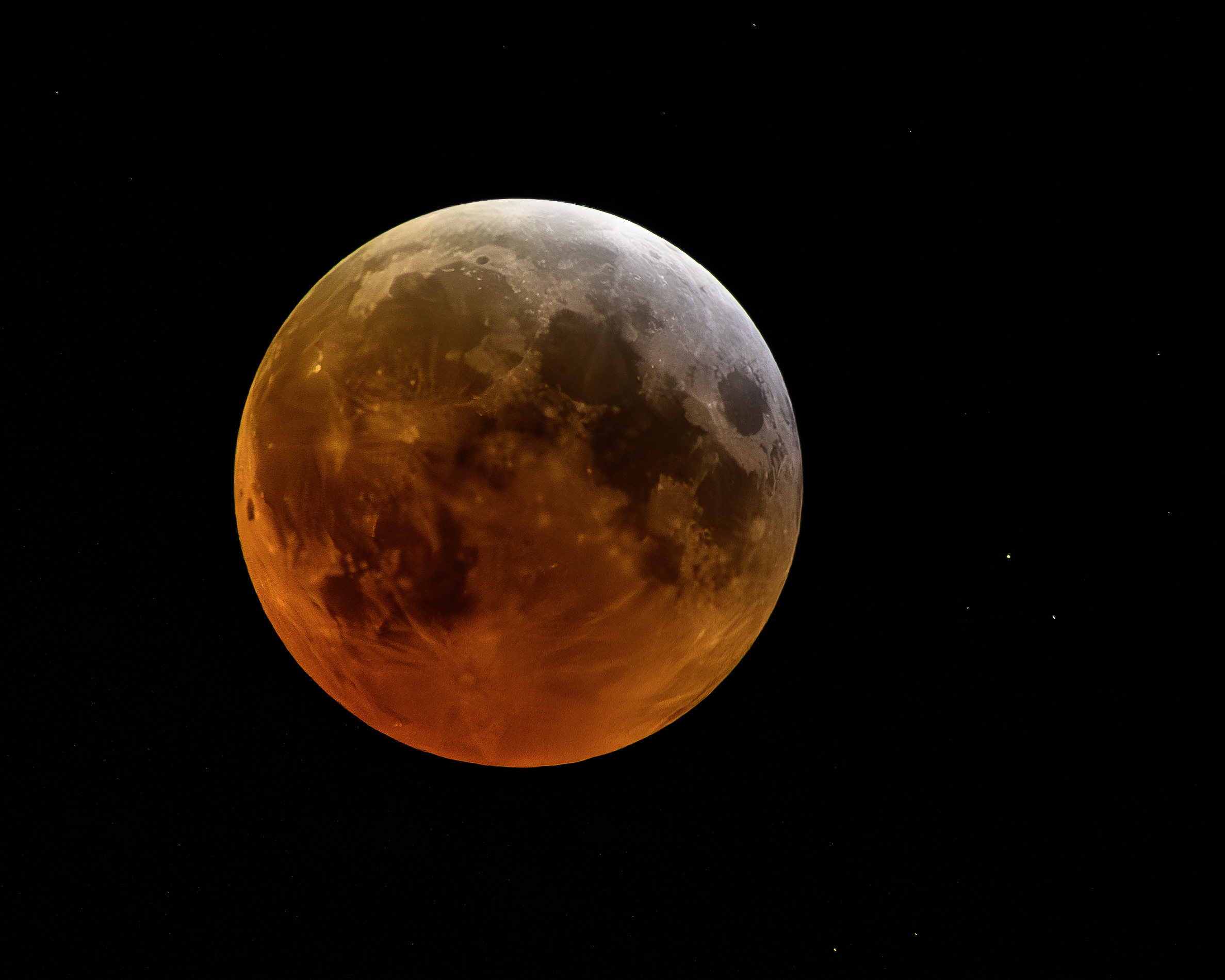
There will be two lunar eclipses in 2026, but only one total lunar eclipse. The first lunar eclipse will be a total lunar eclipse on March 2-3, during which the full Worm Moon will drift through Earth’s inner umbra and turn reddish-orange for 58 minutes from 6:04 to 7:02 a.m. EDT on March 3, according to timeanddate.com. The best views of this event, dubbed the “Blood Moon,” will be from western North America and Asia-Pacific.
The second lunar eclipse on Aug. 27-28 will be a partial lunar eclipse, during which 96% of Sturgeon’s moon will enter Earth’s inner umbra, potentially giving it a reddish-orange color similar to the maximum eclipse at 12:12 a.m. EDT on Aug. 28, according to timeanddate.com. The best views will be from North America, South America, Europe, and Africa.
What are the phases of the moon?
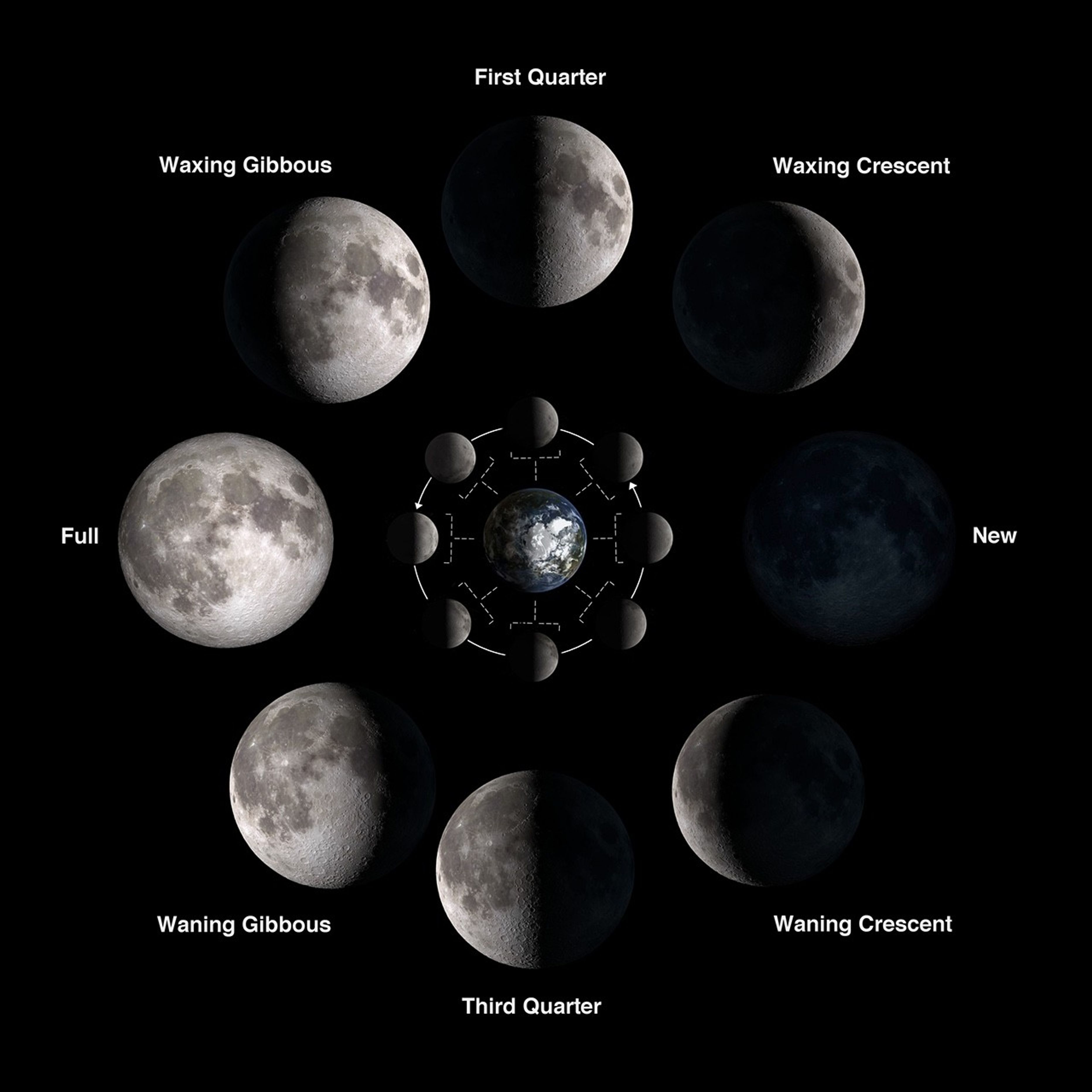
Scientists typically divide the moon’s 29.5-day cycle into eight phases. These stages are determined by the relative positions of the Moon, Earth, and Sun.
The cycle begins with a new moon, when the moon is directly between the Earth and the sun. When the moon is in its new phase, we cannot see the moon because no sunlight is reflected from the Earth’s side of the moon. A solar eclipse can only occur at a new moon. There will be two central solar eclipses in 2026: an annular solar eclipse on February 17th and a total solar eclipse on August 12th.
When more sunlight hits the Earth’s side of the moon, the moon is said to be full. The next phase of the moon is called the waxing moon, followed by the waxing phase. During the first quarter, half of the Moon’s visible surface appears bright.
Next comes the waxing moon, which is located between the waxing moon and the full moon. The full moon rises in the middle of the lunar phase, and the moon shines brightly and greatly in the sky. At this stage, the Moon and Sun are on opposite sides of the Earth, and the entire Earth side of the Moon is illuminated.
After the full moon, the waning cycle begins. First there will be a waning gibbous phase, then a waning moon, and finally a waning crescent moon. After almost 30 days, the moon becomes “new” again and the cycle repeats.
Source link
