

If Google’s AI researchers had a sense of humor, they would have called TurboQuant, a new ultra-efficient AI memory compression algorithm announced Tuesday, “Pied Piper.” Or at least that’s what the internet thinks.
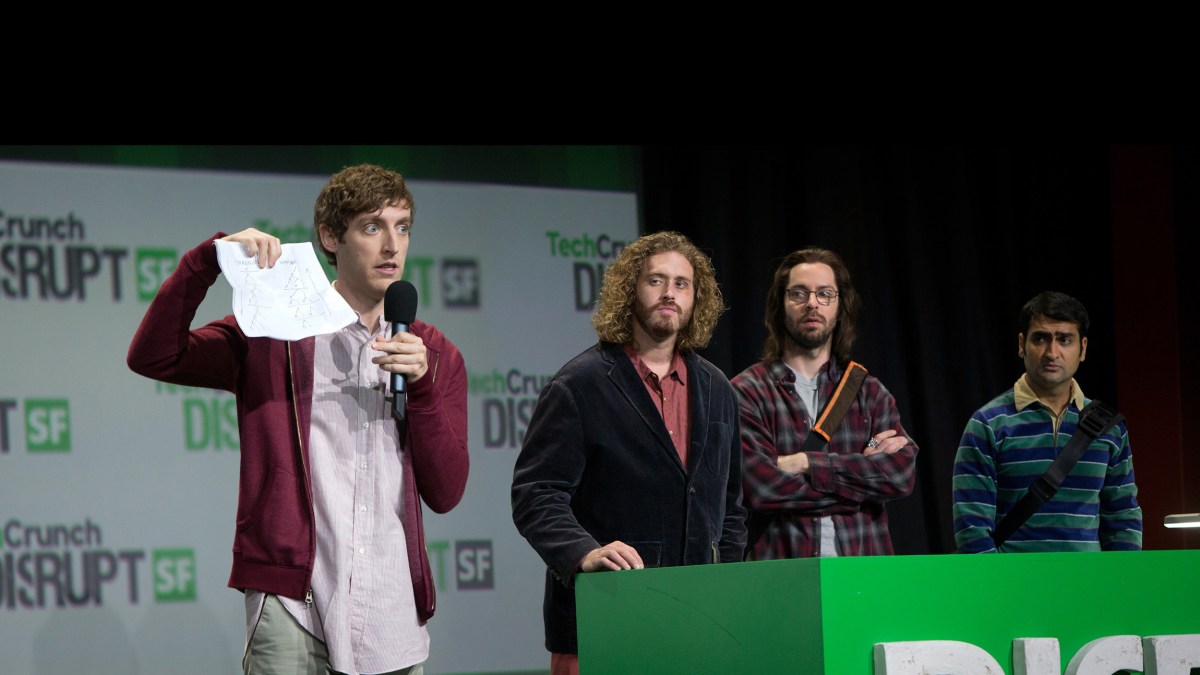
The joke is a reference to the fictional startup Pied Piper, which was the focus of the HBO television series “Silicon Valley,” which aired from 2014 to 2019.
The show followed startup founders as they navigated the tech ecosystem, faced challenges like competition from big companies, funding, technology and product issues, and even (happily) wowed the judges with a fictional version of TechCrunch Disrupt.
Pied Piper’s breakthrough technology in the TV show was a compression algorithm that significantly reduced file size with near-lossless compression. Google Research’s new TurboQuant also delivers extreme compression without sacrificing quality, but applied to the core bottlenecks of AI systems. Hence the comparison.
Google Research described the technology as a new way to shrink the working memory of AI without impacting performance. According to the researchers, this compression method, which uses a form of vector quantization to eliminate cache bottlenecks in AI processing, essentially allows AI to store more information while maintaining accuracy in less space.
They plan to present their results at the ICLR 2026 conference next month, along with two methods that enable this compression: the quantization method PolarQuant and a training and optimization method called QJL.
Understanding the mathematics involved here may be within the purview of researchers and computer scientists, but the results are exciting the broader technology industry.
If TurboQuant is successfully implemented in the real world, it could make AI cheaper to run by reducing the runtime “working memory” known as the KV cache by “at least a factor of six.”
Some, like Cloudflare CEO Matthew Prince, are calling this Google’s DeepSeek moment. This is a reference to the efficiency gains brought about by China’s AI models. China’s AI models are trained on inferior chips at a fraction of the cost of rivals, and the results keep them competitive.
Still, it’s worth noting that TurboQuant has not yet been widely deployed. At present it is still a breakthrough in the laboratory.
That makes comparisons to things like DeepSeek and the fictional Pied Piper even more difficult. In television, Pied Piper’s technology was about to fundamentally change the rules of computing. On the other hand, TurboQuant can lead to increased efficiency and reduced memory requirements during inference. However, this does not necessarily solve the widespread RAM shortage caused by AI, given that AI only targets inference memory and not training. Training still requires large amounts of RAM.
Source link
