

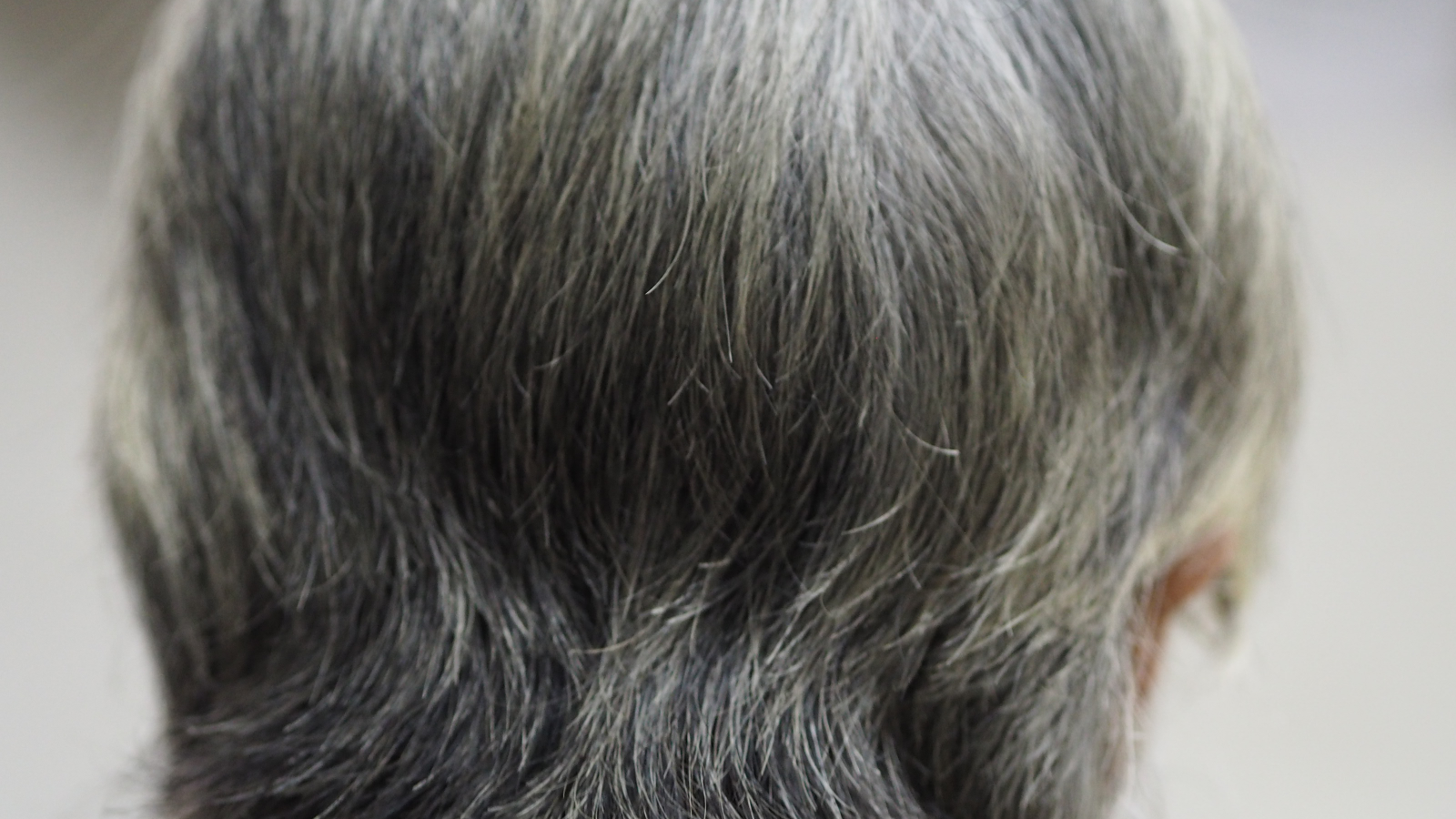
Gray hair may be a sign that the body is effectively protecting itself from cancer, new research suggests.
Carcinogens, such as ultraviolet (UV) rays and certain chemicals, activate natural defense pathways and not only cause premature graying of hair, but also reduce the incidence of cancer, a study has found.
The researchers behind the study tracked the fate of the stem cells responsible for producing the pigment that gives hair its color. Experiments in mice showed that these cells respond to DNA damage by either stopping growing and dividing, causing hair graying, or replicating uncontrollably and eventually forming tumors.
you may like
The findings, reported in October in the journal Nature Cell Biology, highlight the importance of this type of defense mechanism, which emerges with age as a defense against DNA damage and disease, the study authors said.
Gray hair as a defense against cancer
Healthy hair growth relies on a constantly regenerating population of stem cells within the hair follicle. Small pockets within the hair follicle store melanocyte stem cells, the precursors to cells that produce the pigment melanin that gives hair its color.
“Each hair cycle, these melanocyte stem cells divide and produce several mature, differentiated cells,” said Dot Bennett, a cell biologist at City St. George’s, University of London, who was not involved in the study. “These travel to the bottom of the hair follicle and begin producing the pigment that supplies the hair.”
Graying occurs when these cells can no longer produce enough pigment to fully color each hair.
“This is a type of fatigue called cellular senescence,” Bennett explained. “This is a limit on the total number of divisions a cell can undergo, and appears to be an anti-cancer mechanism that prevents random genetic errors acquired over time from propagating out of control.”
When melanocyte stem cells reach this “stemness checkpoint,” they stop dividing. This means that the hair follicle no longer has a pigment source to color the hair. This usually happens because stem cells naturally reach this limit as we age. But Emi Nishimura, professor of stem cell aging-related medicine, and her colleagues at the University of Tokyo were interested in how this same mechanism operates in response to DNA damage, a key trigger for cancer development.
In the mouse study, the research team used a combination of techniques to track the progression of individual melanocyte stem cells through the hair cycle after exposing them to a variety of harmful environmental conditions, such as ionizing radiation and carcinogenic compounds. Interestingly, they found that the type of injury affected the cell’s response.
you may like
Ionizing radiation triggered stem cell differentiation and maturation and activated biochemical pathways that ultimately lead to cellular aging. As a result, the melanocyte stem cell reserve was rapidly depleted throughout the hair cycle, stopping the production of further mature pigment cells and resulting in gray hair.
Meanwhile, by effectively turning off cell division, this aging pathway prevents mutated DNA from passing into new generations of cells, thereby reducing the likelihood of those cells forming cancerous tumors.
Exposure to chemical carcinogens — such as 7,12-dimethylbenz[a]Anthracene (DMBA), a tumor initiator widely used in cancer research, appears to circumvent this protective mechanism. Instead of turning on aging, we turned on competing cellular pathways.
This alternative chemical sequence blocked cell aging in the team’s mouse studies, allowing hair follicles to retain their stem cell reserves and ability to produce pigment even after DNA damage. This means the hair retained its color, but in the long term, unchecked replication of the damaged DNA can lead to tumor formation and cancer, the researchers said in a statement.
These findings reveal that the same population of stem cells can have opposite fates depending on the type of stress they are exposed to, lead study author Nishimura said in a statement. “Reconstructing gray hair and melanoma [skin cancer] “Not as unrelated events, but as diverse outcomes of stem cell stress responses,” Nishimura added.
Bennett said the next step is to apply this understanding to human hair follicles to see if the observations in mice carry over to humans.
This article is for informational purposes only and does not provide medical advice.
Source link
