

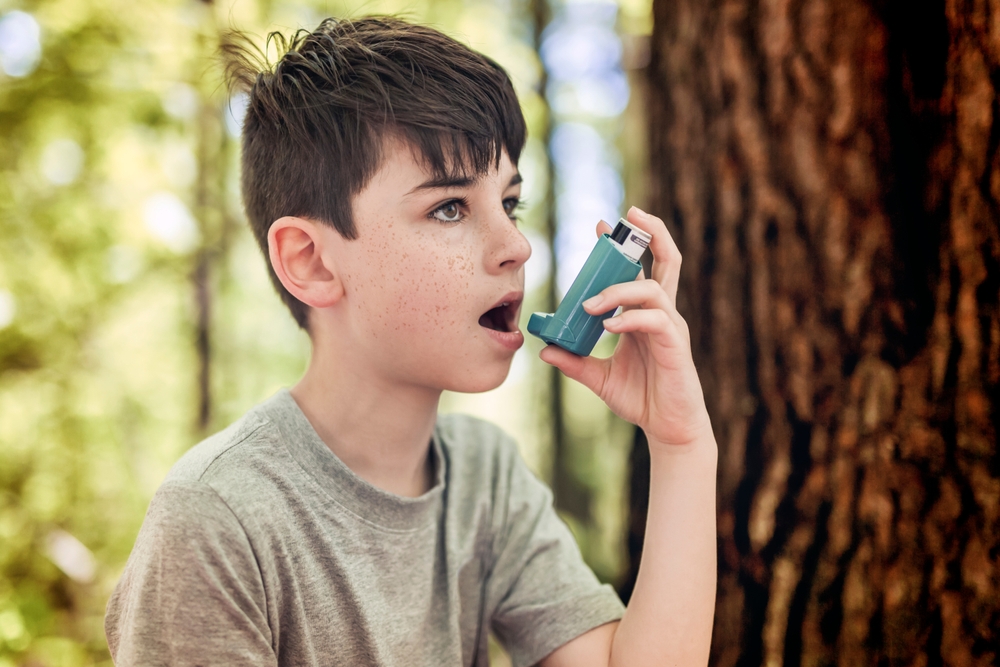
A large Swedish study has identified a remarkable link between PFAS exposure during pregnancy and a higher risk of childhood asthma, adding to growing concerns about the long-term health effects of these persistent chemicals.
Researchers at Lund University analyzed data on more than 11,000 children born in Blekinge, Sweden, between 2006 and 2013, focusing on the population affected by one of Europe’s most serious drinking water contamination incidents.
The findings suggest that very high levels of PFAS exposure can significantly increase asthma risk in children, although low to moderate exposures showed no clear effects.
Anneliese Blomberg, a researcher in occupational and environmental medicine at Lund University, explains:
“Children of mothers with very high PFAS exposures had an approximately 40% higher risk of developing asthma.”
PFAS dangers
PFAS (perfluoroalkyl and polyfluoroalkyl substances) are synthetic chemicals widely used in industrial processes and consumer products. They are used in everything from nonstick cookware and food packaging to firefighting foam.
What is particularly concerning about PFAS is their persistence. Often referred to as “permanent chemicals”, they break down very slowly and can accumulate in the human body over time.
Importantly, PFAS can cross the placenta, so exposure during pregnancy can directly impact the developing fetus.
Blekinge incident
The study focuses on the city of Ronneby in Blekinge, where high levels of PFAS were discovered in drinking water in 2013. The source of the contamination was traced to firefighting foam used during military exercises at a nearby air force base.
For decades, residents have been unknowingly consuming contaminated water. This has created a unique opportunity for researchers to examine the long-term health effects of high-level PFAS exposure, especially during pregnancy.
To estimate prenatal exposure, the scientists used maternal residential history data collected during the five years before birth. By linking addresses to municipal water records, we were able to classify exposure levels with relative accuracy.
A clear gradient in risk levels
Children were grouped based on the extent and duration of maternal exposure. The results show a clear pattern.
Low exposure: 16% of children develop asthma Very high exposure: 27% develop asthma
This means that children whose mothers experienced the highest levels of PFAS exposure had an approximately 40% increased risk of childhood asthma.
Of note, no increased risk was observed for children with intermediate levels of maternal exposure. This suggests a potential threshold effect where only substantial exposures have a significant impact on respiratory health.
Consider other factors
To strengthen the findings, the researchers adjusted for a variety of confounding variables, including socioeconomic background and maternal smoking during pregnancy.
To isolate the effects of PFAS as much as possible, children in the high exposure group were compared to similar individuals in the low exposure group.
However, researchers are careful not to exaggerate causal relationships. Although the association is strong, it does not conclusively prove that PFAS exposure directly causes asthma.
There are also limitations. This study could not fully account for all environmental and behavioral factors, such as postnatal second-hand smoke exposure and genetic predisposition to asthma.
Additionally, exposure estimates were based on housing data rather than individual biomarker measurements.
Why this study stands out
Most previous studies on PFAS exposure have focused on populations with relatively low exposure levels, often yielding mixed or inconclusive results. What makes this study unique is the inclusion of individuals with very high exposures, providing a broader scope for analysis.
This makes the findings particularly important for communities around the world facing significant pollution events. It also provides a clearer picture of potential health risks at the upper end of exposure.
Public health impact
The results raise important questions regarding environmental safety standards and long-term health monitoring. Although daily exposure to PFAS is widespread, this study suggests that risk levels can increase significantly under conditions of sustained high exposure.
For policymakers, the findings highlight the importance of stricter regulations and remediation efforts in contaminated areas. To clinicians and public health experts, they emphasize the need to more closely monitor children in high-risk populations.
The researchers are calling for further studies to see if similar patterns emerge in other heavily exposed populations. We also need a better understanding of how PFAS affect lung development and whether there are subtle health effects even at lower exposure levels.
Future research will aim to refine the exposure model, particularly in Ronnebee, to pinpoint when and how exposure influences health outcomes. This could help determine whether certain developmental periods, such as early pregnancy, are particularly sensitive to PFAS.
This study adds to the growing body of evidence linking environmental pollutants and long-term health effects.
Although not conclusive, the study results suggest that high exposure to PFAS during pregnancy may significantly increase the risk of childhood asthma, reinforcing concerns about the widespread presence of these chemicals.
Source link
