

Innovation Platform Editor Georgie Purcell spoke with NASA’s John W. Dankanich to hear how the space agency is using plasma propulsion to improve missions.
Plasma propulsion is an advanced form of electric space propulsion that uses electric and magnetic fields to ionize propellant into plasma (a charged gas of electrons and ions) and accelerate it to extremely high speeds, far exceeding chemical rockets. This solution offers a variety of benefits for space missions, including increased efficiency and reduced costs.
NASA has utilized plasma technology for a variety of activities and missions throughout its history and continues to do so to optimize efficiency, cost-effectiveness, and capabilities. To learn more about the role of plasma propulsion in NASA’s work, Georgie Purcell spoke to John W Dankanich, NASA’s Space Transportation Systems Capability Director.
Can you identify some of the main uses of plasma propulsion in NASA missions?
Plasma propulsion, or commonly referred to as “electric propulsion” (EP), includes a variety of propulsion solutions, including Hall effect thrusters, grid ion thrusters, pulsed plasma thrusters, electrospray, and more.
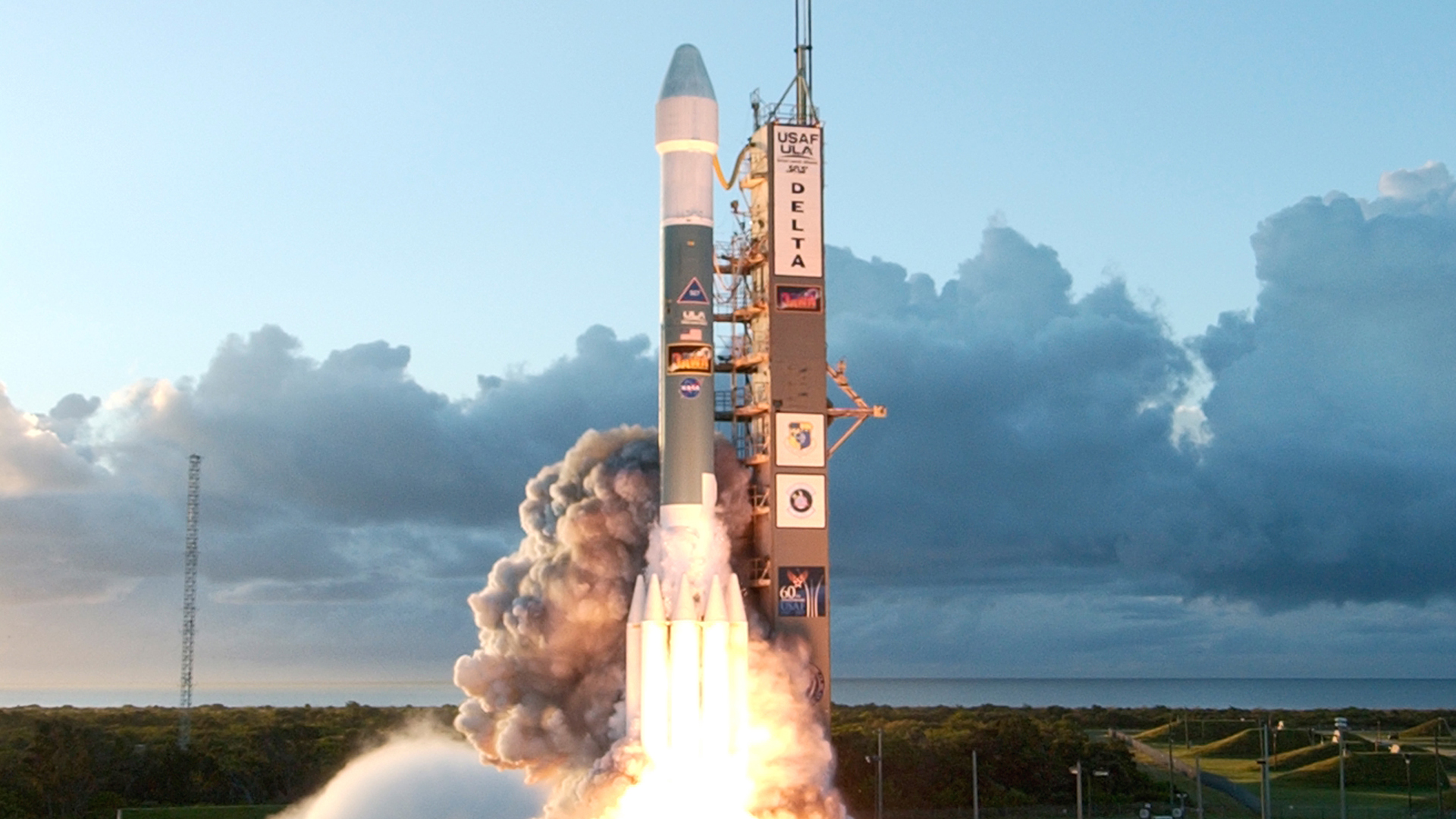
Electric propulsion has facilitated a variety of scientific missions at NASA. For example, the Dawn planetary science mission used a gridded ion thruster called NASA Solar Technology Application Readiness (NSTAR). The mission was led by Jet Propulsion Laboratory (JPL) to explore Vesta and Ceres using thruster technology developed by the Glenn Research Center. This was the first science mission to use primary electric propulsion, and the EP system also enabled the first mission to stop and explore two different destinations in the same spacecraft.
We continue to use electric propulsion for planetary science within the ongoing NASA Psyche mission. The mission, enabled by the use of Hall-effect thrusters, is scheduled to launch in 2023 and arrive at the metal-rich asteroid Psyche in July 2029. This is an interesting mission because Psyche could be the exposed core of a protoplanet, which could help us understand planet formation.
NASA continues to see an increase in the number of plasma-propelled missions used, especially as low-power and low-cost solutions continue to mature, some of which enable high-performance, low-cost missions. We have a project under the Space Technology Mission Directorate (STMD) called Subkilowatt Electric Propulsion (SKEP). We also partner with industry to develop systems for small spacecraft, including ESPA-class electric propulsion. In the short term, this will facilitate things like Earth-centered science missions and orbital maintenance, but we’re also working on lowering the cost of planetary science missions.
Our largest EP mission is Gateway, humanity’s first lunar orbiting space station. The Gateway is part of the Artemis architecture, along with other systems such as the Space Launch System, Orion spacecraft, human landing system, and spacesuit. These are some of the systems that will help NASA explore the moon’s south pole. The Gateway will support the NASA-led Artemis mission to return to the Moon for scientific discoveries and will also help chart the path for the first crewed missions to Mars and beyond. This demonstrates a lot of the technology we want from a system aggregation and system scale-up perspective. The small space station will be a multipurpose outpost that will support lunar science missions and will also be able to test technologies in lunar orbit. This is aimed at partnerships with commercial and international partners built through human exploration.

As you can imagine, installing large systems at remote destinations requires enormous amounts of propellant. Part of the Gateway program is Power and Propulsion Elements (PPE). The PPE is also managed by the Glenn Research Center and is currently undergoing final assembly at Lantelis Space Systems. The PPE includes three 12.5 kW Advanced Electric Propulsion System thrusters manufactured by L3Harris Technologies and four 6 kW BHT-6000 thrusters manufactured by Busek. These are all Hall-effect thrusters, providing a high-power electric propulsion system that enables a single-launch architecture that efficiently moves the Gateway into a near-rectilinear halo orbit (NRHO) around the Moon.
How has NASA’s use of plasma propulsion progressed in recent years?
NASA’s work is primarily focused on promoting the success of our industry partners. The use of electric propulsion has become mainstream in commercial spaces in recent years, leveraging many advances over the past few decades.
NASA is also increasing the variety of plasma propulsion options. An important example is the advancement of the Gateway Advanced Electric Propulsion System (AEPS) thruster. We currently use magnetically shielded Hall thrusters, which provide very long-life functionality. We also see the technology being used within a wide range of missions at different scales, with international partners adapting the technology to their own systems.
In addition to these life-extending features, there are also advances such as efforts to reduce costs and improve manufacturing capabilities.
What advantages does plasma have over other types of propulsion?
The big advantage of electric propulsion is propulsion efficiency. The efficiency of a propulsion system is often measured in terms of specific thrust, which is a function of thruster exhaust velocity. Therefore, the faster the exhaust, the more efficient the momentum transfer and the more efficient the spacecraft. Chemical propulsion systems are typically limited in the amount of energy that can be released by breaking chemical bonds through combustion. However, electric propulsion typically ionizes the propellant and accelerates its plasma, often resulting in an order of magnitude higher exhaust velocity or an order of magnitude higher specific impulse.
Depending on the mission we want to pursue, fuel efficiency can be everything. For example, as I mentioned earlier, the Dawn mission was the first mission in history to stop at two different destinations in the same spacecraft. We often think about fuel efficiency on the ground. Naturally, we want our cars to be more fuel efficient, and NASA is no different. The challenge NASA has is that it often needs to buy a new vehicle every time it travels somewhere. For us, fuel efficiency is everything, especially when we’re making multiple stops or going to very difficult destinations. For example, in the Gateway mission, when trying to move such a large mass, the efficiency of the electric propulsion system allows Gateway to reach orbit with just one launch architecture.
What are the main challenges associated with the use of plasma propulsion technology? How are you working to overcome these?
NASA often has unique high-performance requirements. Thousands of plasma thrusters have been launched into commercial space in recent years, primarily for orbit insertion, orbit maintenance, and ultimately deorbit deorbit with relatively low delta-v mission requirements. The goal of the application is to reduce the cost of the system while meeting minimum requirements. Some of these missions require only a few hundred hours of execution, and others use only a few kilograms to tens of kilograms of propellant. But Gateway is designed to launch with thousands of kilograms of propellant and operate for tens of thousands of hours. It is also designed to withstand long-term operation. Simply demonstrating a thruster through a certification program can be costly, especially when scaling up thrusters that may reach the limits of test facilities.
It is also important that these high-performance solutions, especially CubeSats, address very low costs while achieving very high reliability. Achieving reliable, high-performance solutions for CubeSats at low cost has been difficult, but we have made significant progress with multiple Small Business Innovative Research (SBIR) investments in pulsed metal thrusters, electrospray, and even multimode systems.
Thermal issues are also always an issue when moving to higher power density systems.
As we scale up these thrusters to higher powers, it is important to keep the mass down, which essentially allows us to achieve these higher power density solutions.
Cost is also a major challenge for electric propulsion systems. In addition to thrusters, plasma propulsion systems often require high power for spacecraft and also require power processing units (PPUs), which can increase the cost of the overall propulsion system beyond that included in chemical propulsion systems. Both JPL and Glenn Research Center license electric propulsion systems to commercial partners to help enable missions and reduce costs. We recently funded a serial SBIR with a company called HiFunda, a small business developing castable inorganic composite potting materials (CICPM) for high temperature electromagnets. This investment should improve reproducibility in Hall thruster manufacturing, reduce lead times, reduce rework and strengthen quality control while leveraging process automation. These types of investments are helping us work towards lower cost solutions.
Propellants may also be added to some of these missions. Therefore, NASA and its partners have invested in alternative propellants. NASA has traditionally used xenon to boost its performance, but this is relatively expensive compared to alternatives such as krypton and argon. We also studied more dense solutions such as iodine, bismuth, and zinc.
What does the future hold for plasma propulsion at NASA?
I think it’s an exciting time to see where we are now and where we’re going with plasma propulsion. This applies both to scaling up, such as nuclear-electric propulsion, which enables some of the Mars architecture missions we are considering, and to scaling down systems, such as CubeSat and small satellite applications.
It’s amazing how the world becomes more accessible and then the pace of innovation increases and what can be done in space increases. As we begin to improve performance and enable these new capabilities in very low-cost missions, we begin to see mission versatility that enables better science and greater economic activity.
The future of electric propulsion looks bright and broad-spectrum. This means more thruster types, thruster sizes, and propellant diversity to add to your portfolio as you expand the use of EP across all classes of NASA missions for science and exploration.
This article will be published in an upcoming issue of Special Focus Publication.
Source link
