

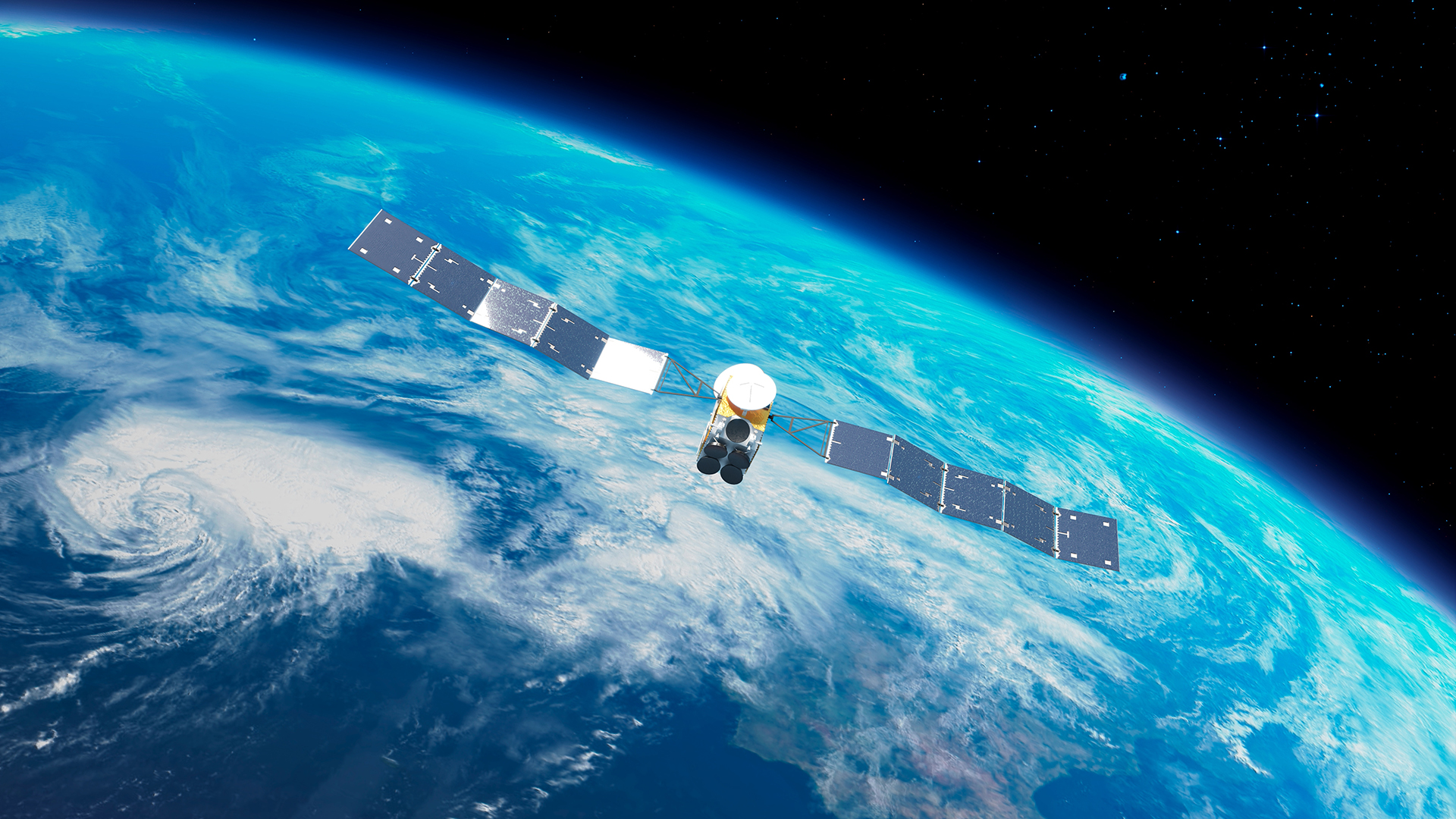
RSS-Hydro advances Luxembourg’s space ambitions through innovative satellite Earth observation.
In the heart of Europe, a landlocked country is making waves across the orbital frontier. Luxembourg, long known as a global financial hub, has successfully turned its attention upwards and transformed into a “new space” powerhouse.
At the heart of this transformation is the Luxembourg Space Agency (LSA), which over the past decade has fostered an ecosystem where commercial ambition and stewardship of the planet merge.
Among the pioneers of this movement is RSS-Hydro, an R&D-focused company that has become a symbol of how satellite Earth Observation (EO) is becoming more than just “eyes in the sky” and becoming the backbone of global climate resilience.
Digital twins for cities on a changing planet
Luxembourg’s commitment to space goes beyond exploration. It’s about application. The largest single catastrophic flooding event in the Grand Duchy occurred in July 2021, causing more than $150 million in damage. This served as a stark reminder of the need for better predictive and adaptive technology that can be used to mitigate, prepare, and protect in one service. RSS-Hydro answered this call as a digital twin pioneer. A digital twin is a highly realistic numerical model of a town or commune that simulates how water behaves during extreme weather events and how communities protect themselves and prepare for the next event.
RSS-Hydro has developed a “living” flood modeling service, SafeCity, by combining high-resolution remote sensing and hydrometeorological data from national data programs and the European Commission’s Copernicus program with proprietary algorithms. This resulted in the company being awarded the 12th edition of Luxembourg’s state-run Fit4Start startup accelerator. SafeCity allows local governments to “see” disasters and take proactive measures before they occur. This is not just a theory. It’s actionable intelligence, or “Tech in Action.”
FloodSENS breakthrough: Breaking through the clouds
One of the historical “Achilles heel” of Earth observation for disaster management is cloud cover. During major storms, optical satellites often see only white fog, just when emergency responders need to see the ground.
Through the ESA InCubed program, supported by LSA, RSS-Hydro began the development of FloodSENS. As part of a hybrid code algorithm, FloodSENS uses a neural network-based machine learning model to reconstruct flooded areas under partial cloud cover from electro-optical satellite imagery. By training on the world’s diverse biomes, from the wetlands of Bangladesh to the urban centers along the Danube River, FloodSENS provides decision makers with a clear understanding of where every minute counts. To better understand and estimate where floodwaters collect on the land surface, FloodSENS’ ML models also use topographic data and hydrographic layers as input. In addition, the FloodSENS algorithm includes code to interpret flood radar images whenever available, moving towards a true multi-sensor, multi-mission algorithm. This allows FloodSENS to generate emergency information about flood disasters regardless of time of day or weather conditions.

“The goal is to move from observation to prediction,” says the RSS-Hydro technical team. “We provide situational awareness to everyone from farmers planning their crops to humanitarian aid workers in flood-hit areas of Somalia.”
The power of a collaborative ecosystem: MeluXina, LIST, Big Techs
The success of RSS-Hydro is testament to the “close and united” nature of Luxembourg’s space ambitions. Innovation here does not happen in isolation. It takes place on supercomputers within the partnership and is based on world-class research and development projects.
In other words, the collaborative synergies within Luxembourg’s New Space ecosystem are best exemplified by the “computational trinity” of national infrastructure, research expertise, and global technological leadership. There is MeluXina, a domestic EuroHPC supercomputer that provides raw capabilities when needed for RSS-Hydro’s most demanding workloads. By leveraging MeluXina’s GPU-AI accelerators, RSS-Hydro can increase the processing speed needed for the most demanding flood intelligence calculations. This high-performance environment is enhanced by a close partnership with the Luxembourg Institute for Science and Technology (LIST), where joint research and development efforts in remote sensing and modeling improve the quality of freely available satellite data. This public-private collaboration will ensure that cutting-edge academic research is quickly translated into commercial-grade tools for global disaster resilience.

RSS-Hydro extends its influence beyond borders through strategic alliances with the world’s leading ‘big tech’ companies. The company leverages NVIDIA-accelerated GPU computing and NVIDIA Omniverse to transform complex geospatial data into immersive 3D “digital twins” that enable decision makers to visualize the impact of flooding on critical infrastructure in real time. In several recent technology use cases, the company has shown that such advanced modeling can be hosted on Oracle Cloud Infrastructure (OCI). OCI provides secure, high-capacity “bare metal” instances needed for global expansion while maintaining strict data sovereignty. By integrating these high-end tools with Google’s extensive historical archives, Flood Hub predictive AI modeling, and Microsoft Azure’s cloud computing tools, RSS-Hydro, with support from the Luxembourg Space Agency, is not just observing Earth, but building an integrated high-tech shield against the escalating challenges of growing climate risks.
Orbital computing: a new frontier for Luxembourg as a “living laboratory”
Entering 2026, the RSS-Hydro, LSA, and ESA collaboration has reached new orbital heights: orbital computing. RSS-Hydro is partnering with space cloud infrastructure provider D-Orbit and satellite provider EnduroSat to test algorithms that process data directly on the satellite.
By analyzing images in orbit and sending only important results back to Earth, response times are reduced from days to minutes. This “intelligence at the edge” is the basis of RSS-Hydro’s strategy to position it and Luxembourg as leaders in high-performance space applications.
With the recent launch of Luxembourg’s first national earth observation satellite, NAOS (National Advanced Optical System), the Grand Duchy now has its own high-resolution imaging capabilities. NAOS is a high-resolution Earth observation satellite developed by OHB Italia for the Luxembourg Defense Directorate as part of the Luxembourg Earth Observation System. For companies like RSS-Hydro, this represents a major advancement in Luxembourg’s space ecosystem.
Luxembourg’s ‘New Spaces’ era is defined by a transition towards sustainability. Whether we’re tracking wildfires and floods with RSS-Hydro or redefining the EO intelligence market, the message is the same. “Space technology is essential to life on Earth.”
Under the leadership of the LSA, the Ministry of Economy and the Department of Defense, Luxembourg is no longer just a participant in the space race. It’s part of the reshaping. Through regulatory foresight, targeted funding, and a continued focus on climate resilience, the Grand Duchy is proving that even a small country can have a big impact in space.
Please note: This is a commercial profile
This article will be published in an upcoming issue of Special Focus Publication.
Source link
