

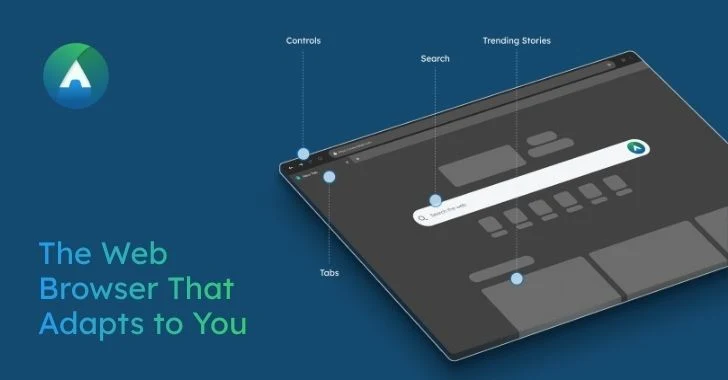

As web browsers evolve into general-purpose platforms, performance and productivity often suffer.
Feature overload, excessive background processes, and fragmented workflows can slow down browsing sessions and cause unnecessary friction, especially for users who rely on the browser as their primary work environment.
This article explains how a lightweight, task-focused browser like Adapt Browser can help users browse faster, reduce distractions, and complete everyday tasks more efficiently without relying on heavy extensions or complex configurations.
Productivity issues with modern browsing
For many professionals, the browser serves as a central hub for research, communication, content consumption, and operational work. However, common challenges remain, including:
High CPU and memory usage by background services Too many tabs leading to loss of context Frequent switching between browser tabs and external applications Reliance on extensions that negatively impact performance and stability
These problems aren’t necessarily caused by the website itself, but by the way browsers manage processes, interfaces, and workflows. This highlights the importance of using a fast and lightweight browser. Fast browsing options include Adapt Browser, Opera, Edge, and Vivaldi.
Step 1: Reduce browser overhead and prioritize performance
One of the most effective ways to improve your browsing speed is to minimize your browser’s baseline resource consumption. Lightweight browsers take a different architectural approach by reducing background activity and avoiding unnecessary services that run regardless of user intent.
This can have the following consequences:
Faster page load times Improved responsiveness when switching between tabs or windows Reduced memory usage on systems running multiple applications
A performance-oriented browser, Adapt Browser helps you stay responsive during long work sessions by focusing on important features rather than feature parity.
Step 2: Centralize your web-based workflows
A major source of browsing inefficiency is constantly switching between tabs, windows, and desktop applications. Streamline your daily workflow by centralizing commonly used web tools within a browser interface.
This approach allows users to:
Access frequently used web applications without opening new tabs Maintain visibility of active tools while browsing or investigating Reduce time spent navigating between disconnected contexts
Adapt Browser accomplishes this by providing access to essential tools for work in one place, helping users maintain momentum and reduce cognitive load.
Step 3: Reduce distractions through interface simplicity
Interface design plays an important role in user focus. Excessive UI elements, notifications, and visual clutter can distract and delay task completion.
A streamlined browser interface emphasizes:
Clean layout with minimal visual noise Clear separation between content and controls Reduced interruptions during focused work
Adapt Browser supports this design philosophy to maintain sustained attention, especially for tasks such as reading, writing, and analysis.
Step 4: Use windows smarter to improve task management
Opening multiple tabs is often a workaround when viewing is limited. Modern browsers allow you to optimize how your content is displayed and managed instead of relying on a large number of tabs.
Effective strategies include:
See related content side-by-side without opening additional tabs Keep search results visible while exploring linked pages Reduce duplicate browsing actions
By improving the way windows and views are handled, users can stay organized while maintaining browsing speed. Adapt Browser provides exactly this functionality, allowing users to adapt the browser to suit their workflow.
Applying these principles using Adapt Browser

Adapt Browser follows a lightweight design philosophy centered around performance and task efficiency. Rather than trying to replicate a feature-rich browser ecosystem, we focus on optimizing core browsing behaviors and integrated workflows.
The main features are:
Lightweight architecture designed to reduce CPU and memory usage Integrated access to commonly used web applications and tools Interface elements designed to reduce distractions and tab clutter
Adapt is built as a non-Chromium browser, giving you more control over resource usage and core browser behavior compared to browsers that rely on Chromium-based architecture. It also has AppEsteem certification, which indicates that the browser meets established security and transparency standards for consumer software.
This approach supports users who want faster browsing and a more focused work experience without complex setup or customization. Additional technical details and updates can be found on the official Adapt Browser website.
Browsing faster and getting more done isn’t just about internet speed; it’s also heavily influenced by how your browser manages your resources, workflow, and your attention. A lightweight browser can significantly increase productivity by reducing overhead, simplifying the interface, and centralizing important tools.
As web-based work continues to expand, browser design choices play an increasingly important role in everyday efficiency. A task-focused browsing approach allows users to spend less time navigating and more time completing meaningful work.
Source link
