

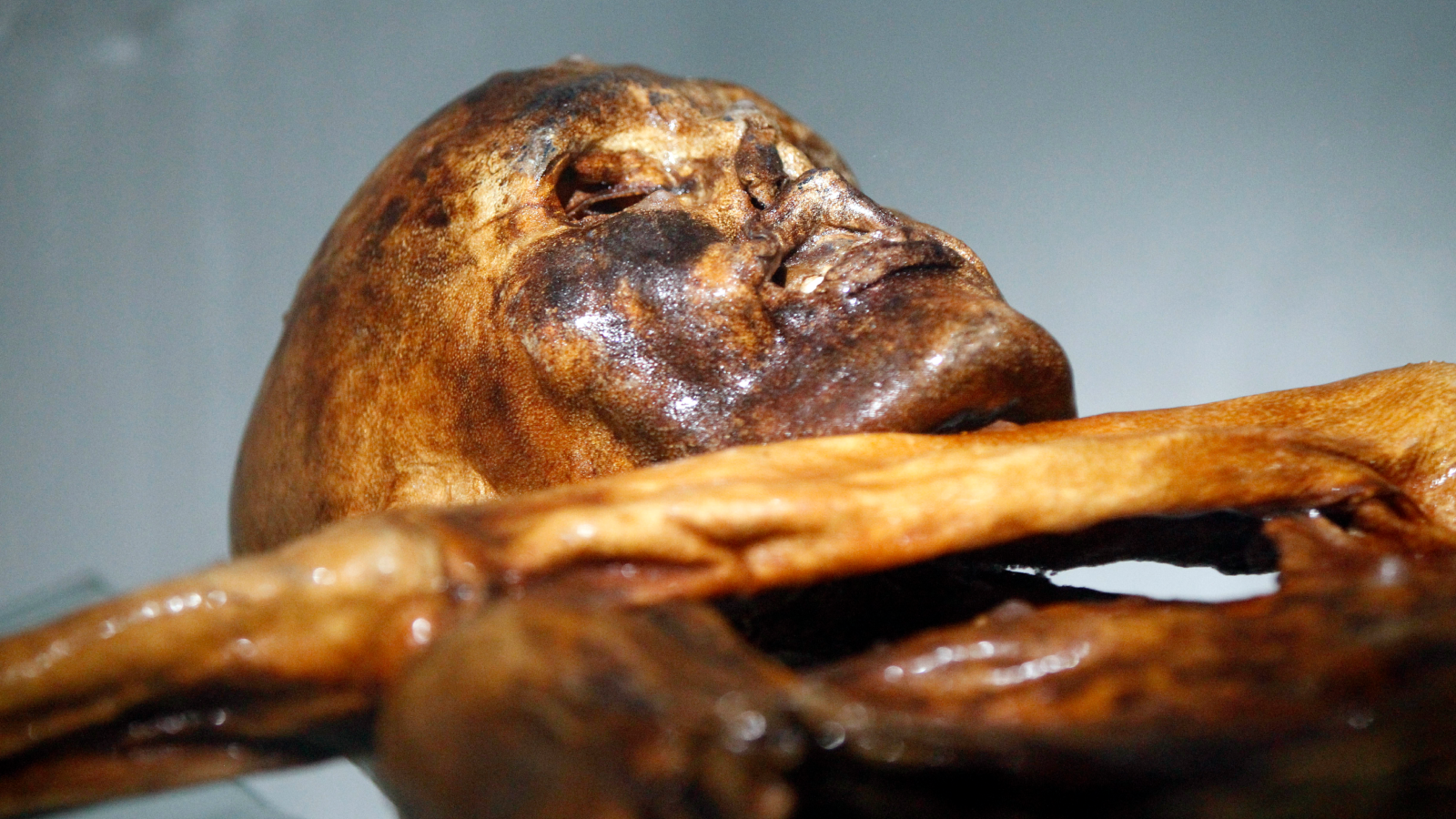
A new study has found that the 5,300-year-old iceman mummy Ötzi and a prehistoric man who lived in Siberia 45,000 years ago both carried cancer-causing strains of human papillomavirus (HPV).
Scientists analyzed ancient genetic data previously collected from these people and found that both were likely infected with HPV16, a preprint paper posted on bioRxiv on Dec. 16 reported. In the study, which has not yet been peer-reviewed, the authors present what they claim is the “earliest molecular evidence” of HPV16 in modern humans.
HPV in ancient humans
HPV includes a diverse family of viruses that are transmitted primarily through direct skin-to-skin or sexual contact and are commonly found in humans today. Most infections are asymptomatic, but in a small number of cases, HPV16 and other high-risk types (known as “oncogenic” papillomaviruses) can promote the development of some cancers.
Although the clinical importance of papillomaviruses is well understood, little is known about their occurrence in prehistoric human populations. In the study, the authors examined the long-standing question of how long cancer-associated papillomaviruses, specifically HPV16, have been prevalent in modern humans, study co-author Marcelo Briones, a professor at the Center for Medical Bioinformatics at the Faculty of Medicine of the Federal University of São Paulo in Brazil, told Live Science in an email.
“These results show that HPV16 has been anatomically associated with modern humans for a very long time, probably well before the split of major populations outside of Africa,” or before 50,000 to 60,000 years ago, Briones said. “This supports the idea that oncogenic human papillomaviruses are not recent pathogens, but rather long-term companions of the host, having evolved with primates and humans over long evolutionary time scales.”
The researchers reanalyzed publicly available genome sequence datasets for both Ötzi and a Siberian man known as Ust Ishim. These individuals were chosen because they represent two of the best-preserved and best-characterized ancient human genomes available, Briones said.
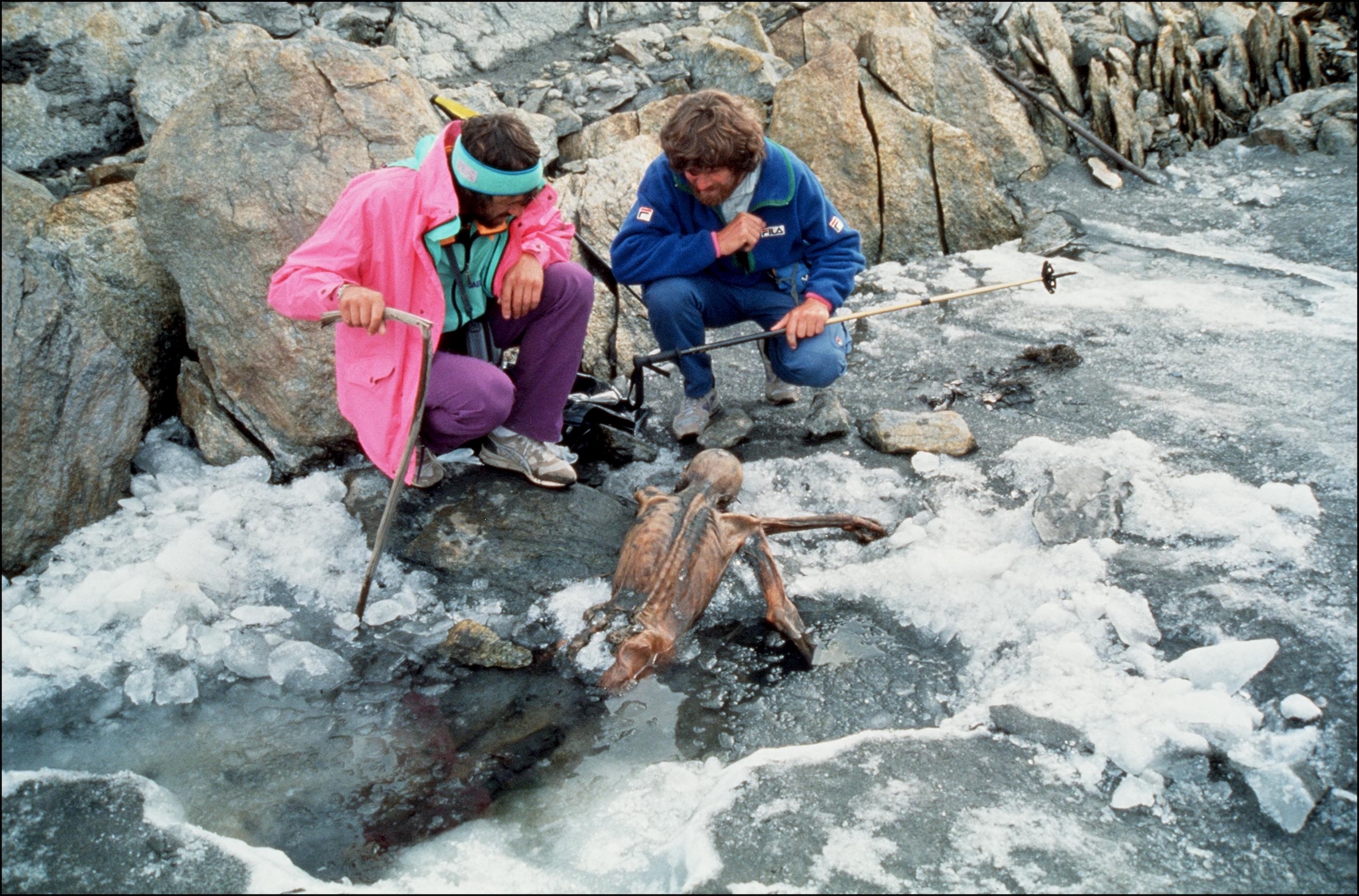
Ötzi was a naturally mummified man whose 5,300-year-old body was discovered in 1991 high in the Alps on the Austrian-Italian border. Since then, his surprisingly well-preserved remains, clothing and tools have provided a rare glimpse into prehistoric life in the area. Meanwhile, the Ust-Ishim people, discovered in 2008, lived in what is now Western Siberia about 45,000 years ago. His remains, a single leg bone, yielded one of the oldest modern human genomes ever fully sequenced.
Briones et al. searched genetic datasets for DNA fragments that matched known HPV genomes. They found multiple DNA fragments matching HPV16 (specifically, the strain known as HPV16A) in both individuals, suggesting the virus was present in them.
Most previous hypotheses about when HPV16 appeared in modern humans relied on computer models of how the virus evolves over time. Researchers say these suggest that the virus has ancient evolutionary origins, but direct biological confirmation is lacking. In general, computer models suggest that papillomaviruses likely coevolved with vertebrates over hundreds of millions of years.
you may like
Although the preprint does not address the ultimate origin of HPV as a population, it does indicate that at least one high-risk type was present in modern humans at least 45,000 years ago.
Given this early date, Briones said the new findings call into question the previously proposed hypothesis that Neanderthals transmitted HPV16A to prehistoric Homo sapiens populations through interbreeding. However, he said the new study’s conclusions were “limited” by the small data set.
Koenraad Van Doorslaer, interim co-chair of the immunobiology department at the University of Arizona, who was not involved in the study, told Live Science in an email that he “mostly” agreed with the paper’s conclusions, saying the authors “rigorously demonstrated” that both men were likely infected with HPV16.
“I’m really excited about the implications of this study, because it confirms some important assumptions about the history of this important family of viruses,” said Professor Van Doorsler.
However, Van Doorslaer said the study authors’ suggestion that the findings challenge the idea that HPV16A first entered humans through interbreeding with Neanderthals “may be overstated” in light of the data presented. For one thing, Ust-Ishim’s genome has previously been shown to contain Neanderthal DNA, “suggesting that interbreeding predates the lifetime of Ust-Ishim,” Van Doorsler said. “Therefore, this sample contains both Neanderthal DNA and HPV16 DNA, so it does not prove that HPV16 is not of Neanderthal origin.”
Etzi Quiz: What do you know about the mummy Iceman who was murdered in the Alps 5,300 years ago?
Source link
