

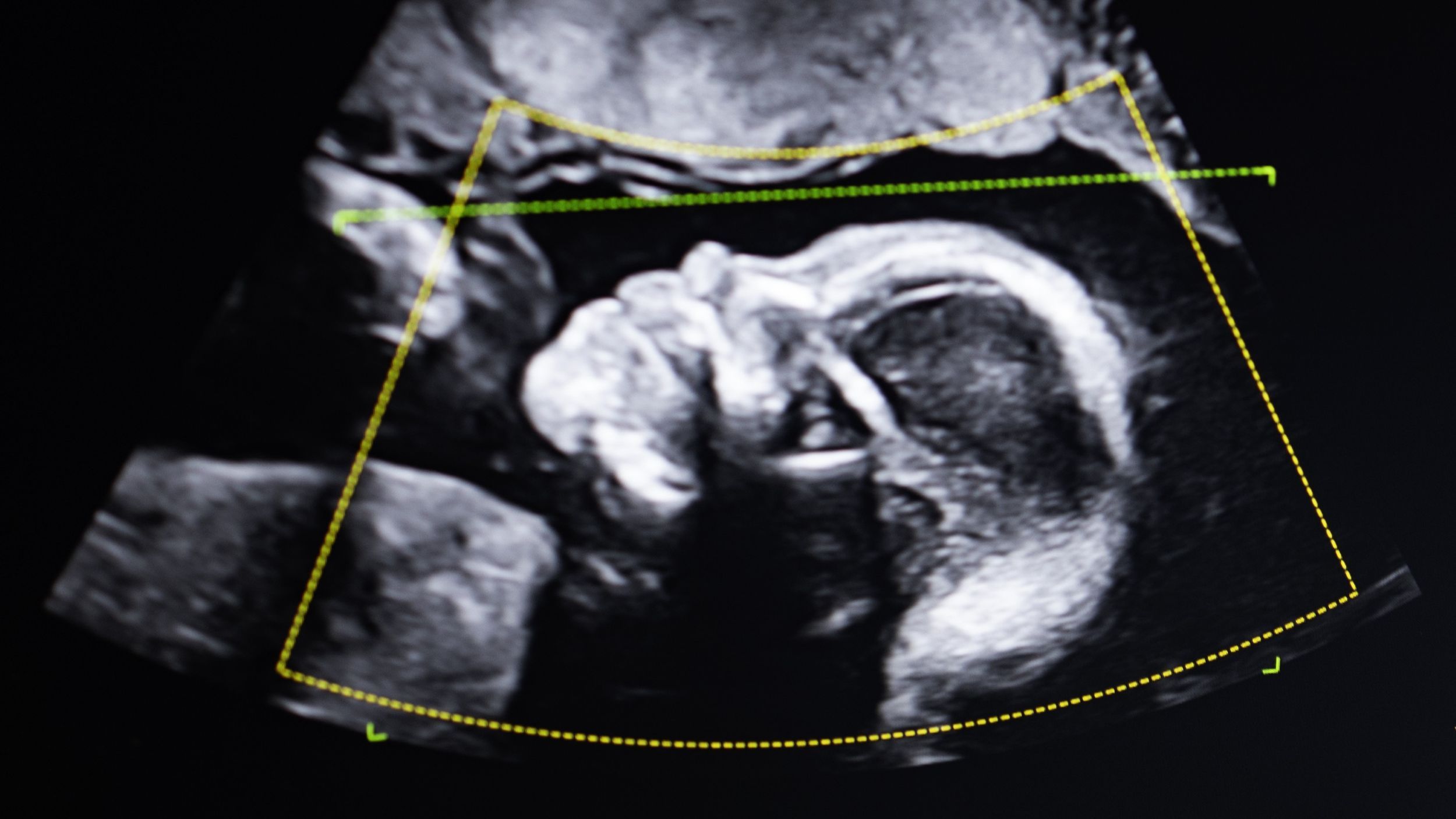
DNA is considered the ultimate indicator of our identity. This is a surefire way to determine our origins and connections to our parents and previous generations of our family. But in this excerpt from Hidden Guests: Migrated Cells and How the New Science of Microchimerism Is Redefining Human Identity (Greystone Books, 2025), author and science journalist Lise Barnow examines an unusual case that reveals the limitations of DNA testing, where a mother test suggested that the woman was not the mother of the child she had given birth to.
“I kind of laughed at first…but they were serious. You could see the seriousness on their faces,” Fairchild said. “DNA is 100% foolproof and doesn’t lie,” the social worker told her. “So who are you?”
you may like
Fairchild was initially suspected of attempting to defraud the welfare system by fabricating children. State prosecutors opened an investigation and quickly confirmed that the two children were indeed living with her. Did she kidnap them? Ms. Fairchild showed them a photo of herself pregnant. Her mother, the children’s father, and her obstetrician all testified to the fact that she gave birth.
Was she a surrogate mother who took in the children she gave birth to? After three court hearings, Fairchild feared the worst. “Every day felt like the last day I would see them,” she said through tears. “I called every lawyer in the phone book. No one believed me. This was my word against DNA. It was my word against everyone.”
Fairchild was pregnant with her third child at the time, and the judge required that both mother and baby be tested immediately after birth. Then the unthinkable happened. The third child who had just emerged from Fairchild’s womb was also not her son, genetically speaking.
Finally a lawyer agreed to help her. Alan Tindell asked Fairchild about his life, his relationship with his siblings, and his relationship with the father of his children. “After seeing her answer, I finally decided to believe her,” Tindell explained. He soon came across a scientific paper describing Karen Keegan’s case and contacted the team in Boston to test Fairchild. They first tested Fairchild’s blood but, like in Karen Keegan’s case, only one type of cell was found. They moved on to her skin, hair, and cheek cells, but there was still nothing.
We know too little about our own biology to have blind faith that DNA profiling will always reveal a person’s identity or origin.
Lise Barnoud “Hidden Guest”
Until the day the cervical smear test was performed. There, they found cells with different DNA, DNA that matched Fairchild’s children and her mother. They concluded that the second DNA must have come from the missing twin sister. Fairchild could finally breathe. But how would her story have ended without Karen Keegan?
The oft-taught equation of “one individual, one genome” cannot fully capture the complexity of reality. Even to me, what seemed like a long-established and unwavering certainty turned out to be incomplete knowledge in need of revision. We know too little about our own biology to have blind faith that DNA profiling will always reveal a person’s identity or origin.
Our final proof is not foolproof. However, it is very often used to confirm relationships, prove or disprove paternity, evaluate applications for family reunification, and convict the presumed innocent. British philosopher Marguerite Shildrick, one of the few scholars who has investigated the social and legal implications of microchimerism, says: “The most important assumption in such situations is that a sample in which genetic kinship cannot be confirmed is a sign of fraud, regardless of other evidence supporting legitimate kinship.”
you may like
Why is some scientific knowledge so hastily passed off as infallible truth?Are we not thinking enough about our own ignorance? And why do some fields of knowledge remain frozen in skepticism, when new discoveries could dispel doubts? The sociology of science has the right research for that.
It’s impossible to know how many Karen Keegans and Lydia Fairchilds there are. In most cases, the presence of chimeric cells from the extinct twin goes unnoticed. If Keegan had not needed a kidney transplant and Fairchild had not applied for welfare, they would never have known that their gametes were “occupied” by cells other than their own.
Over time, their children and grandchildren may have noticed that branches of the family tree seem to be missing, that they have somehow inherited genes that neither of their parents have.
Currently, we know of about a dozen cases of this phenomenon, where chimeric cells are present in the tissues that form eggs and sperm, known as germline chimerism. One such case involved an American man who learned through a paternity test that he could not be the father of a child born through assisted reproduction. He believed he was the victim of a semen mix-up and was preparing to sue the clinic when more accurate tests revealed that he actually shared 25% of his DNA with the child. So, genetically speaking, he was the child’s uncle.
Further research revealed that 10% of his sperm contained the DNA of his missing twin brother. “One of the most impactful results of this case study is that it points out that some of the traditional paternity tests that yielded negative results (tested parents were excluded as biological parents) may have been wrong, because the alleged parents may have undiagnosed chimerism,” stress the researchers who documented his case.
Given the increasing use of these tests, the parentage of other fathers may be unfairly contested. This is exactly the scenario depicted in the French TV series Nona et ses filles, which aired in 2021. Nona, played by 70-year-old actress Miou-Miou, becomes pregnant, but a genetic test reveals that her boyfriend Andre is not the father of her child. They eventually learn that one of Andre’s testicles contains the sperm of his missing twin brother. In Andre’s words as he tries to make sense of his situation: “I mean, he’s my nephew…but he’s also my son.”
Excerpt from Hidden Guests: Migrated Cells and How the New Science of Microchimerism Is Redefining Human Identity by Lise Barnéoud. Published by Greystone Books in 2025.
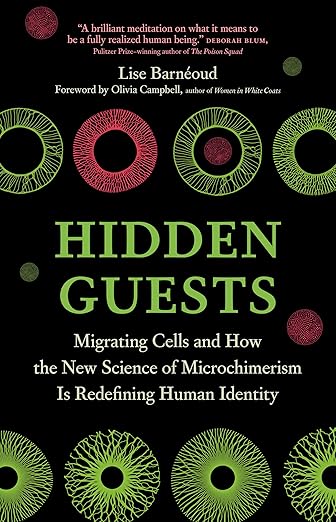
Hidden guests: How the new science of cell migration and microchimerism is redefining human identity
Part mind-blowing medical mystery, part cutting-edge science, Hidden Guests reveals the surprising phenomenon of microchimerism, or the presence of foreign cells within our own bodies. The surprising story of how these cells got there and what they do once they arrive may change everything we know about the immune system, lineage, and identity.
Source link
